
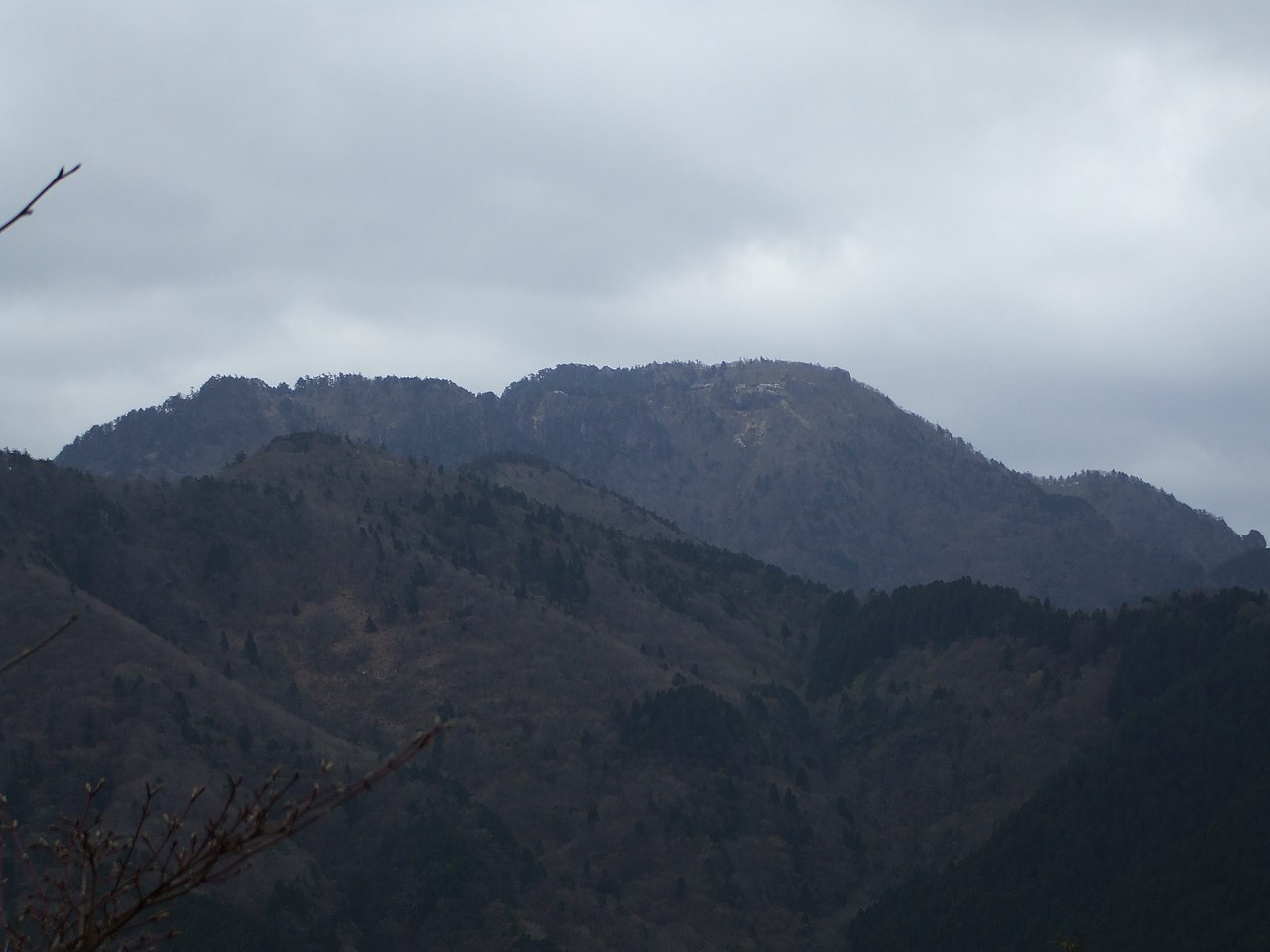
The principal peak of the Oku-Chichibu, with the Gojō-iwa rock tower
Mt. Kinpu rises 2,599 m (8,527 ft) on the border of Kōfu in Yamanashi and Kawakami in Nagano — the principal peak of the Oku-Chichibu range. It sits in the heart of Chichibu-Tama-Kai National Park alongside Mt. Mizugaki, Mt. Kobushi, and Mt. Kita-Okusenjō. Kyūya Fukada wrote about Kinpu in Nihon Hyakumeizan as the representative Oku-Chichibu peak, and singled out Gojō-iwa, a 15-metre-tall granite rock tower that crowns the summit. Gojō-iwa is the visual landmark identifying Kinpu from miles around. The summit at 2,599 m happens to sit roughly 1,200 m below the summit of Mt. Fuji — a number that recurs in Japanese mountain literature.
Kinpu has long been a sacred mountain in the Zaō Gongen tradition, and Gojō-iwa has been worshipped as the deity's body. The Nara-period priest En-no-Ozunu is credited in the opening tradition, and the mountain holds a special position in the Shugendō ascetic landscape of the Oku-Chichibu. A small shrine still stands at Gojō-iwa's base, where climbers bow at the foot of the rock tower. To climb Kinpu is to walk the Oku-Chichibu ridge and at the same time to step into a thousand-year-old Shugendō tradition.
Ōdarumi Pass — Japan's highest paved road
The most standard route starts at Ōdarumi Pass (2,365 m), the highest point on the forest road linking Yamanashi and Nagano. It is the highest paved-road pass on a regular Japanese road. From the pass, the route over Asahi Pass and Mt. Asahi to Kinpu summit gains only about 230 m of vertical, 4–5 hours round-trip. It is realistically a day-trip — and the most accessible 2,500 m+ peak in the Oku-Chichibu region.
The second main route is the Mizugaki Sansō route from Hokuto, Yamanashi. From Mizugaki Sansō (1,520 m) the trail passes Fujimi-daira hut, Daihinkō hut, Daihinkō rock, and Sunaburai-no-Kashira to Kinpu. About 1,080 m of vertical, 6–7 hours up. This is the line used for the classic Kinpu + Mizugaki traverse done over two days. A Nagano-side route from Mawarime-daira also exists but sees limited use.
Standard plans are an Ōdarumi day-trip or a two-day Mizugaki Sansō climb with a night at Kinpu Sansō. For the Mizugaki + Kinpu pairing, the three-day pattern runs Mizugaki Sansō → Mizugaki summit → night at Fujimi-daira → Kinpu summit → back to Mizugaki Sansō. 'Quickly stand on a 2,500 m peak' goes via Ōdarumi; 'walk the Oku-Chichibu ridge properly' goes via Mizugaki Sansō — Kinpu's distinguishing feature is offering both as parallel options.
Gojō-iwa: the summit's landmark
Gojō-iwa is the centrepiece of the Kinpu summit. About 15 m tall, formed of stacked granite blocks, it stands alone on the ridge just southwest of the summit point — a unique skyline feature. It is climbable as a free-solo for an experienced rock climber, but climbing the rock is now discouraged on religious grounds, since it functions as the deity's body and a shrine sits at its base.
The summit view spans Mt. Mizugaki and Mt. Kobushi in the Oku-Chichibu to the east, Mt. Fuji and the Southern Alps to the south, the Yatsugatake and Northern Alps to the west, Mt. Asama and the upper Jōshin'etsu range to the north — most of central Honshu's major mountain groups in one panorama. The view of Fuji from Kinpu is one of the finest in the Oku-Chichibu, and the framing of Fuji with Gojō-iwa in the foreground is the signature Kinpu photograph. The summit area is granite gravel and rock blocks with dwarf-pine green — a landscape no other Oku-Chichibu peak quite duplicates.
Kinpu Sansō and Ōdarumi hut: hut options
Huts on Kinpu follow route choice. Kinpu Sansō, just below the summit at 2,460 m, runs year-round and is the primary overnight for the Mizugaki Sansō route — about 15 minutes to the summit, well-placed for sunrise and sunset. Ōdarumi hut at Ōdarumi Pass serves as a pre- or post-climb base for the Ōdarumi route. Fujimi-daira hut, midway on the Mizugaki Sansō route, is the standard overnight for the Mizugaki + Kinpu pairing.
Kinpu Sansō has unusually good amenities for an Oku-Chichibu hut, with a mushroom-themed dinner and house-baked bread that have small followings of their own. Peak-season reservations are essential weeks in advance. For an Ōdarumi day-trip the need for a hut overnight is low — the parking at the pass supports a clean day climb. Kinpu trip planning is essentially route-choice planning: day-trip from Ōdarumi or overnight via Mizugaki Sansō.
Season and gear: late May through early November
Kinpu's climbing season runs roughly late May through early November. The Ōdarumi forest road closes for winter (typically late November through late May), and the Ōdarumi route's season aligns with the road. The Mizugaki Sansō route is accessible year-round and used for winter climbing as well, but ridge snow and ice make full winter kit mandatory in the cold months. July and August are crowded; late September and October bring autumn colour and high fair-weather percentage.
Gear assumes a long day at 2,500 m. Fleece and a wind- and waterproof shell are required; mid-cut or higher boots; a 20 L+ day pack or 30 L+ overnight pack. A helmet for the summit-area rock zone is useful. Summit-area mornings even in midsummer can drop to 5–10 °C (41–50 °F), so pack a light down or thick fleece in reserve. The Ōdarumi day-trip still demands central-Honshu 2,500 m gear standards on the ridge — don't underestimate it on convenience grounds.
Sunrise from Kinpu Sansō frames the Oku-Chichibu ridge of Mizugaki and Kobushi to the east, Mt. Fuji to the south, and the Yatsugatake and Southern Alps to the west. The signature Kinpu photograph — Fuji and the rising sun framed against Gojō-iwa — pulls landscape photographers to overnight at the hut and climb back up to the summit pre-dawn. New-moon midsummer nights spread the Milky Way over the ridge, and stargazing from the Oku-Chichibu at 2,500 m is genuinely productive.
Enzan Station, Ōdarumi Pass, Mizugaki Sansō — access
Access for the Ōdarumi route runs from Enzan Station on the JR Chūō line by taxi to Ōdarumi Pass in about 75 minutes (private car, taxi, or shared taxi only). There is no public bus service from Enzan to Ōdarumi, so car-less climbers rely on shared taxis. For the Mizugaki Sansō route, the JR Chūō line to Nirasaki Station, then a Kayagatake-Mizugaki shuttle bus to Mizugaki Sansō in about 60 minutes; cars park at the hut.
From Tokyo, the JR Azusa limited express to Enzan takes about 90 minutes and to Nirasaki about 2 hours. By car, the Chūō Expressway from Katsunuma IC or Nirasaki IC takes one to two hours. The Ōdarumi route is one of the very few ways to 'stand on a 2,500 m peak as a day-trip from Tokyo', which sustains Kinpu's lasting weekend popularity. After descent, Enzan Onsen on the Enzan side or Masutomi Onsen near Nirasaki handle the rinse-off. Climbing Kinpu means standing at the foot of the symbolic Gojō-iwa rock and walking the visual centre of the Oku-Chichibu ridge — a dense single day either way.


