
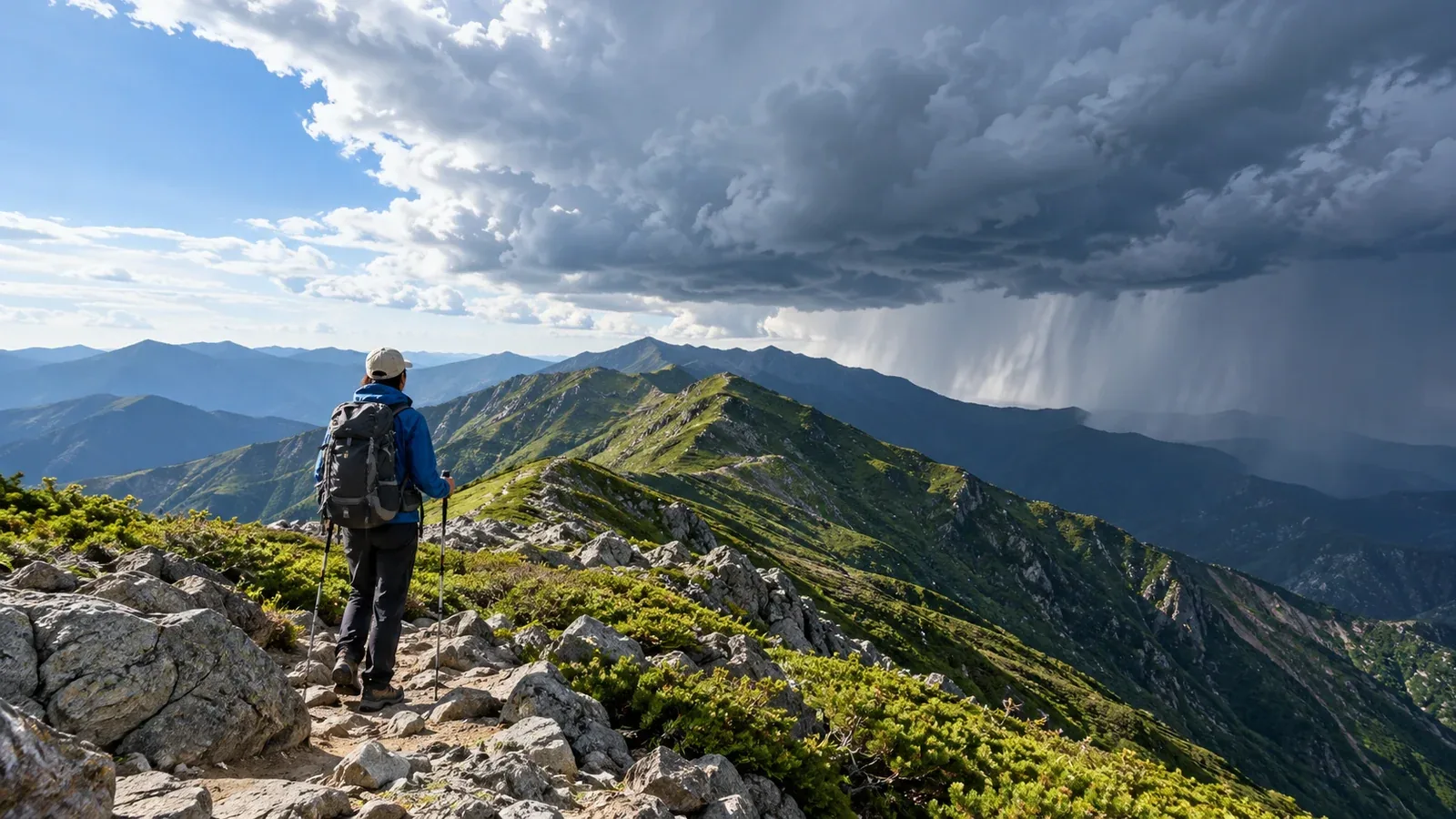
Summer thunderstorms often develop in the afternoon. When should you be off the ridge, and how can you work backward from that point to plan your hike?
You may hear people say to start descending by 1 p.m. That is one example. The range, elevation and weather affect when thunderstorms develop, and they can form in the morning. Understanding how to set a deadline is more useful than memorizing an hour.
Why thunderstorms often develop in the afternoon
The sun heats the ground and the air near it. Warm, moist air rises and cools, and cumulonimbus clouds can develop. These clouds produce lightning.
After several hours of heating, storms can form in the afternoon. A front can bring them in the morning, and clouds can grow quickly. Clear skies at breakfast tell you little about the risk later in the day.
Work backward from your shelter time
Plan to leave the ridge and reach a substantial building or an enclosed, metal-roofed vehicle with the windows up before the risk rises. A forest or an outdoor trailhead still leaves you exposed to lightning.
A useful target is reaching suitable shelter before thunderstorms become more likely. There is no fixed safe hour. Build in extra time for these factors.
- Elevation and terrain. A high, exposed ridge can leave you in open terrain for a long time.
- The day's weather. A nearby front, humid air or cumulus clouds growing early can mean storms form sooner.
- Time to get down. If reaching shelter takes an hour, leave the ridge at least an hour before your target arrival time and allow for delays.
Put the plan together in this order.
- Check the regional forecast and Japan Meteorological Agency thunder advisories the day before and the morning of the hike. Look at the lightning nowcast before setting off.
- Watch for growing cumulus clouds as you walk.
- Find out how long it takes to get from the ridge to a substantial building you can enter or to your vehicle.
- Work backward from your target shelter time to set the latest time to leave the ridge.
- If you hear thunder or see lightning, head for shelter immediately, even before your deadline.
It is tempting to carry on when the summit is close. Treat your turnaround time as a decision you made before that pressure set in.
Signs that a storm is developing or approaching
Watch the sky as well as the clock. Act early when you see these changes. Take shelter immediately if you hear thunder or see lightning.
- Cumulus clouds grow rapidly upward and develop dark gray bases.
- You hear thunder or see a flash.
- The air suddenly cools or strong gusts begin.
- A sudden downpour or hail begins, sometimes with lightning.
Once you hear thunder, it is close enough to be dangerous. A strike can happen away from the cloud itself.
If you are caught outside
A storm can develop earlier than you expected. If you are exposed on a ridge, reduce your exposure while you head for shelter.
Places and actions to avoid
- Sheltering under a lone tree.
- Staying on a ridge, summit or other high, exposed ground.
- Taking shelter under a cliff, rocky overhang, shallow cave or open rain shelter.
- Staying beside water or a metal fence, or lying flat on the ground.
What to do
- If you can move safely, leave exposed high ground such as a summit or ridge.
- If you must stay outside, avoid isolated tall trees and places where water collects.
- Keep moving toward suitable shelter. Crouching offers no reliable protection.
- Get inside a substantial enclosed building or a metal-roofed vehicle with its windows closed. Wait there for at least 30 minutes after the last thunder.
- Keep some space between members of the group as you move toward shelter.
Conditions vary from one route to another. Review current guidance from the Japan Meteorological Agency and local mountain safety authorities before you go.
Put the deadline into the route plan
Plan for lightning before setting out so you have time to act if the weather changes.
When checking walking times, find out when you can leave the ridge as well as when you can reach the summit. Use the forecast and the time to shelter to choose a ridge departure time and work back to a trailhead departure time. If the risk is high, postpone or choose a less exposed itinerary.
An early start helps you finish earlier, but you can still encounter lightning. Use the forecast and your shelter options to decide in advance what will make you change plans or cancel.
Before you go
Review your planned route and write down a ridge departure deadline and a start time. Check the regional forecast and JMA thunder advisories the evening before and again in the morning, then check the lightning nowcast before leaving. Ask the local authority or mountain hut about shelter. Nordwand hiking logs and certified guides may also help you learn local weather patterns.
Further reading
- Japan Meteorological Agency, Lightning Safety
- Japan Meteorological Agency, mountain weather information
- National Police Agency of Japan, mountain incident reports
- Fire and Disaster Management Agency of Japan, lightning safety information