
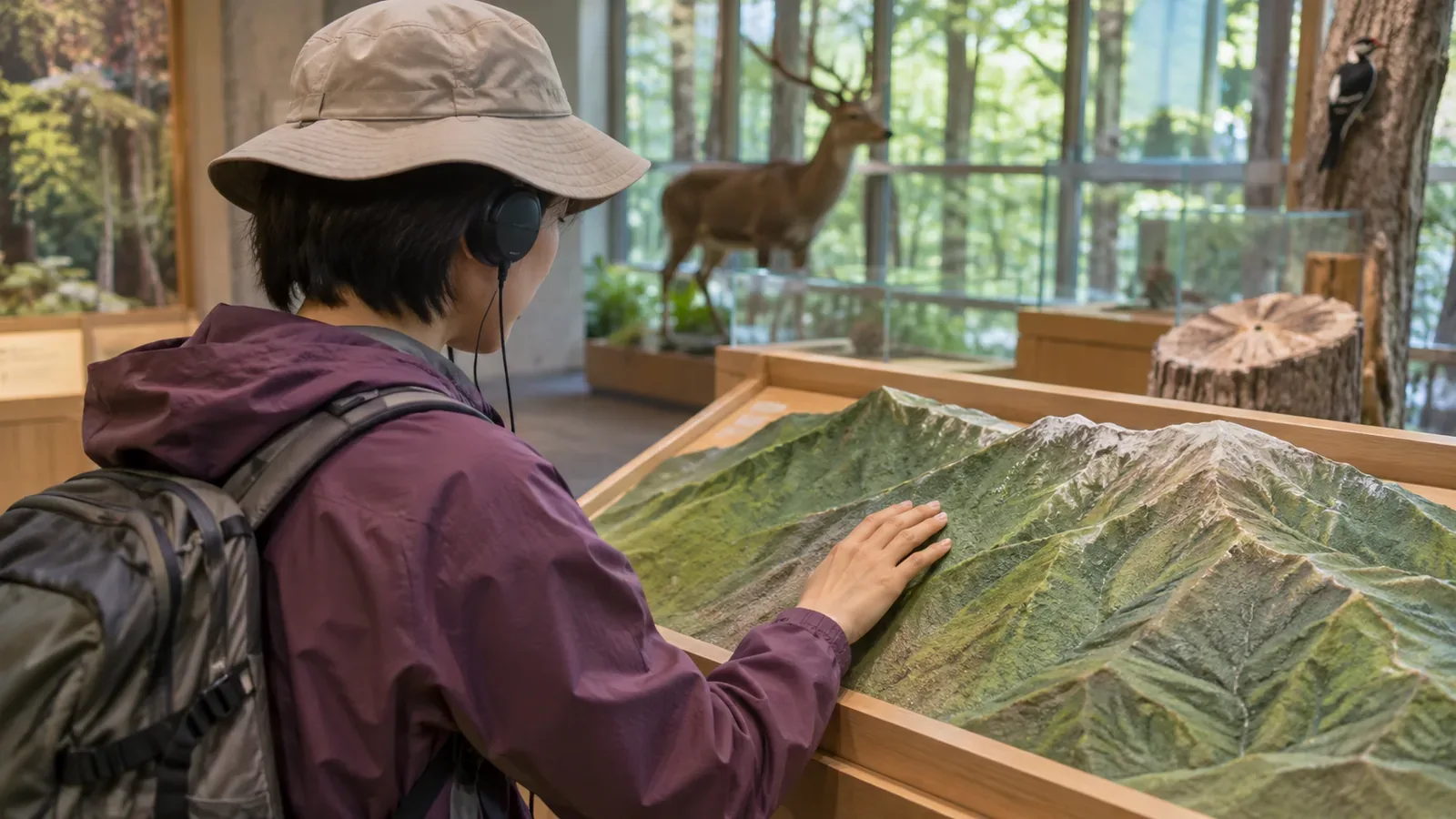
There are several ways to learn about mountains and forests. You can read a panel, listen to an explanation or feel the shape and texture of a touchable exhibit. Each site offers a different experience. Find out what is available before you visit so you can choose what works for you.
Find out what kinds of exhibits the site offers
Look for terms such as “audio guide,” “touchable exhibits,” “tactile maps” and “braille” on the official websites of visitor centers and natural history museums. The same label can mean recorded commentary, a device you borrow or a staff-led tour. Check what is available and which exhibits it covers.
Japan's Ministry of the Environment guidance on visitor center exhibits gives examples such as objects visitors can touch, tactile maps, audio guidance and captions on videos. It includes a photo of a touchable display at Ichinose Visitor Center. The photo illustrates a design option. Check the center's current exhibits before relying on it for a visit.
If you find no information on the website, ask the site. An older article may describe something that is currently unavailable because of repairs or a change of exhibits. Give the date you plan to visit and ask what will be available then.
Ask how the audio guide works
If there is an audio guide, find out whether you borrow a device, use your own or get a tour from a staff member. At the National Museum of Nature and Science, the Kahaku HANDY GUIDE is a text guide for personal devices. The museum lends out separate audio guides. Ask about the features you need, where to pick up a device, reservations and availability.
Check whether the guide covers the whole exhibition or just part of it. The Lake Biwa Museum in Shiga Prefecture states that its foreign-language guides provide text only and have no read-aloud function. If a guide is described as multilingual, check whether your language is available in audio. Ask the person what they need, including captions and text, rather than inferring it from a disability.
If you will use a device in the building, ask where the controls are, how to receive instructions and how to reach staff if you need help. Even when assistance is available, say what kind of guidance works for you.
Check what you can touch and how to get there
For touchable exhibits, ask which objects you can touch, whether you need a staff member and when the exhibits are available. Follow the signs or staff instructions. An object within reach may have different handling rules from the one next to it.
Check the whole route to the exhibit, including from the nearest transit stop or car park to the entrance, reception, exhibits, restrooms and rest areas. Find out if any section has steps or stairs. An exhibit may be usable while information about getting there is still missing. Ask about each section where you need details.
At a discussion on universal design in national parks reported by DPI Japan, participants talked about involving people with disabilities and checking facilities after construction. When choosing a site, give each person a chance to explain what they need and use the answers to decide for themselves.
Plan ahead and record what you learned
Check the official visitor guide for opening days, exhibit hours and transport updates. Share the answers you received with your companions, along with the date and exhibit concerned. If your plans change, contact the site about bookings or assistance you arranged.
If you are accompanying someone, ask before taking over a conversation or guiding their hand to an exhibit. Find out what kind of information or help they want and what they want to do themselves. Follow their pace and let them choose how to communicate with staff.
If you share your experience afterward, give the date you used the exhibit and explain what worked for you. Equipment and support needs vary by date and by person. Tell readers where to find current information so they can make their own choices.
Find out what is available and how to use it
Audio guides and touchable exhibits offer more ways to get to know the natural world. Ask the site what it offers, how to use it, how to get there from the entrance and what support is available. Plan the visit with the information each person needs to choose how to spend their time.
References and sources
- Japan Ministry of the Environment: technical guidance for natural park facilities, including information and exhibits for diverse visitors
- DPI Japan: discussion on universal design in national parks (December 13, 2024)
- National Museum of Nature and Science: museum guide
- Lake Biwa Museum, Shiga Prefecture: accessibility and visitor facilities