
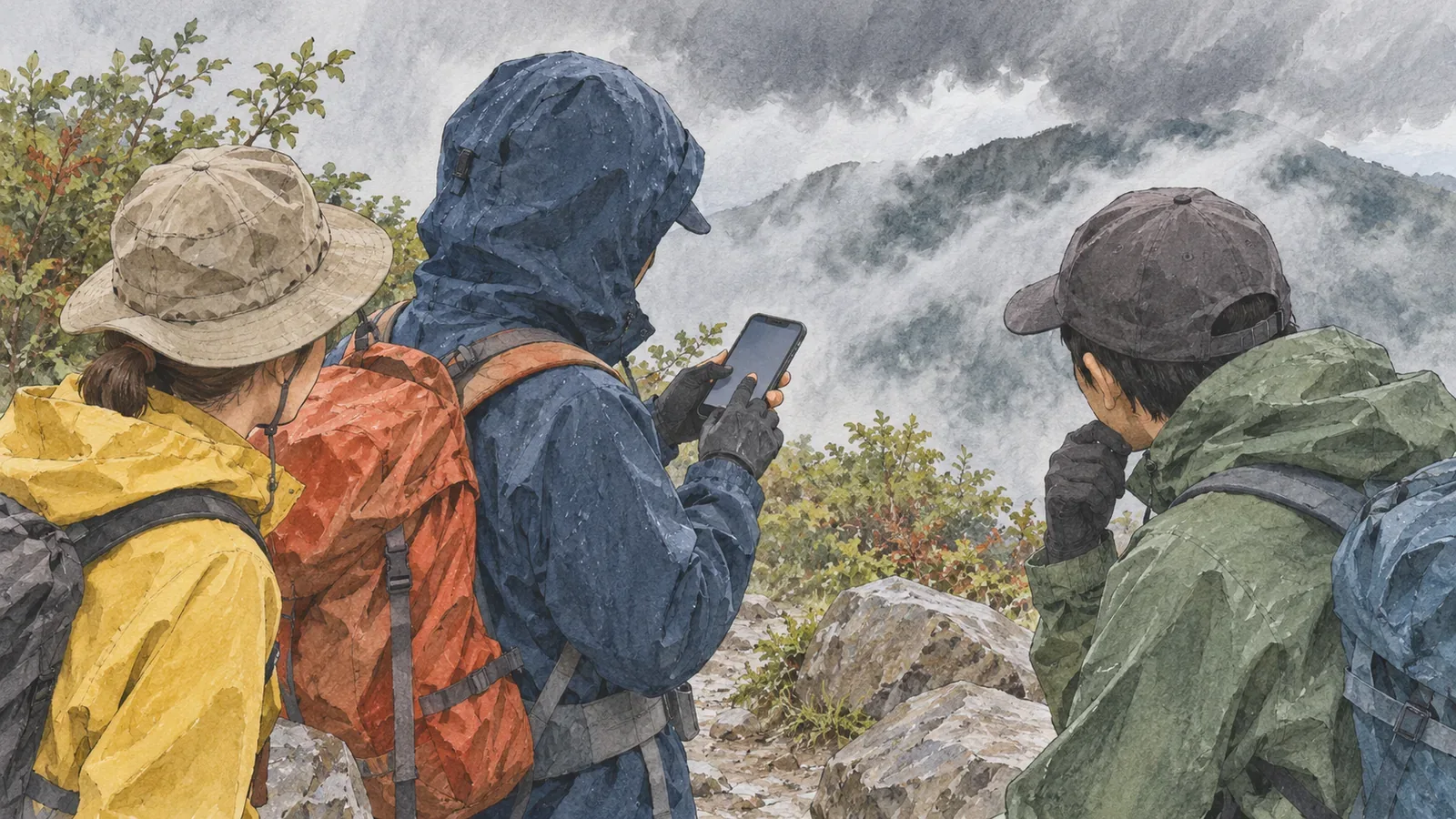
When you cancel a hike, explain what you’ve called off, why, where you are and how you’re doing, and when you’ll next be in touch. These four points give you a starting place for a routine update. Add what the recipient needs to know and make a separate rescue call if you need help. Decide who needs which information before you set out.
Deciding to stop and sharing the plan
Hiroshima Prefectural Police advise stopping early in poor visibility or illness, postponing if there are concerns about weather or health, and considering another mountain, cancellation or postponement if a hut or trail is closed. Atsugi Police Station in Kanagawa advises assessing health, weather and local conditions on the day, then cancelling or turning back if needed. Saijō Police Station in Ehime cautions that coming a long way can make it tempting to press on and contribute to accidents.
Hiroshima police recommend giving a copy of the plan to family or colleagues. The Central Council’s summer advisory also describes where to submit the plan, including police, household or club, and asks for a report after you get down. Saijō Police Station also advises notifying family and friends when you finish. Agree on a contact who stays behind and how to reach them. For changes or reports to whoever received a submitted plan, follow their current instructions.
The following method is for telling companions or family about a routine change when everyone is safe and able to move. Cancelling a booking, amending a submitted hiking plan and requesting help from police or fire and rescue services have their own information and contact requirements.
Tell the people who have the plan what you’re doing now
Family or colleagues with your plan may use the original times and route to work out where you are. Whether you cancel before starting or turn back on the trail, tell them about the change if you can. Nara police explain that a submitted plan helps prepare for search and rescue. Keep a note of who has a copy so you know whom to notify.
The National Police Agency points out that reception and battery life are limited on many mountains. Start with what you are doing and how you are, so the person gets what they need before the connection drops. If you have decided to turn back, say so clearly. Say if you need help or advice. Put safety information ahead of a long explanation of why you stopped.
Four points for a short update
Include 1. What you did, 2. The kind of reason, 3. Your current situation and 4. Your next check-in. First, say what you are doing in one sentence: “We cancelled today’s hike” or “We’re turning back at this junction.” Second, name the main reason: weather, how someone feels or local conditions. Hiroshima’s examples include poor visibility, illness, a closed hut or a closed trail. Third, give the location and time you checked it, whether you are somewhere safe and whether you can walk, as far as you know. If the location is uncertain, say so. Fourth, tell them what to expect next: “I’ll call when I’m down.”
For example: “At [time] we’re at [junction]. The fog has thickened, so we’re skipping the summit and descending by the route we’ve checked. Everyone can walk. We now expect to be down at [time], and I’ll check in from the trailhead.” This example assumes you know where you are and have verified the way down. Give the recipient what they need now. Details can follow later.
Keep the message short while describing the situation accurately. If you cannot walk because of illness, or think you are lost, tell someone you need help. The National Police Agency advises stopping early when you suspect you are off-route and returning to the marked trail if you can verify the way and move safely. It notes that a GPS-enabled phone can help in a rescue request, although coverage and battery life are limited. Say how things actually are.
On paper the night before, draft messages for three situations: (a) changing mountains after learning a hut is closed, (b) turning back after visibility drops and (c) taking an earlier way down after someone feels unwell. Compare what family, colleagues and the plan recipient need to know, and trim the draft. Use the plan recipient’s form or instructions to report a cancellation.
Stop somewhere safe to send it, and act promptly in an emergency
For a routine update, stop and check the surroundings before typing. Avoid going near a cliff edge or along an unknown path just to send a message. A routine update can wait if you cannot send it safely. If you cannot move, do not know where to go or need help, stay clear of unsafe movement and contact police or fire and rescue services promptly by whatever means you have.
Hiroshima Prefectural Police describe the location-sharing feature in their Otomo Police app for check-ins when there is reception, such as when starting, finishing or reaching a summit. Coverage varies. Atsugi Police Station recommends using GPS and a hiking app alongside a paper map, and carrying a charged phone and spare battery.
Draft the message on your phone the night before so you can select the recipient and send it from a safe stop when you have reception. Check how your phone and service work in advance. Agree with family that a cancellation update may be brief, and how they should check on you if they hear nothing by your expected return. Choose a time and point of contact for your itinerary. Act immediately if you learn of an accident or a danger. Check for an unsent message where you can.
Draft it before you go and adapt it to the recipient
For a routine update, summarise the decision, the reason, your location and condition, and the next check-in. Prepare the message and contacts in advance. Handle family updates, bookings and formal plan changes with the information each requires. If you need rescue, give your location and describe what is wrong. Clarity matters more than brevity.
References and sources
- Hiroshima Prefectural Police | Safe and enjoyable summer hiking
- Atsugi Police Station, Kanagawa Prefectural Police | Preventing mountain accidents
- Nara Prefectural Police | Mountain incident prevention
- Saijō Police Station, Ehime Prefectural Police | Hiking from spring to early summer
- National Police Agency | Overview of mountain incidents in 2024
- Central Council for Mountain Accident Prevention | Summer hiking advisory, July 2024