
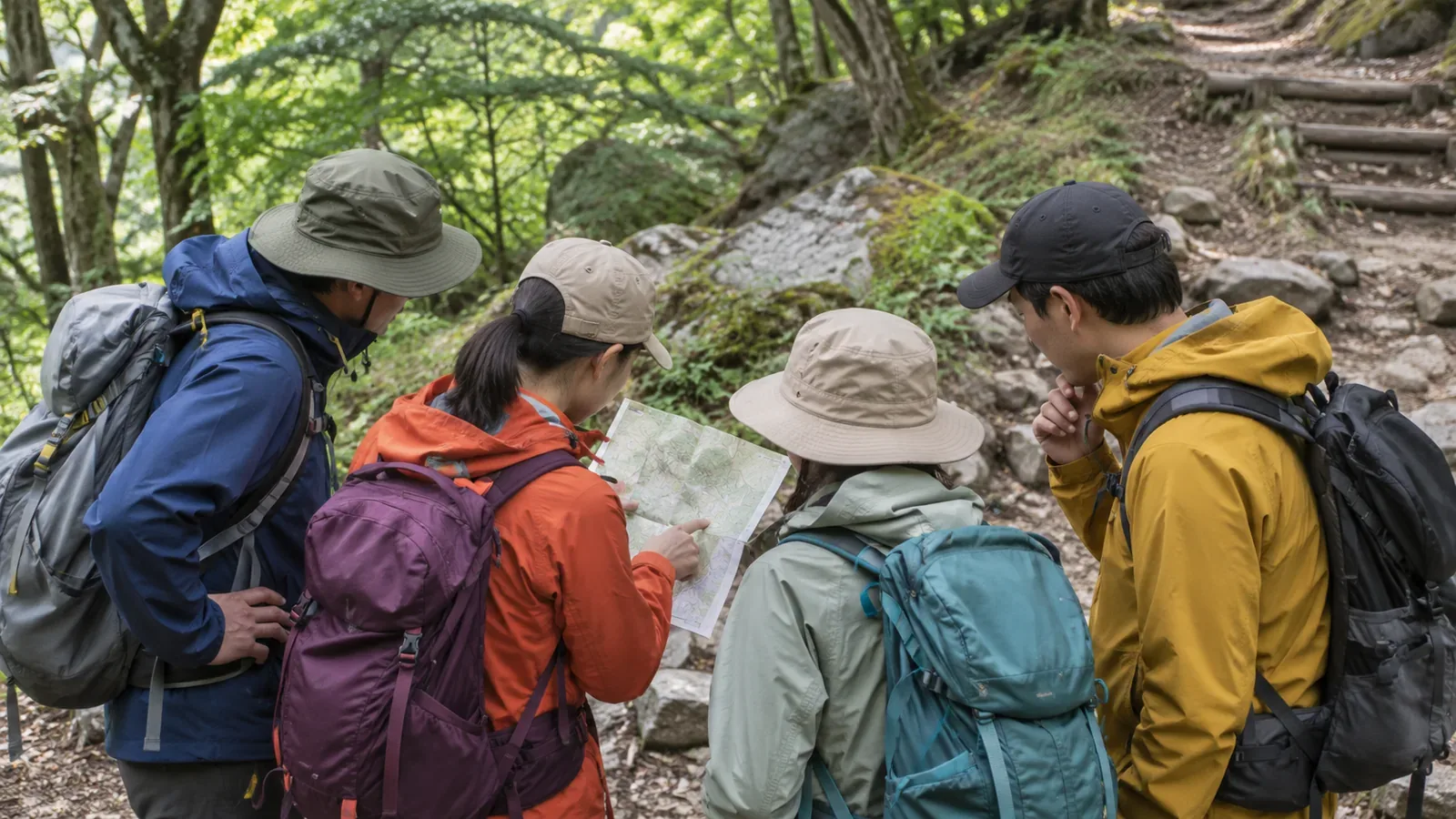
Before splitting up over differences in pace, consider slowing down together, taking a break or shortening the route. Splitting a group partway through changes who makes decisions and what equipment, return routes and communication each party needs. A meeting point covers only one part. Check how everyone is doing and look at the whole plan first. Stay together if the arrangements are insufficient.
Stay at the slowest hiker’s pace and treat splitting as an exception
The U.S. National Park Service’s Hike Smart guide recommends letting the slowest hiker set the pace, placing them near the front and staying together. You may arrive a little later, but you’re less likely to get separated and can help immediately if someone is injured. Great Smoky Mountains National Park gives similar advice. The Appalachian Trail Conservancy (ATC) also recommends matching the slowest person’s pace, waiting for everyone at junctions and assigning a leader to bring up the rear as the sweep.
For large groups, the ATC also suggests arranging smaller groups in advance, camping at separate sites and registering each group separately. That is guidance on group sizes and overnight planning for the Appalachian Trail. Its advice for people already on the trail is to stay together. Check rules for the area where you’ll hike before applying any overseas group-size limits in Japan.
Check whether a change of route, timing or pace would help first
If differences in pace are making the hike difficult, look at the route, the schedule and the current pace. A change in health or footing can make the original plan unrealistic. Adapt it to the conditions that day and avoid pushing slower people to keep up with the original schedule.
First, look at the route. The National Park Service recommends choosing one that everyone can finish safely and enjoy. Consider experience, pack weight, fitness, familiarity with the conditions and whether you’ll hike alone or with others. The Smokies’ guide asks whether the hike suits the group’s abilities and notes that a short mountain trail can still be difficult or take a long time.
Second, look at the time. The National Park Service recommends counting the round trip, setting a turnaround time and returning before dark. The Smokies also recommends tracking elapsed time and distance. Estimate time for the remaining climbs and descents, breaks and a margin. If there’s too little time, consider an earlier destination for the whole group. Keep the group’s return ahead of the fastest hikers’ goal.
Third, look at the pace. Both guides recommend using conversation as a clue about pace, taking regular breaks and paying attention to how people feel. Ask about the effort in a safe place and have the faster hikers slow down. Conversation alone is no assurance that someone is well. If someone keeps feeling unwell, consider a change of route or getting help. Give the last person to arrive time to rest, too.
Find out what each party would need if you split
If you’re considering a split, use the following questions to find gaps in the plan. Each party needs people who can judge the terrain and conditions, suitable equipment and participants who can move safely. Answering every question cannot establish that splitting is safe. If the plan is for someone who feels unwell to descend early, first check whether they can move safely and make sure they have company.
First, does each party know its route and how to get back? Know where you would split, which routes you would take, where you would finish and how long each route would take. Even a trail with no junctions can have hazards. Second, can each party work out its position and make decisions about changing route, turning back or responding to an emergency? Keep the group together if one side has all the experienced hikers or everyone depends on one person’s map or contacts.
Third, check that each party has the equipment it needs for the route and conditions. Fourth, decide what to do if you lose contact or can’t meet again. The National Park Service and Japan’s National Police Agency warn about losing cell coverage or battery power. Fifth, decide when each party will make decisions to get back safely and who handles communications. They may need different turnaround times depending on the return routes.
If you can’t make these arrangements or safely make decisions on the spot, stay together and consider shortening the route or turning back together. A request to “Go on without me” is not enough to leave someone behind. Ask how the plan can change so that everyone returns safely. Give people room to express concerns without pressing them to agree to a split.
Share the revised plan with everyone and the contact staying behind
Japan’s National Police Agency recommends planning around fitness, experience and health, identifying exit routes and sharing the trip plan with companions, family and work. If the route or group changes, update everyone who knows the original plan. Say who will return by which route and when they’ll get in touch. Check how to update a plan you’ve already filed with the organization that received it.
Confirm that each party and the contact staying behind has seen the revision. A message alone may go unread. Make sure they can access maps and contact details before losing coverage. Share the revised expected return times rather than leaving the old ones in place because you expect to meet again. If the update hasn’t reached everyone, consider staying together.
Put the conditions into words before suggesting a split
Follow the slowest hiker’s pace, stay together and account for everyone at junctions. If the differences in pace are causing difficulties, start by reviewing the route, breaks and return time. Both parties need sound judgment, equipment, a reliable return route and a way to communicate. Even if everyone agrees and there’s a meeting point, check those arrangements. If they’re inadequate, stay together and revise the plan so everyone can return safely. Share the change with your companions and the contact staying behind, and confirm they have the same version.