
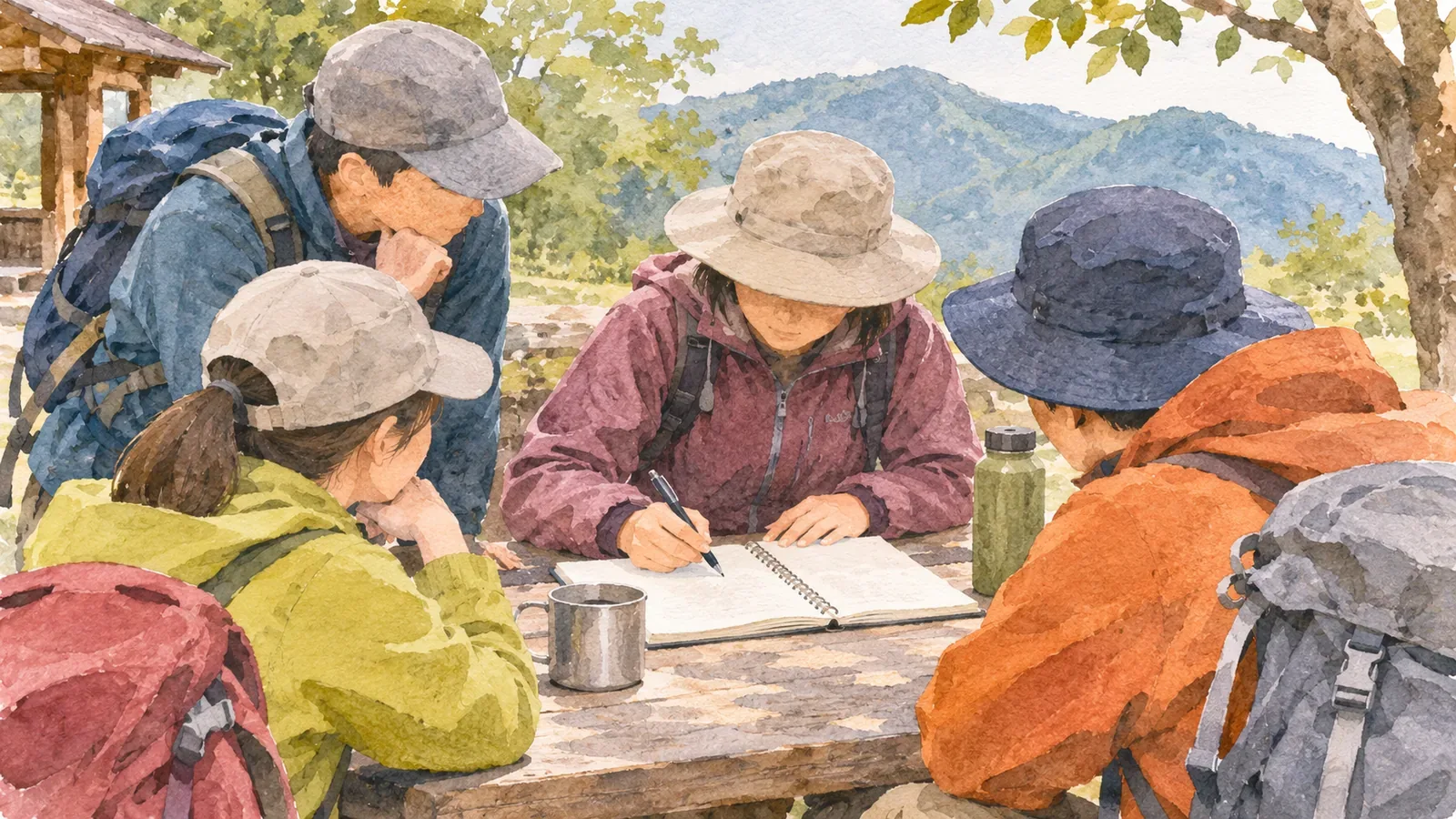
Walking speed is an important factor in planning a hike. A person’s other skills and qualities deserve attention, too. Choose a route and schedule that allow everyone to return safely and share responsibilities according to experience. If you’re behind schedule, talk about which sections took longer and what to change.
How to let the slowest hiker set the pace
The U.S. National Park Service’s Hike Smart guide recommends letting the slowest person set the pace, keeping the group together and putting that person near the front. Staying together makes it less likely that someone will get lost and lets the group help immediately if someone is injured. Great Smoky Mountains National Park also recommends placing the slowest person near the front and moving as a group.
The Appalachian Trail Conservancy advises groups to follow the slowest person’s pace, wait for everyone at junctions and assign a leader to stay at the back as the sweep. These recommendations are for U.S. parks or a specific trail. Check how they apply to the part of Japan where you plan to hike.
Use the same ideas when talking with the group. Share differences in pace as information you need for planning. Avoid assuming that someone can handle every task because they’re quick or that someone who walks slowly struggles to make decisions. Consider fitness, map skills, experience and how people are feeling that day when you decide what to prepare and who will do what.
Describe the pace the plan needs
The following three examples are for messages and planning notes before a hike. They describe the route and the adjustments it needs. After changing how you talk about the hike, ask what people need and update the plan accordingly.
First, change “Alex is slow, so…” to “At today’s group pace, we expect to take about this many hours to get here.” The National Park Service uses the ability to talk as a clue about pace, but it can’t tell you the duration. Estimate the time using distance, terrain, past hikes and breaks, and revise it when you see how the group is moving.
Second, change “The faster hikers have to put up with it” to “Is this route suitable for this group?” The Smokies guide asks whether the route matches the group’s abilities. Hike Smart recommends choosing one everyone can finish safely and enjoy. You can talk about training for a future hike. For today, adjust the route and schedule to the people you have.
Third, change “We’re falling behind” to “This is taking longer than planned.” Hike Smart recommends tracking time and distance and setting and keeping to a turnaround time if the hike runs long. Here the delay is the difference from the plan.
As an exercise, write one sentence before the hike about “today’s pace.” Leave out people’s names. If you have used a name, rewrite the sentence around the route, distance or estimated time.
Assign roles based on what people can do
Hike Smart puts the slowest person near the front to keep the group together. The ATC’s sweep keeps track of everyone from the back. Share what each position is responsible for. Adapt the arrangement to group size, terrain and experience and tell everyone when someone takes over. Make sure the people you choose can make the necessary decisions and help when needed.
NOLS teaches several leadership roles, including leading yourself, leading peers, being the designated leader and actively supporting the leader. It also values respect and inclusion on an expedition. The curriculum addresses leadership generally. Its idea that people can play different roles in different situations can help here.
List the tasks, such as confirming the meeting time, checking the current location and next junction, or tracking elapsed time. Assign them based on experience and people’s preferences. Spread responsibilities without leaving someone inexperienced to make an important decision alone. Check the map or time where you can stop safely. If the route is unclear, stop to check it as soon as you can do so safely. Choose backups in case someone can’t do their job.
Agree on the schedule and when to turn back
The Smokies guide recommends turning back when the hike is harder than expected or you’re unsure. Hike Smart also recommends setting and keeping to a turnaround time. Agree beforehand on conditions that would lead the whole group to turn back, so the decision doesn’t depend on one person declaring they’ve reached their limit.
Share the turnaround time, the conditions for returning and the checkpoints. Plan to talk about whether to continue in a safe place before difficult terrain. If someone feels worse or the weather changes, decide before the planned time or place. Say “This is taking longer than planned” or “Someone has a concern” so the group can discuss the conditions without blaming anyone.
Japan’s National Police Agency also recommends choosing a mountain suited to weather, fitness, skills, experience and health, leaving time for breaks and sharing the trip plan with companions and family, among others. Use what you know about people’s abilities and how they’re feeling to adapt the plan and help one another. Check who’s coming and how they’re doing each time, since conditions can change.
Use pace to plan, assign clear jobs and agree when to turn back
Use speed to estimate the schedule, share the work and agree when to turn back before setting out. The guides recommend letting the slowest hiker set the pace, staying together, regrouping at junctions and setting a turnaround time. The ways of describing pace and assigning roles are the editorial team’s suggestions. Discuss what works for your group. Start by writing a sentence about today’s pace, the roles, and the turnaround time, conditions and checkpoints on paper and sharing them with everyone.