
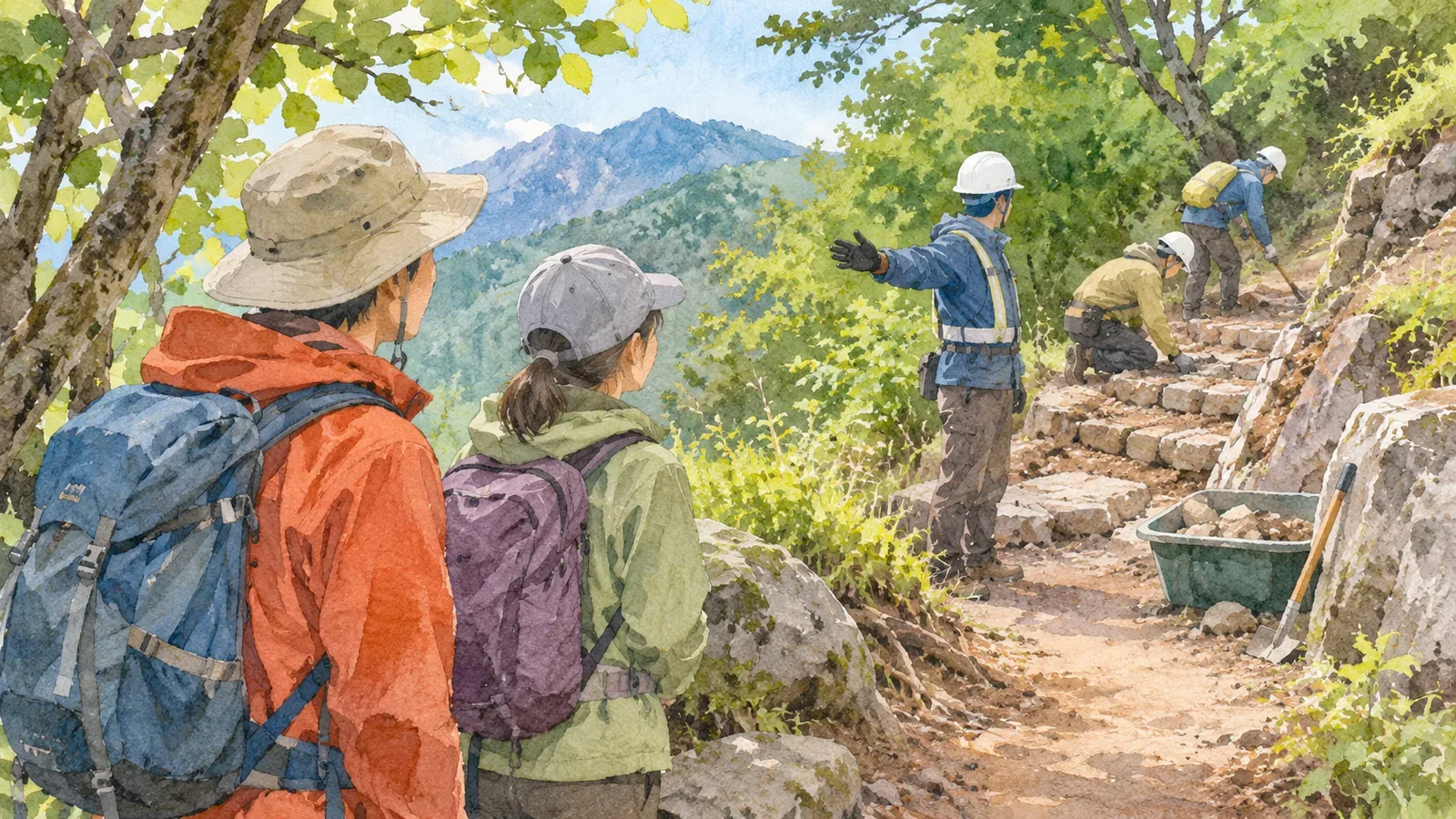
You may come across a crew repairing steps or improving drainage on a mountain trail. You want to pass and the crew needs to work safely. Stop somewhere safe, speak to them when you can and wait for directions. Allow for temporary restrictions and delays as part of the hike.
Check trail work and access before leaving
Check notices from the municipality, park or trail manager for work, repairs and closures on your route. Japan's Ministry of the Environment also asks national park visitors to check conditions, access and weather beforehand. If the notice gives the work area, dates, times when you can pass or a detour, add them to your map and plan. If details are unclear, ask the office about the date and section you intend to use.
If the notice mentions moving tools or materials, leave extra time. If a detour is provided, check its distance, conditions and transport back separately. Stay on established routes rather than making a new way around the work.
The US National Park Service's Blue Ridge Parkway page gives examples of work such as maintaining log or stone steps, managing trailside plants and keeping water flowing. The work varies by site. Treat the US page as an example and follow the instructions at the Japanese site you are visiting.
Wait for the crew's instructions
When you see workers or materials, stop at a safe distance and see what is happening. Wait until you can get the crew's attention, then ask if you can pass. Leave space while tools are in use and while the crew is unaware of you.
In June 2026, Japan's Ministry of the Environment asked hikers on the Oshidomari Trail on Mount Rishiri to follow workers' directions and wait in a safe place while materials were moved by helicopter. That was a notice for the work at the time. Check the latest information for current access. When the crew says you can pass, follow the route and timing they give you. If you need to wait, keep the path and material storage clear. If you cannot make yourself heard, give the crew time to notice you.
In a group, have the person at the front pass the instructions back before moving. If the group is large, follow the crew's instructions about the order and number of people who can pass. Regroup somewhere safe afterward.
Keep work areas clear and stay on the trail
While waiting, leave tools and materials where they are. If you want to help, wait to be invited and check the organiser's directions and requirements before entering the work area. The crew may be planning around the water flow, soil and plants nearby.
The Daisetsuzan National Park Liaison Council describes erosion and how people who step around mud can create parallel trails. Wait where directed to avoid trampling plants or making a new path around the work area.
If you want to take photos, ask the workers and make sure it is safe. Keep the trail open and stay clear of the materials and the crew's movements. If you cannot take a photo, note the location and the kind of work afterward.
Change your plan if you cannot wait
If a long delay leaves little time before dark or your return transport, stop somewhere safe and discuss it with your companions. Consider an alternative route if you checked it beforehand and can confirm it is still open. If the conditions are unclear, turn back or end the hike.
Conditions can differ from the plan. Follow signs and crew instructions even if the work was not listed beforehand. Check the manager's latest information to see whether a closure has been lifted.
If you share access information after the hike, distinguish the date and time you saw the site, the section and the instructions the workers gave. A passage you were allowed to use that day may be unavailable later. Knowing what goes into maintaining trails can help you leave more time for the next hike.
Let the crew guide you through
When you reach a work area, wait somewhere safe and ask the crew when you can pass. Leave tools and materials alone and follow their directions about where and when to go.
Allow for delays. If you are running short of daylight or time to catch your transport, review the route and turn back if you need to.
References and sources
- U.S. National Park Service: Trail Maintenance, Blue Ridge Parkway
- Daisetsuzan National Park Liaison Council: Technical Guidelines for Mountain Trail Maintenance in Daisetsuzan National Park
- Japan Ministry of the Environment: notice about improvements to the Oshidomari Trail on Mount Rishiri (June 10, 2026)
- Japan Ministry of the Environment: national park visitor etiquette