
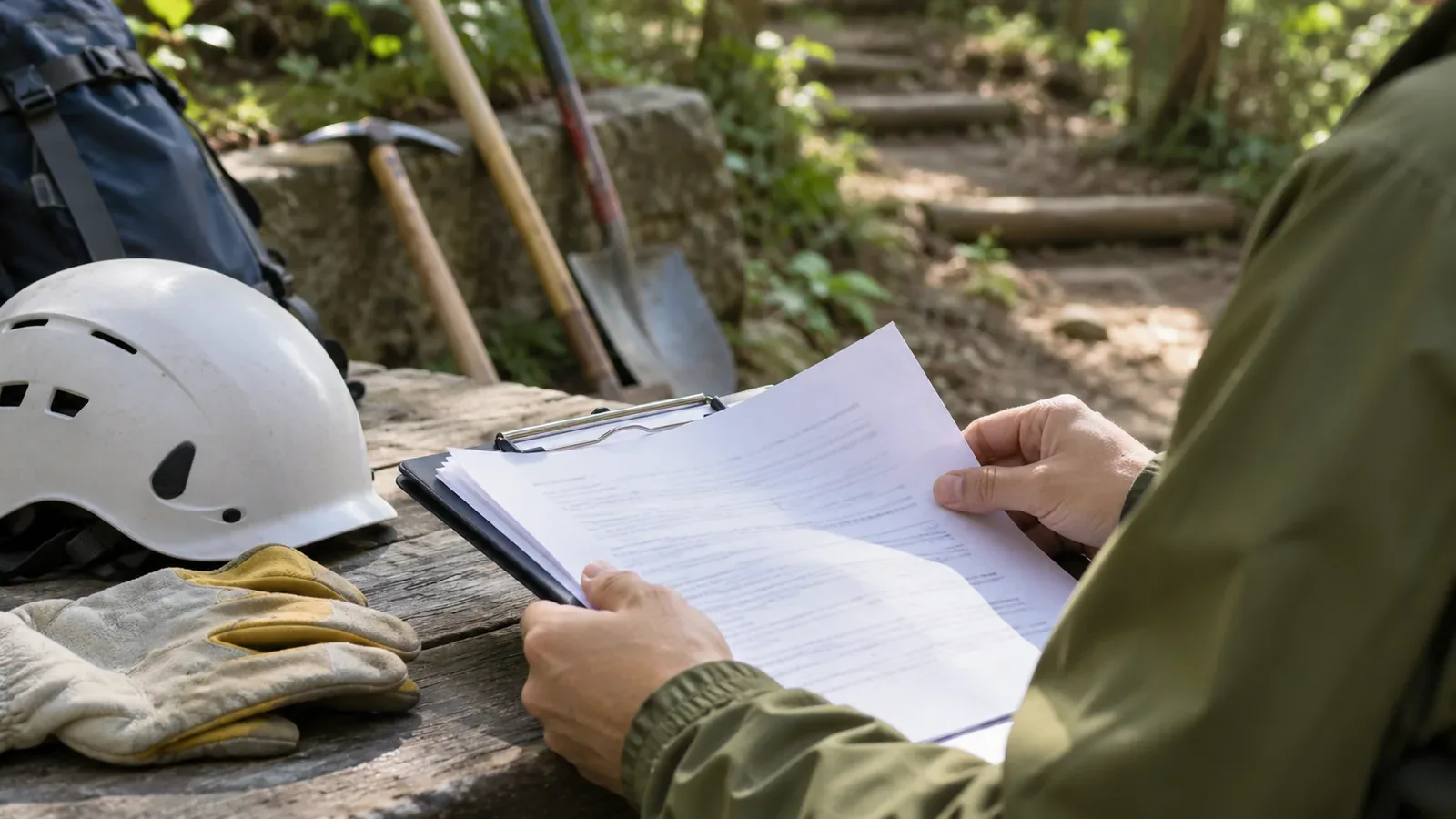
Trail work can involve hand tools and carrying materials. If a listing says insurance is available, check who is enrolled and which tasks and journeys it covers. Ask the organiser what you will do and read the insurance information and policy terms before deciding whether the arrangements suit you. You need a safety briefing as well as insurance.
Find out what work you will do
Check the listing for the work site, walking distance, tools, materials you may need to carry and experience required. The US National Park Service's Blue Ridge Parkway page gives examples such as stone and log steps, managing plants alongside a path and keeping water flowing. Ask your Japanese organiser what this particular activity involves.
Ask which tools participants will use, what they are expected to do and whether there is training or protective equipment. A listing that simply says “trail maintenance” could mean anything from clearing litter to carrying materials. Knowing what you will actually do helps you check the policy.
Consider your fitness, experience and travel time before deciding whether to join. For work you have not done before, ask about instruction or supervision ahead of time. On the day, wait for directions before you start. Insurance and a safety briefing serve different purposes.
Ask who is enrolled and what the policy covers
Ask whether the organiser holds a group policy or whether participants need to enrol individually. Note the policy name, its term, the enrolment deadline, when coverage starts and whom to contact. Confirm your own enrolment if you hear that there is insurance. For example, Japan's Ministry of the Environment said it would handle group enrolment in its January 2026 call for park volunteers at Kamikochi. That recruitment has closed, and other conservation activities may use different arrangements.
The Nagoya City Council of Social Welfare describes a volunteer policy that covers accidental injury and liability incidents during activities and includes travel to and from the site. This is a description of that specific scheme. Check the policy terms against your planned work to see whether trail maintenance or use of particular tools is covered.
Find out how the policy treats injuries to you and damage or injury you cause to someone else or their property. Read the policy or its guide for coverage limits, exclusions or deductibles, activities outside coverage and deadlines for reporting incidents. If you need clarification, describe the actual work to the insurance contact through the organiser.
Check coverage for travel and work separately
Check which periods and routes are covered when travelling to the meeting point, walking from the trailhead to the work site, working and travelling after the group disperses. If you plan to stay overnight beforehand or hike separately before or after the activity, ask the insurance contact how that is treated.
If you have personal hiking insurance, check whether its terms cover volunteer work, tools and liability. Ask about overlap or gaps between your own policy and the organiser's if necessary. Whether a product is sufficient depends on the terms and the activity.
If the meeting time or work date changes, check whether the coverage period and list of insured people will change as well. Before leaving, note how to cancel and whom to contact if there is an accident or someone becomes unwell.
Follow the briefing and stay within the assigned work
The Daisetsuzan National Park trail guidance describes assessing the causes of damage, considering measures, making repairs and checking the results. Leave the choice of method to those responsible for the work. Follow the organiser's instructions about tasks, locations, tools and protective gear.
Ask before starting if you are unsure. Use the tools you are assigned and dig or cut only where instructed. If the weather changes or you feel unwell, tell the person in charge and ease off, whether or not you are insured. Make sure everyone knows the emergency contact procedure and meeting point.
After the activity, follow the organiser's directions for returning tools and submitting reports. If there is an accident or property damage, tell the person in charge promptly and confirm what steps to take.
Describe the work when you ask about coverage
For conservation work with tools, find out what the work and travel involve. Ask the organiser and insurance contact who is insured, what is covered, what is excluded and whom to contact.
Coverage depends on the policy. Follow the safety briefing and stay within the assigned tasks.
References and sources
- Nagoya City Council of Social Welfare: guide to volunteer activity insurance
- U.S. National Park Service: Trail Maintenance, Blue Ridge Parkway
- Japan Ministry of the Environment: Daisetsuzan National Park trail maintenance guidelines, chapter 3 (March 2005)
- Japan Ministry of the Environment: additional recruitment of Kamikochi park volunteers (January 28, 2026)