
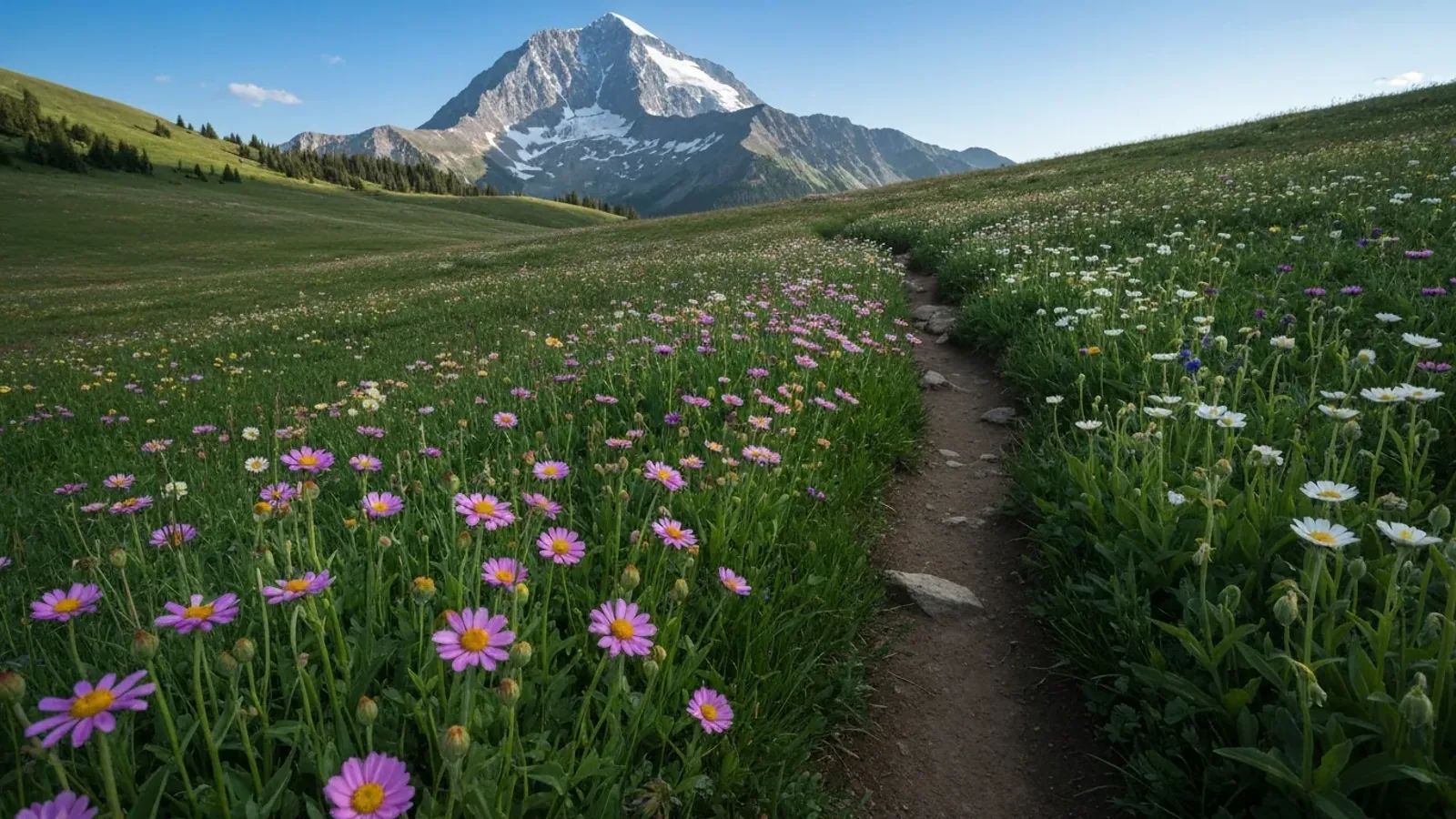
On hiking trails in Japan, uphill hikers generally go first, provided the descending hiker can give way safely. This is a courtesy, not a reason to make someone step onto an unstable edge or reverse through a dangerous section. Check the terrain, find a safe place to wait, and agree on who will move.
Uphill or downhill: who goes first?
The Japanese Alpine Club describes uphill priority as the usual trail etiquette. When yielding, choose a stable place on the mountain side of the path, away from the drop. If neither person can safely step aside, do not squeeze past each other simply to follow the convention.
On exposed or narrow ground, the available waiting places matter more than the direction of travel. Follow signs and instructions from trail managers or guides, and let someone already negotiating a difficult section reach a safe place before you enter.
Why uphill hikers usually have priority
Two practical reasons are pace and visibility. Climbing takes sustained effort, so an unnecessary stop can interrupt a hiker’s rhythm. A person looking downhill may also see approaching hikers and suitable passing places sooner. These are useful reasons to offer the climber a clear path when conditions allow.
They do not make every uphill movement safer than every downhill movement. Loose stones, slippery footing, large packs and limited space can affect either person. Avoid dislodging stones and do not assume that giving priority alone removes the risk of a fall or rockfall.
Where to wait: the mountain side, on secure footing
The mountain side means the side towards the slope, rather than the side facing a drop. Wait there only if the footing is secure and there is enough room for both packs to pass without contact. Keep away from crumbling edges and do not step into protected vegetation or beyond a barrier.
The Japanese Alpine Club’s family-hiking guidance makes this distinction on trails beside cliffs: the person who can safely move to the mountain side yields. That may be either the ascending or descending hiker. A mountain-side position is not a guarantee that a collision would be harmless.
Look for a passing place before the trail becomes too narrow. A short wait on a broad, stable section is preferable to trying to rearrange two people on an exposed ledge.
Ladders, chains and other places where passing is unsafe
There is no universal rule that descending hikers have priority on every ladder or fixed-chain section. Treat these places as sections that may need to be used by one party at a time, and follow any local instructions.
- If someone is already on the difficult section, wait at a safe point outside it until they have cleared it.
- Do not enter a narrow section from opposite ends at the same time or try to pass on a ladder.
- Do not demand that another hiker climb backwards or retreat over insecure ground just because you believe you have priority.
- When there is a long queue, agree on a small group moving through at a time, leaving breaks for people travelling the other way.
- If an uphill hiker wants a rest and offers to let others pass, accept the offer only when there is a safe passing place.
Use a few words before either person moves
A greeting makes it easier to agree on a pass. Say “I’ll wait here” or “Please go ahead,” and wait for the other person to acknowledge you. If a group is coming, tell the person waiting how many hikers are still behind you.
Ask before overtaking a slower hiker too. Give them time to reach secure footing instead of approaching closely or pushing past. On busy trails, brief, clear communication is enough; nobody needs to stop for a conversation.
What to remember on your next hike
Use uphill priority as a starting point. A secure waiting place, space for packs, and clear agreement come first. On ladders, chains and exposed stretches, let the person already committed to the section finish and follow the local guidance. Never force a risky move in the name of etiquette.
References and sources
- Japanese Alpine Club: Mountain Trail Etiquette (Japanese and English)
- Japanese Alpine Club: Family-hiking questions — passing on narrow trails (Japanese)
- Ministry of the Environment: Yakushima hiking precautions and etiquette (Japanese)
- Ministry of Agriculture, Forestry and Fisheries: Beginner hiking — on the trail (Japanese)