
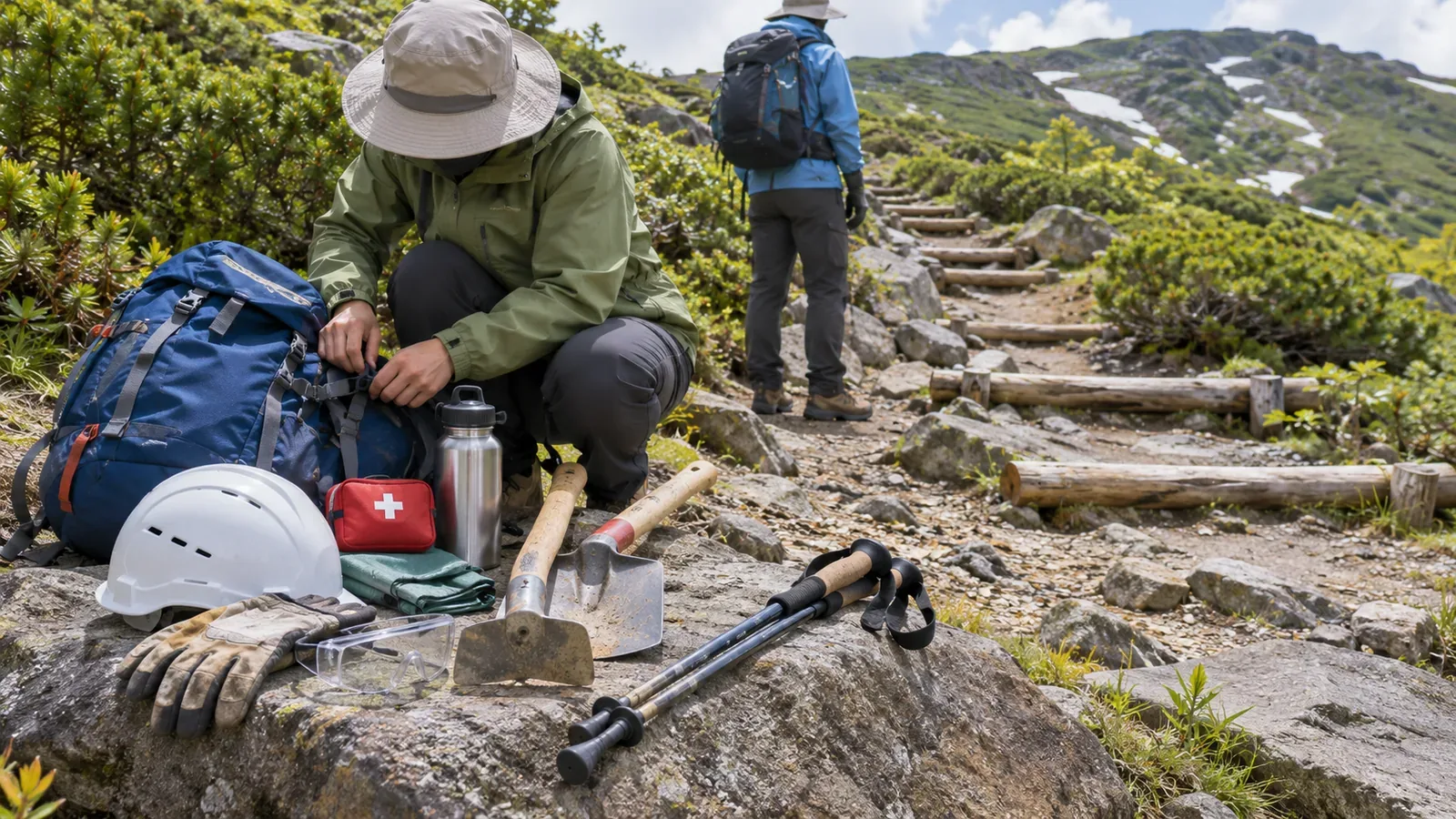
For trail volunteer work, ask the organiser what they provide, what you should bring and what the specific job calls for. Clearing sediment and carrying materials can be quite different. Read the listing, check what you have and ask about anything missing or unfamiliar before signing up.
The job determines the gear
The US National Park Service's Blue Ridge Parkway page describes work such as putting in log or stone steps, clearing drainage features and cutting back vegetation beside trails. New River Gorge's basic trail maintenance listing mentions clearing existing water bars, fixing drainage, trimming growth and removing fallen trees or branches. It lists brush cutters, rakes, shovels, pruners and other tools. The tools you use can vary from one workday to another.
The Daisetsuzan National Park draft maintenance manual asks planners to match work and equipment to participants' abilities. It expects the people planning the work to assess what equipment suits the tasks and participants. We suggest asking what the day's tasks are before applying, identifying the tools those tasks involve, then checking your own gear. This follows from the likelihood that clearing brush and cleaning drains call for different tools and ways to protect your hands.
Find out what is provided and what to bring
The New River Gorge listing says the park provides gloves, water and needed safety gear, while volunteers arrange their own transport. Training covers equipment use and maintenance standards. The listing asks for people who can work outside in changing weather and hike 2 to 8 miles a day, sometimes on rough, uneven ground.
That US park listing was last updated in February 2015, and we have not verified the current terms. Equipment arrangements for activities in Japan can differ. Since organisers are likely to provide different things, asking five questions in writing can prevent confusion on the day. Ask whether gloves, protective gear and tools are loaned or brought by volunteers, whether there is a tool briefing, what footwear, clothing and rain gear are required, how water, food and portable toilets are handled, and how to get to the meeting point. Before bringing your own blades or tools, get the organiser's approval. The US example provides training in tools and maintenance standards together.
Check safety arrangements as well as gear
The Daisetsuzan draft lists criteria for starting or stopping work, an emergency contact method, first-aid supplies and a designated leader. It asks organisers to take account of insurance in case participants are injured, without naming a policy or provider. This was a July 2018 draft for Daisetsuzan National Park. Procedures can differ elsewhere.
Pacific Crest Trail Association training in the United States also lists awareness of personal protective equipment (PPE), a job hazard analysis (JHA), a pre-work safety briefing (TSS), an emergency action plan (EAP) and the Ten Essentials. The material reviewed here did not give us a specific PPE list. It treats gear, briefings and emergency arrangements together. We suggest asking who calls off the work, how to get help in an emergency and how injury insurance works when you ask about gear.
Check your own equipment before leaving
The Daisetsuzan draft mentions trekking pole tip caps, portable toilets and taking rubbish out. The council's page also describes damage from pointed tips to soil and plants. You can check your own gear at home. On site, leave stones and walking routes in place unless the organiser's work plan and directions say otherwise.
Check the organiser's requirements and inspect your gear at home. We suggest making sure every trekking pole has a cap and checking for loose or damaged caps. Check that you have enough portable toilets for the length of the job and a bag for rubbish. Some calls, like New River Gorge's, give a walking distance as a guide. Be honest about how far you can walk in a day when you apply. Pack so you can reach what you need. Stop on stable ground without blocking the way before opening your pack.
Read Japanese recruitment notices in context
Gunma's 2026 call for Mount Tairappyo volunteers listed removing sediment from side drains, repairing damaged sections and carrying materials on pack frames. It asked for hiking boots or rubber boots, a separate rain jacket and trousers, work gloves, drinks, lunch and trail snacks. It said the office would contact volunteers the day before if the work was cancelled. The deadline and dates have passed. Read it as an example of how the tasks, packing list and cancellation instructions fit together.
Check four things in order. Ask what you will do. Then find out who provides gloves, protective gear, tools, water and transport. Ask who decides whether to stop, how to contact help and what the insurance covers. Finally, check items such as pole tip caps and portable toilets at home. The sources show that organisers match equipment to the job and the volunteers' abilities, and plan for safety alongside gear. We did not establish specific equipment standards, insurance types or current recruitment contacts from these sources. Check those directly with the organiser.
References and sources
- U.S. National Park Service: Trail Maintenance, Blue Ridge Parkway
- U.S. National Park Service, New River Gorge National Park & Preserve: Basic Trail Maintainer
- Japan Ministry of the Environment, Kamikawa, Higashikawa and Kamishihoro ranger offices: draft Daisetsuzan trail maintenance procedures manual (July 2018)
- Pacific Crest Trail Association: Trail Skills College Field Reference, Course 100, Intro to Trail Maintenance (January 2019)
- Daisetsuzan National Park Liaison Council: Technical Guidelines for Mountain Trail Maintenance in Daisetsuzan National Park
- Gunma Prefecture: volunteer recruitment for Mount Tairappyo trail maintenance (June 10, 2026)