
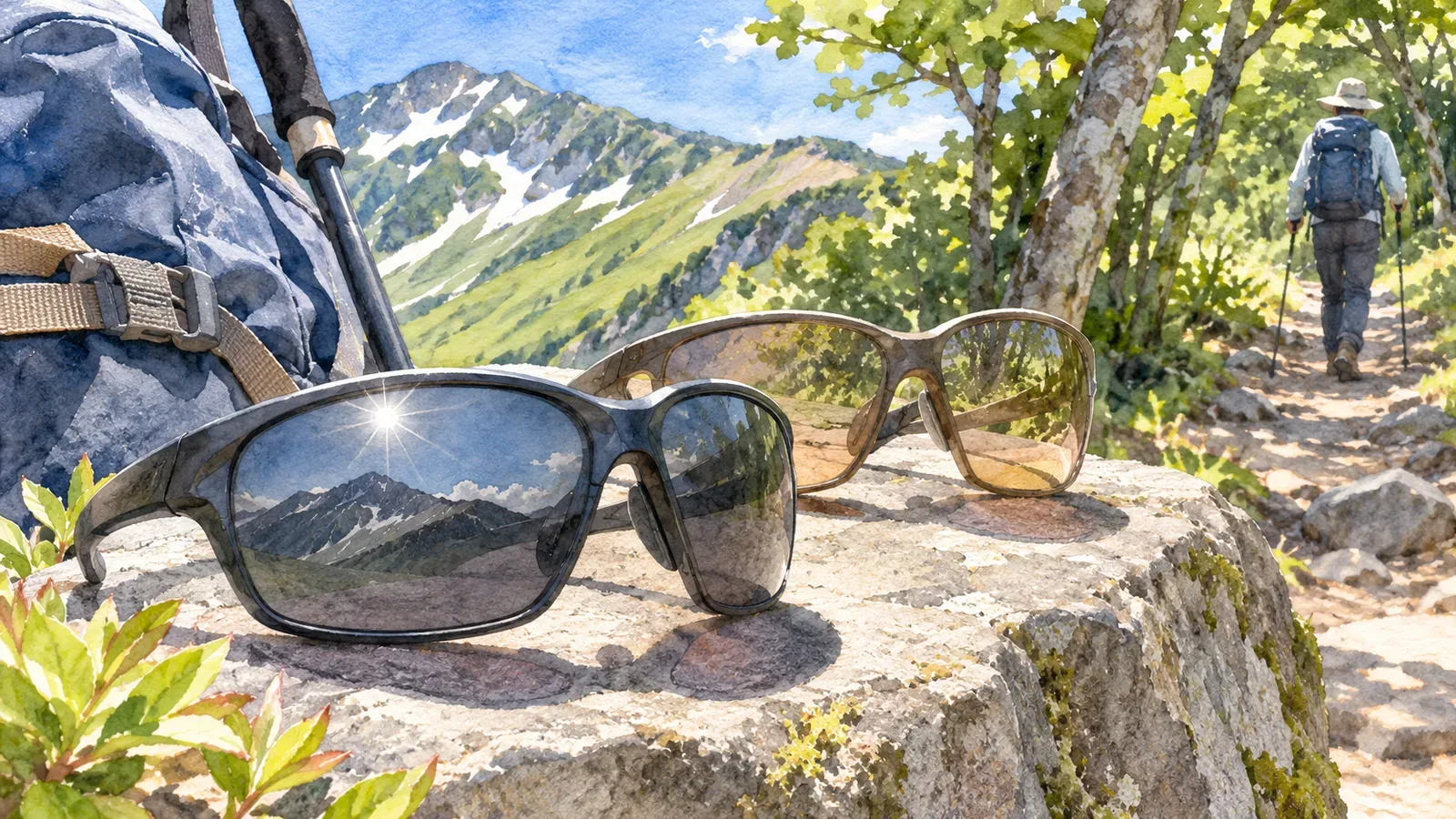
Do you expect darker sunglasses to block more UV? Lens darkness and UV transmittance are different properties. Before buying, check both the visible light transmittance that affects glare and the UV information. Consider what shape and fit will work on the trail.
Separate lens darkness from UV transmittance
Tests by Kanagawa Prefecture and guidance from the WHO show why lens darkness alone cannot tell you how much UV a lens blocks. Some light-tinted lenses block UV, and dark lenses still need their specifications checked. Consider how much visible light the lenses let through and how much UV they let through separately.
Kanagawa Prefecture tested 22 types of eyewear in October and November 2019. All met their stated UV transmittance, but the measured visible light transmittance for some differed from the label by more than the allowed tolerance. The page was updated in 2026, years after the testing. Those results cannot guarantee the performance of every product now on the market.
Japan’s Consumer Affairs Agency lists visible light transmittance and UV transmittance as separate items in its sunglasses labeling guide, which excludes corrective eyewear. When buying, read the specifications and precautions on the product or packaging as well as looking at the tint. Ask the retailer or manufacturer about unclear labels instead of guessing numbers from advertising. If you wear prescription glasses, ask about both vision correction and UV protection.
Visible light transmittance tells you how bright things will look
Visible light transmittance expresses how much visible light passes through. In general, a lower number means less light gets through and the surroundings look darker. Kanagawa Prefecture also recommends choosing a tint based on where you will use it, fit and your preferences.
In the mountains, sunny open stretches alternate with forests and shaded sections. Dark lenses may cut glare while making it harder to see steps and the trail underfoot in darker places. If you can try them on, check how well you see in both brighter and darker surroundings.
A visible light transmittance number cannot identify one lens that will work for everyone. Eyesight, everyday glasses, weather and intended use all affect what you see. Ask an optician if needed and prioritize being able to see well enough to walk safely.
Check shape and fit too
Along with the lens specifications, check that the frame fits your nose and ears comfortably and stays in place while you walk. Consider how it fits with your hat, helmet or rain hood. Make sure you can adjust it at a safe stop if sweat or rain makes it slip.
Japan’s environment ministry explains that small lenses or poorly fitting frames may give insufficient protection from UV coming in from the sides, above or below. Check the gaps around your face and field of view as well as lens transmittance. With a hat, check whether one pushes the other out of place.
If the lenses are scratched or dirty, check how well you can see and whether they are still usable. Follow the cleaning instructions and avoid rubbing hard or trying your own chemicals. The Consumer Affairs Agency’s label guidance also says to keep sunglasses away from high heat and metal objects that can scratch them. Keep hard objects away from the lenses even inside the case.
Read the label in light of mountain conditions
The Japan Meteorological Agency explains that its UV forecasts account for the reflection of grass and soil. Places with highly reflective surfaces can have stronger UV than forecast. The sun can also shine through cloud briefly, so do not decide on protection based on cool air or the appearance of the sky alone.
Sunglasses are one part of sun protection. Combine them with a hat and clothing. Along with how well you can see through the lenses, practice putting them on and taking them off without dropping them and adjusting them safely when you enter a darker area. Stop somewhere safe instead of handling them while walking.
Product labels and standards help when buying, and you still need to check the fit and condition during use. If you are troubled by glare or have concerns about your vision, ask an eye doctor or optician about your situation.
In short: read the two transmittance figures separately
Check UV and visible light transmittance separately when choosing sunglasses. Try them in different light, check your field of view and fit, and see how they work with your other equipment.
References and sources
- Kanagawa Prefecture: Product Tests on UV Transmittance and Other Sunglasses Properties
- Japan Consumer Affairs Agency: Sunglasses Labeling Guide
- Japan Meteorological Agency: Guide to UV Information
- Japan Ministry of the Environment: UV and Environmental Health Handbook 2020
- WHO: Radiation — Protecting against Skin Cancer