
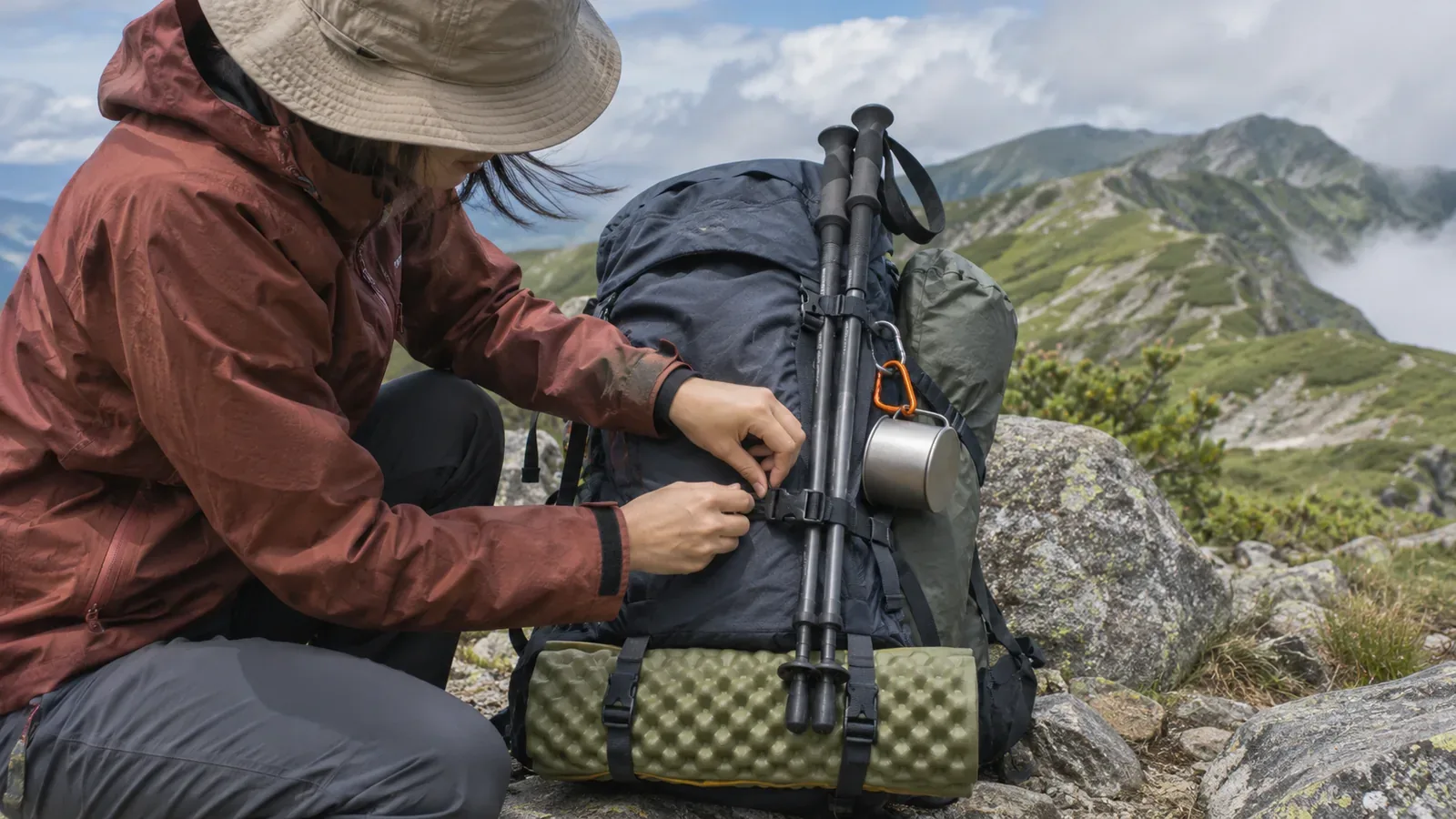
Attaching a mat or poles to the outside leaves room inside your pack, but exposes the gear to wind and movement. Check the attachments before leaving and put the pack on to see what swings or sticks out. Make sure gear is secure, clears nearby obstacles and can be removed safely.
Check what goes outside and where it attaches
List the items you plan to carry outside and check which attachment point supports each. Follow any instructions the pack or gear maker provides. Before adding a cord or strap, check whether the point is meant to bear the load.
Inspect straps, buckles, loops and gear bags for tears and wear. Close each fastener completely and check gently that it does not loosen after adjustment. If something may be damaged, contact the maker or change how you carry it. Leave enough time before departure to do this.
Even light gear can be awkward or swing if it presents a large surface to the wind. Osprey advises putting gear inside where possible to reduce the amount that swings outside. Reassess what needs to go outside and what fits inside. Fewer outside items means fewer attachments to check.
Put the pack on and check movement and clearance
Load the pack as you will for the hike and put it on in a level, safe place. Walk slowly, crouch and lean forward as usual. Check whether the outside gear swings. Ask a companion to watch from behind, or set the pack down and see whether anything shifted.
Check how far gear sticks out to either side and above or below. Imagine passing along a narrow trail or under branches. If you cannot see an end, check where it goes when you turn. Reposition or stow items that could catch.
Test whether an item gets trapped under the pack when you set it down or blocks gear you need at a break. If an attachment needs opening repeatedly, choose an arrangement that makes it easy to fasten again each time.
Check gear as the wind changes and during breaks
The Japan Meteorological Agency explains that its mean wind speed is a 10-minute average and that gusts can be higher. Even if the forecast looks calm, allow for local gusts and terrain and check attachments. There is no single wind speed at which outside gear is guaranteed safe.
Keep mats and clothing removed at a break under control so they cannot blow away. Before shouldering the pack again, have the wearer or person responsible check that each fastener has been closed. If sharing group gear, tell everyone who attached what.
If strong wind threatens to blow gear away, put yourself and the group first. Avoid chasing it down a dangerous slope. If it is hard to stay upright, reassess the hike. Securing the load may not solve the problem. Before turning back, check that the return route is safe.
Check again early in the hike and after getting home
In addition to checking before departure, stop in a safe place after you start to look for loose straps or tilted gear. Recheck the position and attachments after taking things out. Doing this before entering strong wind saves work in an exposed spot.
Salomon advises using compression straps to steady the load and securing outside items, with care to avoid overtightening and damaging the contents. If unsure how to adjust your gear, read its manual and ask the maker if needed. Gear of different shapes and materials may need different attachment methods.
At home, remove gear and check for mud, moisture and wear at attachment points. Follow each maker’s care instructions. Deuter advises drying a wet pack and rain cover before storing them. Use washing and drying methods appropriate to your product. Note what swung or was hard to reach so you can pack it better next time.
Test the pack on your back after securing everything
Check the intended attachment points and fasteners, then put the pack on and move around. Recheck fasteners after setting out and after breaks. Change the route if wind makes it unsafe to walk.