
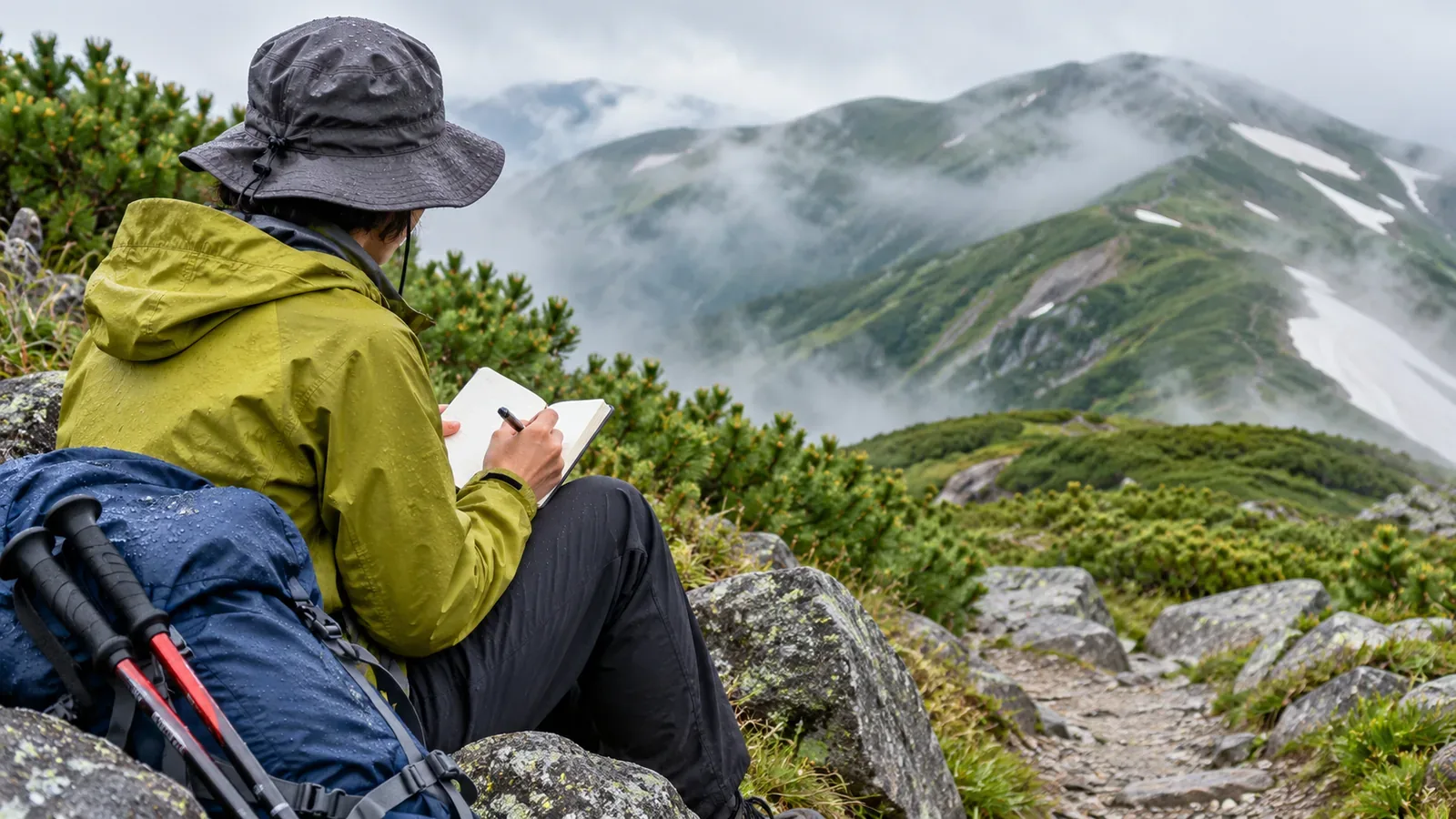
When plans change, we suggest recording how you made the decision, including whether you followed the steps you had agreed on. As of October 28, 2026, several public sources we reviewed recommended turning back, cancelling or postponing. The log below is an editorial suggestion for what to do after making that decision.
What public guidance says about changing plans early
Hiroshima Prefectural Police advise turning back when in doubt and postponing when there are concerns about the weather or your health. If poor visibility or illness develops, reassess and stop early. Seek help if continuing would be unsafe. If a hut or trail is closed, consider changing mountains, cancelling or postponing.
Nara Prefectural Police put realistic planning and readiness to turn back among their basic safety measures. Atsugi Police Station asks hikers to assess their health, the weather and local conditions on the day and to cancel or turn back if needed. The National Police Agency’s 2024 overview also recommends a schedule with time to spare, knowing the hazards and escape routes, and sharing the plan. If you think you may have lost the trail, assess the situation early. Retrace your steps to the marked trail if you can do so safely.
These sources recommend changing plans when conditions call for it. A form attached to the summer advisory published by the Japan Sports Agency includes fields for severe weather, emergencies and escape routes. A cancellation or turnaround puts that part of the plan into practice. We suggest noting how it worked so you can improve the next plan.
Seven things to write down after a change of plans
One sheet is enough. Fill in these seven items after you get down or return home.
1. Type of change: postponement, cancellation, route change or turning back during the hike. 2. Trigger: someone’s condition, weather, conditions on the ground or information such as a closure. These categories follow the police advice above. 3. Time and place: the day before, that morning or at a specific point on the hike. 4. Check against the plan: did it match a condition you had agreed on, or was it unexpected? 5. Messages and steps taken: did you tell the family or colleagues who had the plan? The advisory’s form calls for a descent report to the recipient. Check the recipient’s instructions for reporting a cancellation. 6. Way back: a previously checked escape route or the trail you came up? 7. What to add next time: another trigger, a spare day or a note on severe weather and emergencies.
One line per item is enough. Include a concrete detail in items 2 and 4 so you can picture the moment later. For example: “The latest forecast the night before still left us uneasy” or “Cloud dropped and visibility worsened.”
Take notes, photos or use a screen only when stopped on stable ground where others can pass. If there is no suitable place, write after the descent. If poor visibility or illness leaves you unable to move safely, seek help first. Record the decision once you have made it and are safe.
Review the decision by the steps you took
Ask three questions. Did we record when and where we decided? Did we describe the trigger in our own words? Did we note which calls, messages or return steps we could and could not carry out? For a postponement before departure, the way back is not applicable. If you had no reception, record that circumstance. The purpose is to preserve what you knew and what you can use next time. Record events that your plan did not anticipate, too. A score cannot certify a decision or its safety.
Keep a separate line for what happened later. If the weather holds after you turn back, keep the account of the conditions you faced when deciding. Revising that entry in light of the outcome makes it harder to learn what to plan for. If you think you might have turned back too early, put a possible adjustment under item 7.
Two fictional examples to try on paper
First, you check the forecast the night before and remain uneasy. After talking to your companions, you postpone until the following week. Item 1: postponed. Item 2: weather. Item 3: the previous evening. Item 4: the conditions agreed before departure did not cover this. Item 5: told the family who had the plan. Item 6: not applicable. Item 7: add a backup date to the plan if the weather looks uncertain. You can complete the log even when you never set foot on the trail.
Second, someone feels progressively worse on the hike, stops where the footing is stable, tells the others and decides to return from a junction checked in advance. Write after getting down. Item 1: turned back. Item 2: physical condition. Item 3: a junction on the trail. Item 4: the plan covered it, but the threshold was vague. Item 6: used the escape route checked in advance. Item 7: add one line about which symptoms should trigger a change. Finding a vague condition in item 4 gives you something to improve.
Pick a past hike and try the same form. Mark the return route “not applicable” if you postponed before starting. Use “I don’t remember” if you cannot recall, or “check next time” if you discover you missed something in the research. Item 6 is the route you actually used. Look back at your original plan if you need to know which alternatives you had checked. As records build up, see whether you were concerned about health, weather or conditions and choose what to check for next time. Use the log to learn, and allow yourself to turn back whenever you are uneasy.
Use the record to improve your next plan
Public guidance recommends cancelling, postponing or turning back if concerned, checking escape routes and sharing a plan. The seven items and three questions give you a way to record what happened afterward. Even on a day when you never reached the summit, putting the conditions into words and recording the contact and return steps can improve your next plan. Write from a safe stop or after the descent. Make the decision first.
References and sources
- Hiroshima Prefectural Police | Safe and enjoyable summer hiking
- Nara Prefectural Police | Mountain incident prevention
- Atsugi Police Station, Kanagawa Prefectural Police | Preventing mountain accidents
- National Police Agency | Overview of mountain incidents in 2024, June 19, 2025
- Central Council for Mountain Accident Prevention, published by the Japan Sports Agency | Summer hiking advisory, July 2021