
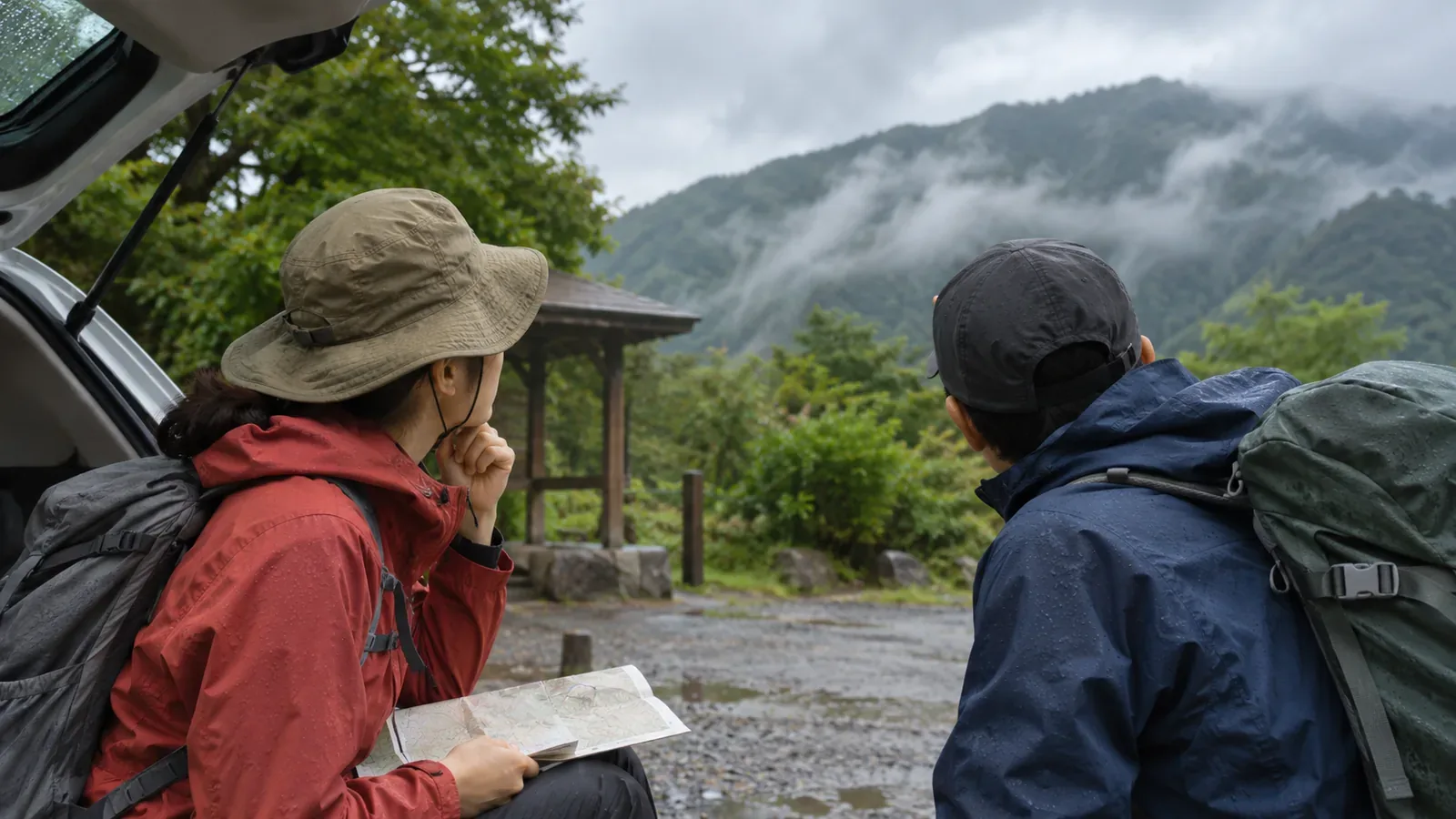
By the night before your hike, write one sentence that says what you’ll do if you notice a specific condition. Having it in writing can take some pressure off the decision on the day. This is an editorial suggestion. As of October 28, 2026, guidance from Hiroshima Prefectural Police and Atsugi Police Station urged hikers to cancel, postpone or turn back based on their concerns and conditions on the day. Here we turn their examples into practical if–then statements. If you include a time or elevation, base it on something specific to your trip, such as your itinerary or an official notice.
What the authorities ask you to consider before turning back
Atsugi Police Station advises making a realistic plan for your fitness and experience and sharing it with family or others. On the day, assess how you feel, the weather and the conditions on the ground, and be ready to cancel or turn back. Hiroshima Prefectural Police urges hikers to avoid pressing on when they have doubts. Nara Prefectural Police includes realistic planning and a willingness to turn back among its recommendations for staying alive.
The guidance gives examples of when to reconsider. Hiroshima Prefectural Police cites hut and trail closures, poor visibility and feeling unwell. The sources give no universal cutoff time, elevation or template for a condition. Our suggestion is to adapt the examples to your plan and write down what you will notice and how you will respond. Use the sentence to support your judgment on the day and stay alert for hazards you did not anticipate.
Decisions before departure and checks on the trail
Hiroshima Prefectural Police recommends checking weather and route conditions before entering the mountains, and locating hazards and escape routes. Check for hut or trail closures and consider changing the mountain, cancelling or postponing. If the weather or your health gives you cause for concern, consider another day. On the trail, poor visibility from bad weather, low cloud or fog can make it easier to get lost, trip or fall. The police advise ending the hike early when visibility is poor or you feel unwell. The National Police Agency’s 2025 overview likewise calls for up-to-date weather information and advance checks of hazards and escape routes, and notes that poor visibility and ill health raise the risk.
We suggest making two sets of checks, one before departure and one to repeat on the day. The night before, consult the latest forecast and the notices from trail and hut operators. Feeling unwell or noticing that something is off already matters before you leave. Visibility, trail conditions and how you feel can change during the hike, so keep them on the list for the day itself. Address doubts you can resolve at home before travelling to the trailhead. The two sets of checks are an editorial suggestion.
Write one sentence that links what you notice to what you’ll do
Pair something you can observe or feel with the action you’ll take. Include things only you can feel, such as discomfort or unease. “If I still have concerns about the forecast, huts or trail, I’ll stay home and consider postponing.” “If I feel unwell before leaving or at the trailhead, I won’t start the hike.” “If low cloud or fog makes me unsure of the direction, I’ll stop and check my location and footing.” Before retracing your steps, make sure you can follow the way back safely. If you cannot establish where you are or how to return, avoid wandering and call for help or rescue.
Read advice to retrace your steps when you suspect a wrong turn in the context of Hiroshima Prefectural Police’s separate advice to stay put and seek help when you cannot establish your location. Assess whether you can safely find your way back. You can call off a hike based on how you feel, even when others cannot see what is wrong. Adapt the examples to your own route. If you add a time or elevation, draw it from the itinerary, an official notice or another source specific to your trip.
For a group hike, write conditions that work for the participant who is least confident in their fitness. This is our adaptation of Hiroshima Prefectural Police guidance to plan around that participant and leave ample time for breaks. Read each sentence aloud the night before and see if you can state the action in a few words. If that is difficult, clarify what you will observe or what you will do.
Share the conditions and decide how and where to check them
Hiroshima Prefectural Police recommends giving a copy of your hiking plan to family or your workplace. The National Police Agency also says sharing a plan or hiking notification with them can help spot gaps. We suggest attaching your written conditions to the plan you share. If your plans change, someone who knows the conditions can better understand why.
Decide how you will check the conditions. Atsugi Police Station recommends carrying a paper map alongside your phone, charging the phone and taking a power bank. The National Police Agency says phones with GPS can help when calling for rescue, but coverage is limited in many mountains and battery life matters. Check connectivity, positioning and battery power separately. To try your offline map at home, follow the official instructions for the app and device. Apple says Wi‑Fi can still be used in Airplane Mode, so check the connection itself. A successful test at home leaves battery life and phone coverage on the mountain to be assessed separately.
To check a map or screen, stop somewhere with stable footing where you can leave the trail clear. If you cannot find a suitable place, wait. Pause before checking, taking photos or making notes.
You can also choose decision points the night before. The guidance asks hikers to locate hazards and escape routes in advance. Check your map for somewhere before a hazard where you might be able to stop and compare conditions with your plan. This leaves room to abandon that section or turn back before entering it. Choose the point using the map and reassess its suitability on the ground.
Write your conditions the night before and check them on the trail
Before leaving, write your if–then sentences for decisions you can make the night before and checks you need to repeat on the trail. Use the examples in the guidance, including health, weather, visibility, conditions on the ground and hut or trail closures. Any numerical thresholds need a source specific to the trip. Read the conditions aloud the night before, attach them to your plan and share it with family or your workplace. Check from a place where you can stop safely. Leave prepared to postpone or turn back when a condition is met.
References and sources
- Hiroshima Prefectural Police: Safe and enjoyable summer hiking
- Atsugi Police Station, Kanagawa Prefectural Police: Preventing mountain accidents
- Nara Prefectural Police: Mountain accident prevention
- Japan National Police Agency, Community Safety Planning Division: Mountain incidents in 2025
- Apple: Using Airplane Mode on iPhone, iPad, Apple Watch and Apple Vision Pro