
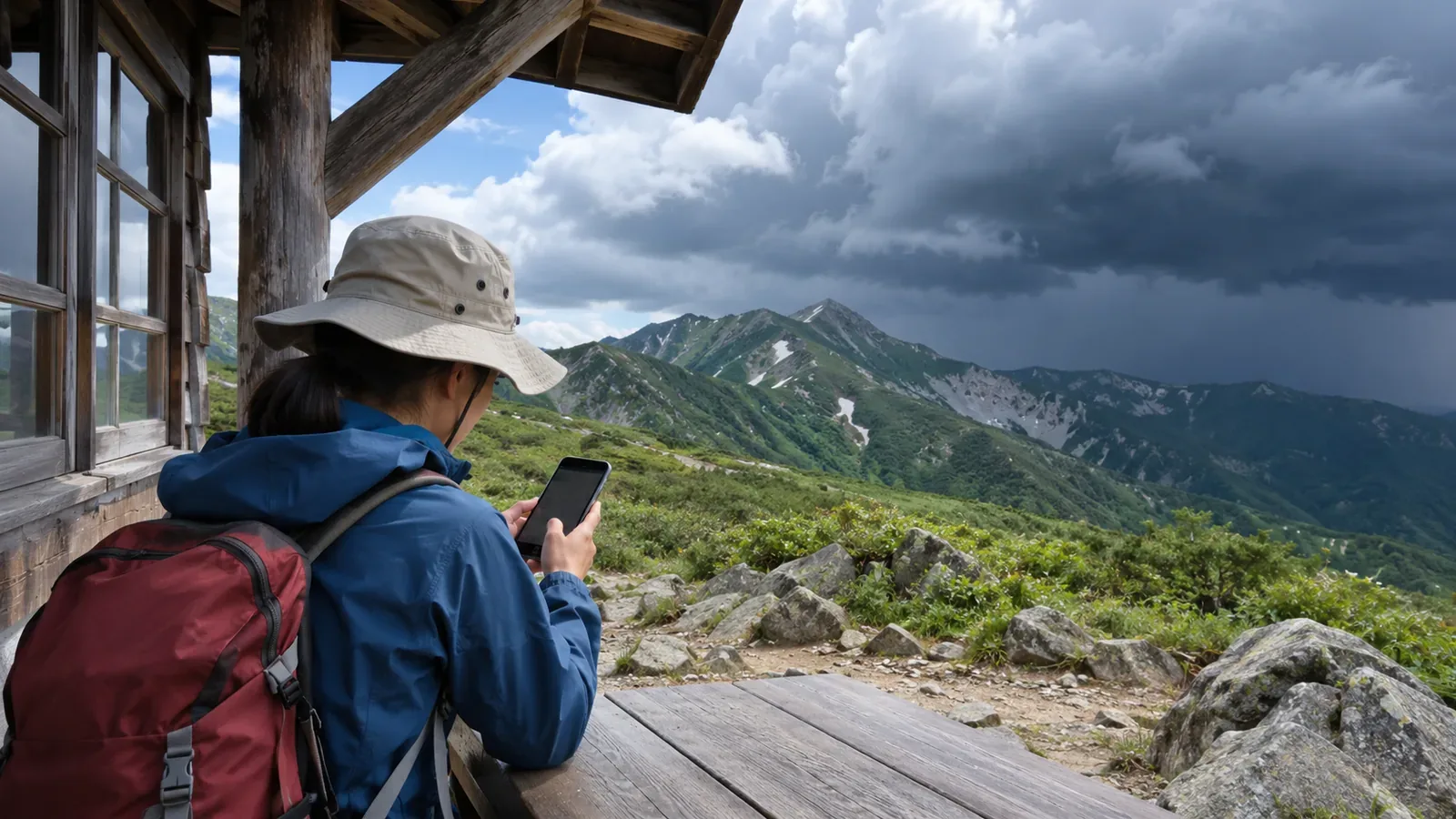
Reassess lightning risk the evening before, the morning of the hike and while you are out. Here is an order for checking the weather and thinking about shelter, based on public guidance from the Japan Meteorological Agency (JMA) and Society of Atmospheric Electricity of Japan available as of October 27, 2026. The sources are general, so we identify our own suggestions for hiking.
What the evening forecast can tell you
When lightning is expected, JMA forecasts can mention thunder and the outlook can describe an unstable atmosphere. The evening before, look for these phrases and check which area and time they cover. Regular prefectural forecasts come out at 05:00, 11:00 and 17:00, with additional revisions when the weather changes abruptly. Thunder advisories are issued as needed. Check the latest information again before leaving.
The absence of an evening advisory leaves open the possibility of one the next day. In its guidance on information issued in stages, the JMA says advisories are issued several hours before damage is expected. This can sometimes mean the night before. Use the previous day’s and morning forecasts to see the possibility of lightning, then reassess with advisories and the latest information.
Here is our suggestion. In the evening, write down when you expect to be on ridges or near summits and agree on what to do if lightning is expected then. Tired hikers may be more inclined to stick to the plan. For example, agree with your group that if the morning forecast mentions thunder, you will shorten the hike or reconsider setting out.
Three things to check in the morning and before leaving
The JMA recommends checking the forecast and thunder advisories before leaving through television, radio, the internet or another source. Check three things: whether the forecast or outlook mentions thunder or an unstable atmosphere, whether a thunder advisory has been issued, and whether the Lightning Nowcast predicts level 1 or higher.
The Lightning Nowcast runs continuously whether lightning is occurring or not. It analyses intensity and potential on a 1 km grid, updates every 10 minutes and forecasts 10 to 60 minutes ahead. If level 1 or higher is forecast before leaving, the JMA advises planning for the possibility of lightning within an hour.
The precipitation, lightning and tornado nowcasts show separate phenomena. Open the Lightning Nowcast itself as a routine check so the movement of rain clouds does not distract you from the lightning outlook.
Reassess on the trail using activity levels and changes in the sky
Think about what action each level calls for. Level 1 means rain clouds may become thunderclouds. Plan for possible lightning within an hour. If shelter takes time to reach, act early at a thunder advisory or level 1. At levels 2–4, cumulonimbus clouds are already present and lightning can strike at any time. Seek shelter immediately inside a suitable building or another safe place.
A map without an activity level offers no assurance of safety. Storm clouds can rapidly develop in an unmarked area and the monitoring system misses some discharges. Seek safe shelter promptly if you hear thunder or see signs that a storm is approaching, whatever the nowcast shows.
Plan for stretches where you cannot refresh the data. Practise finding the analysis and forecast valid times in your usual service, and check for the latest version when you have coverage. A saved screenshot contains only the observations available when it was issued. If you disconnected to save battery, confirm you are back online and have received fresh data. When an update is unavailable, use the broader forecast and the time needed to reach shelter to decide whether to shorten or cancel before entering the dead zone.
Shelter in the mountains and decisions about resuming
The JMA explains that people are more exposed to strikes on summits, ridges and open ground. The Society of Atmospheric Electricity of Japan also warns about lightning jumping from trees to people beneath them, including in woodland. Think early about reaching a safe building or similar shelter. Lower ground still needs checking. Stay on an identifiable route with sound footing rather than heading off trail into a ravine or stream bed.
Choose shelter by checking the structure and access. The JMA lists reinforced concrete buildings, enclosed cars, buses and trains as relatively safe. The inside of a wooden building generally offers protection too. The agency advises staying at least 1 m from electrical appliances, the ceiling and walls. Huts and pavilions vary in construction. Check opening hours, entrances and other information from the operator before counting on a roof.
The JMA describes emergency outdoor protection when you cannot enter a safe space. A fixed distance from a tall tree or pole does not establish safety, and a strike nearby can harm people through the ground. A topographic map cannot show how a structure is grounded or protected against lightning. Avoid treating marked poles or buildings as verified protective areas. Decide early whether to enter sections far from suitable shelter.
The two waiting periods apply to different situations. If you had to take temporary cover outdoors because you could not enter a safe building or similar space, the JMA says to wait at least 20 minutes after lightning activity stops before moving to a safe space. The Society of Atmospheric Electricity of Japan says a paused outdoor event may resume after 30 minutes without further thunder. Neither source sets a rule for resuming a hike. Check current weather information for nearby storm clouds before resuming. The society also advises people to cancel, postpone or go home as necessary during outdoor activities at sea or in the mountains.
Start with the evening forecast and plan to reassess after leaving
Use the evening forecast for an initial look at lightning risk, then revisit the decision with morning advisories, the Lightning Nowcast and changes in the sky along the way. Prepare three notes to make decisions easier: when you will be on ridges or near summits and how you will react to lightning information there, which products to check in the morning and where and when you will have service, and possible shelters, their construction and the stretches without suitable shelter.
Agree before leaving how the group will discuss turning back or calling off the hike. This makes it easier to raise concerns along the way. Act earlier if you hear thunder or notice changes in the sky, even before the agreed criteria are met. Check the latest information for the area and revisit the previous evening’s decision on the day.
References and sources
- Japan Meteorological Agency, Using the Lightning Nowcast and its limitations
- Japan Meteorological Agency, What is the Lightning Nowcast?
- Japan Meteorological Agency, Protecting yourself from sudden heavy rain, lightning and tornadoes: Check weather information often
- Society of Atmospheric Electricity of Japan, How to protect your life from lightning
- Japan Meteorological Agency, Staying safe from lightning
- Japan Meteorological Agency, Using weather information issued in stages
- Japan Meteorological Agency, Weather forecasts