
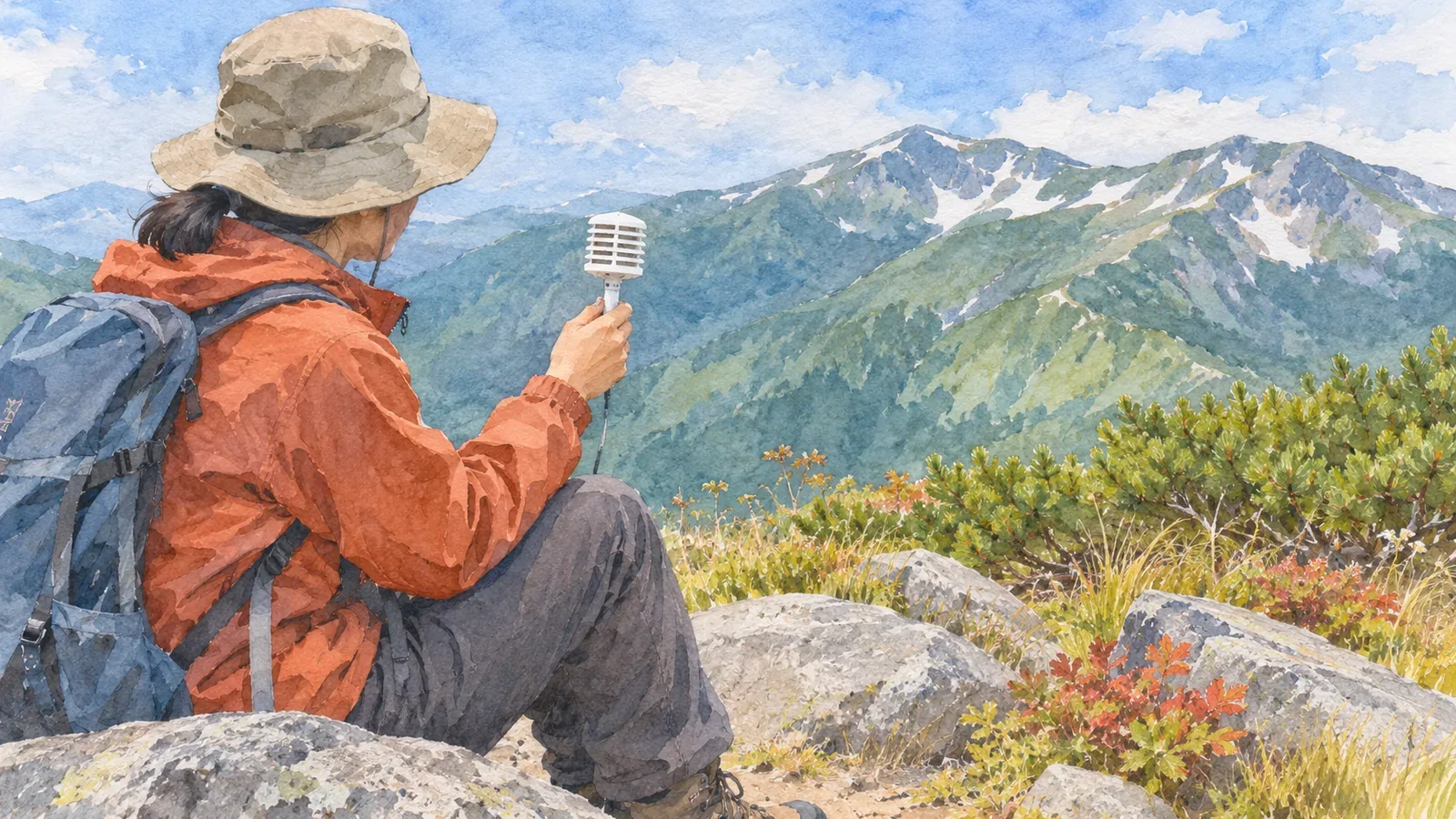
Record temperatures logged on the move separately from readings taken after stopping in steady conditions. A thermometer takes time to follow changes in the surrounding temperature and can be affected by sunlight and body heat. A stable display does not prove it has reached the true air temperature. Check the manual for placement and settling time before leaving, and read it on the mountain somewhere safe.
What official observers control when measuring air temperature
The Japan Meteorological Agency’s standard is an electric thermometer 1.5 m above grass at a sunny, well-ventilated site. The thermometer sits out of direct sunlight in a ventilated shield. An electric fan at the top continuously draws outside air in from below. The Okinawa Meteorological Observatory explains that the instrument measures the change in platinum’s electrical resistance and converts it to temperature. The thermometer and hygrometer sit inside a stainless-steel shield that guards against precipitation and sunlight, with air moved by a fan.
Official observations use both sun protection and airflow. A portable thermometer also requires care. CASIO’s Operation Guide 5463 lists body heat, sunlight and moisture as influences and advises removing the watch and placing it somewhere ventilated out of direct sun. The weather agency’s observation guide also identifies siting conditions and instrument checks as factors in data quality.
What the time constant tells you about lag while moving
BARANI DESIGN models how the sensor gradually follows a sudden temperature change. The time constant is the time it takes to reach about 63.2% of that change. In the model, five times the constant gives about 99.3%. This does not set the waiting time for each portable thermometer. For a product’s response-time specification, check the test conditions and how much of the change it represents.
In a model of lag alone, readings are lower while the air temperature rises and higher while it falls. On a hike, sunlight, body heat, wind and moisture can also affect the display, so the model cannot determine the direction of error on its own. Avoid using the time constant of a different instrument as the waiting time for yours.
For example, right after moving a device from warmth into cold, its reading may still reflect the earlier conditions. Moving it from sun to shade changes the sunlight on the case as well as any difference in air temperature. This move alone cannot measure the sensor’s response time. Record what changed before and after.
Check the manual and watch how the display changes before leaving
Check the manual for measurement position, wait time, operating temperature and water resistance. CASIO says its 5463 takes about 20–30 minutes to reach the surrounding temperature after removal from the wrist. The first reading, by contrast, appears after about one second. Time to display and the update interval are different from the time the case takes to reach the air temperature.
If you try this at home, follow the manual and note when you set the device down and when you took several readings. An unchanged value can reflect rounding or update intervals and does not prove accuracy. Avoid taking that time as a fixed wait on the mountain. Consider the wind and placement on the day and avoid waiting in cold or rough weather just to measure.
You can mark safe places to stop and take a reading on your itinerary. There is no need to leave your planned route to measure. Note any change in sunlight or thermometer position. Keep your attention on the trail while moving. If using automatic recording, check the function and sampling interval before you leave.
How to label the readings and interpret them
With each number and time, identify it as a reading while walking or after stopping and settling. Also note how long you waited after stopping, whether you were in sun or shade, whether there was wind or rain, and whether the thermometer was attached outside the pack. These details help you assess whether differences may involve lag, sunlight or placement.
Differences between walking and stationary readings include more than lag. One comparison cannot quantify the instrument’s delay. Record how the display changed for each setup and avoid adding or subtracting the difference as a fixed correction on a different hike.
Note any rain or moisture. CASIO’s temperature precautions advise drying the case, but conditions for use in rain vary by model. When comparing with official readings or another person’s device, check location, time, height, sunlight and placement. A difference alone cannot tell you whether a device is faulty or how large the error is.
In short: treat readings on the move as approximate and subject to lag
Settling time differs from the time it takes a reading to appear or refresh. Check your own manual and record walking and stationary readings with the conditions. Waiting may leave some bias from sun or body heat. Put safety before a measurement and stop only where it is safe to do so.