
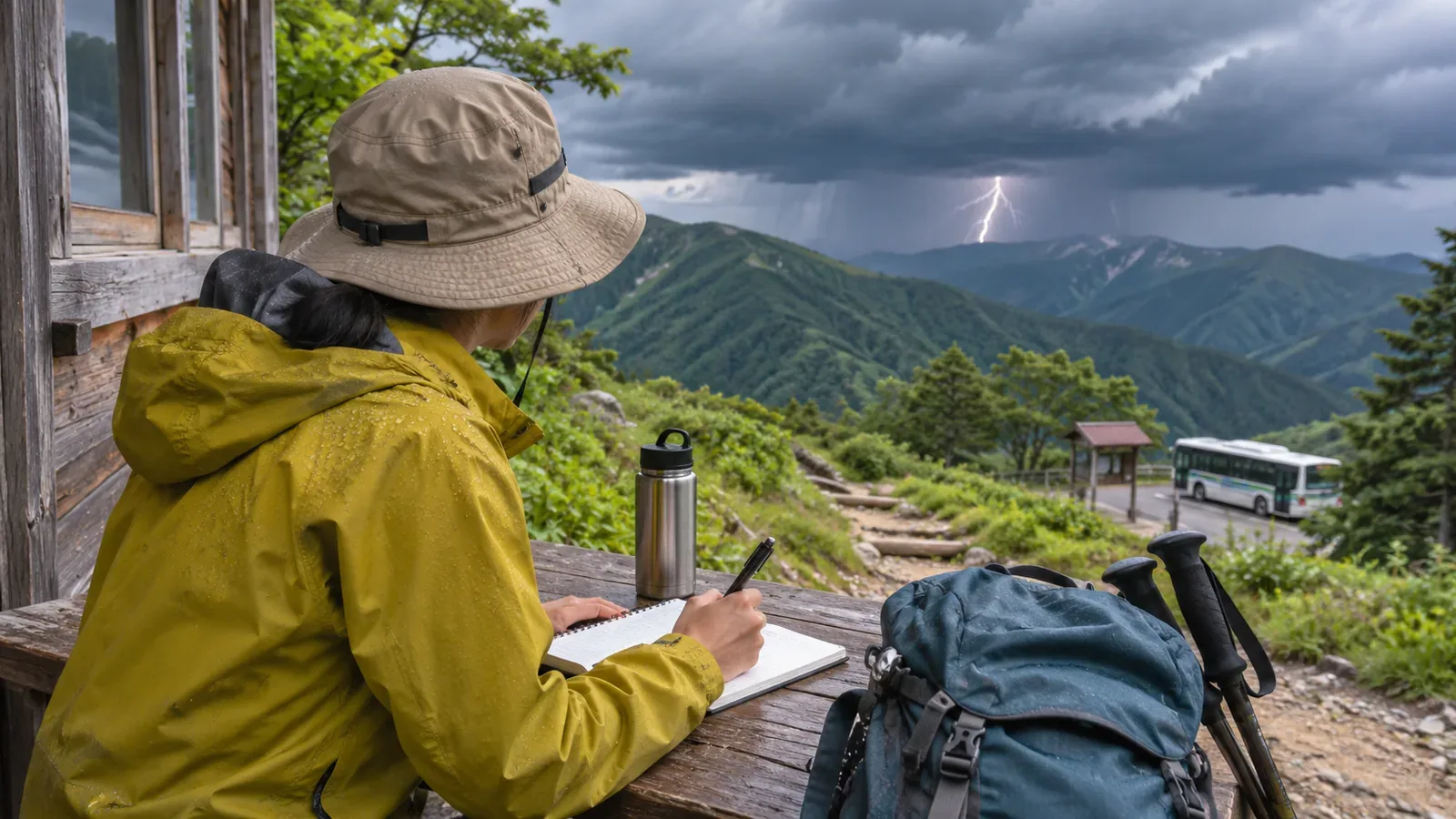
Waiting for lightning to pass or turning back can change when and where you finish the hike. Before leaving, identify the service you plan to catch, where you can wait or what alternatives you can use if you miss it, and when you will let it go. That way you can stay in shelter as needed and avoid rushing along a dangerous route. Check transport status separately from mountain lightning information.
Check return transport in a different place from lightning information
The Lightning Nowcast and other lightning information help you decide when to move on the mountain. To see whether trains or buses are running after the descent, check the operator’s own updates. Transport may still be disrupted after the lightning display calms down. Equally, normal transport service does not change the lightning situation on the mountain.
Service updates set out which delays are reported and how the information is refreshed. Decisions to suspend or resume because of lightning vary by route and depend on equipment and weather at the time. Avoid assuming a fixed suspension length. Check the operator’s notices and plan what you will do if you cannot catch the service.
Read service updates with their reporting thresholds and limitations in mind
Tobu Railway’s status page reports actual or expected delays of at least 30 minutes. The same page says delay certificates are available for delays of at least five minutes. JR East’s Kanto page displays “delayed” when a delay of at least 30 minutes has occurred or is expected during the reporting window from 04:00 to 02:00 the next day.
Our reading of those thresholds is straightforward. A delay under 30 minutes can go unreported on a service status page. A blank status therefore does not guarantee a train is on time. Allow extra time if you have to change trains or are close to the last service so you still have options.
Both operators say to use the displays as a guide because actual operations may differ. Tobu generally updates from the first train to the last, with occasional updates outside those hours. JR East’s page has a refresh button. Check the information’s date and time and whether it has refreshed, and check station announcements as well.
These are examples from two operators. Other rail and bus operators can use different thresholds. Before leaving, read the reporting criteria and update schedule on the website of the operator you will use. Check the updates only after stopping on stable ground without blocking others. If there is nowhere suitable to stop, leave it until later. Avoid looking at the screen while walking.
Check the conditions for the day and season on mountain routes
For a seasonal example, Yamanashi Kotsu listed June 26 to November 3 for its 2026 hiking bus service to Hirogawara. By the article’s November 4, 2026 check, that listed season had ended. Timetables also vary by day and period within the season. A bus mentioned in an older hiking report may not be running on the same dates. Check the operator’s information for the date and year you are travelling.
The same operator’s page says the municipal bus between Hirogawara and Kitazawa Pass was suspended after Typhoon No. 19 damaged the forest road in 2019. The road was closed to pedestrians as well. A bus cancellation does not mean you can walk along the road. Check service updates and road and trail restrictions separately. For any reopening or change in operation, check the latest official notices.
The Tateyama Kurobe Alpine Route FAQ says that from around late October, snow, ice and snow clearing on the Tateyama Toll Road between Bijodaira and Murodo make Highland Bus delays and cancellations more likely. The first and last departures also depend on the period, so consult the timetable. This example concerns snow and ice. Late in the season, transport can be disrupted for reasons other than lightning. Operating dates can change from year to year, so check current official information.
Write a note for transport after the hike
Use the transport note to connect decisions on the mountain with the journey home. Consider a delay from sheltering and an early turnaround that takes you to a different trail exit. Identify transport and places to stay after a safe descent. This makes it easier to change plans without having to catch a particular service.
Write down the intended and last services from that day’s timetable, where to check status, what to do if you miss the service, when to let it go and whom to contact. For alternatives and places to stay or wait, confirm operating days, reservations and access conditions in advance. Listing an option does not establish that you can use it on the day. Check updates on stable ground, and agree to avoid cutting shelter time short or walking faster than is safe to catch a service.
Nagano Prefecture requires a hiking plan to be filed when using designated trails within the prefecture. Its website links to filing methods, forms and examples and advises checking the latest route and weather information. Check whether your route is covered and where to file the plan. Share your onward transport and how you will communicate any plan change with family or another contact. Check each other prefecture’s guidance for its applicable trails and filing methods.
Finish with a rehearsal on paper. Imagine sheltering delayed your descent by an hour and you missed the intended service. That hour is an exercise assumption. Use the note to say in order whether another service is available, where to check updates, where to go if you cannot board and whom to contact. Look up any answer you cannot give before you leave.
Decide in advance when to let a service go
Check the reporting threshold and update time for your transport operator, and leave connection time even with no delay shown. Thirty minutes is the threshold for the rail examples here. Other operators can differ. For mountain routes, check operating seasons, days of service and road restrictions. Plan what to do if you miss a service so your response to lightning stays based on the conditions on the mountain.