
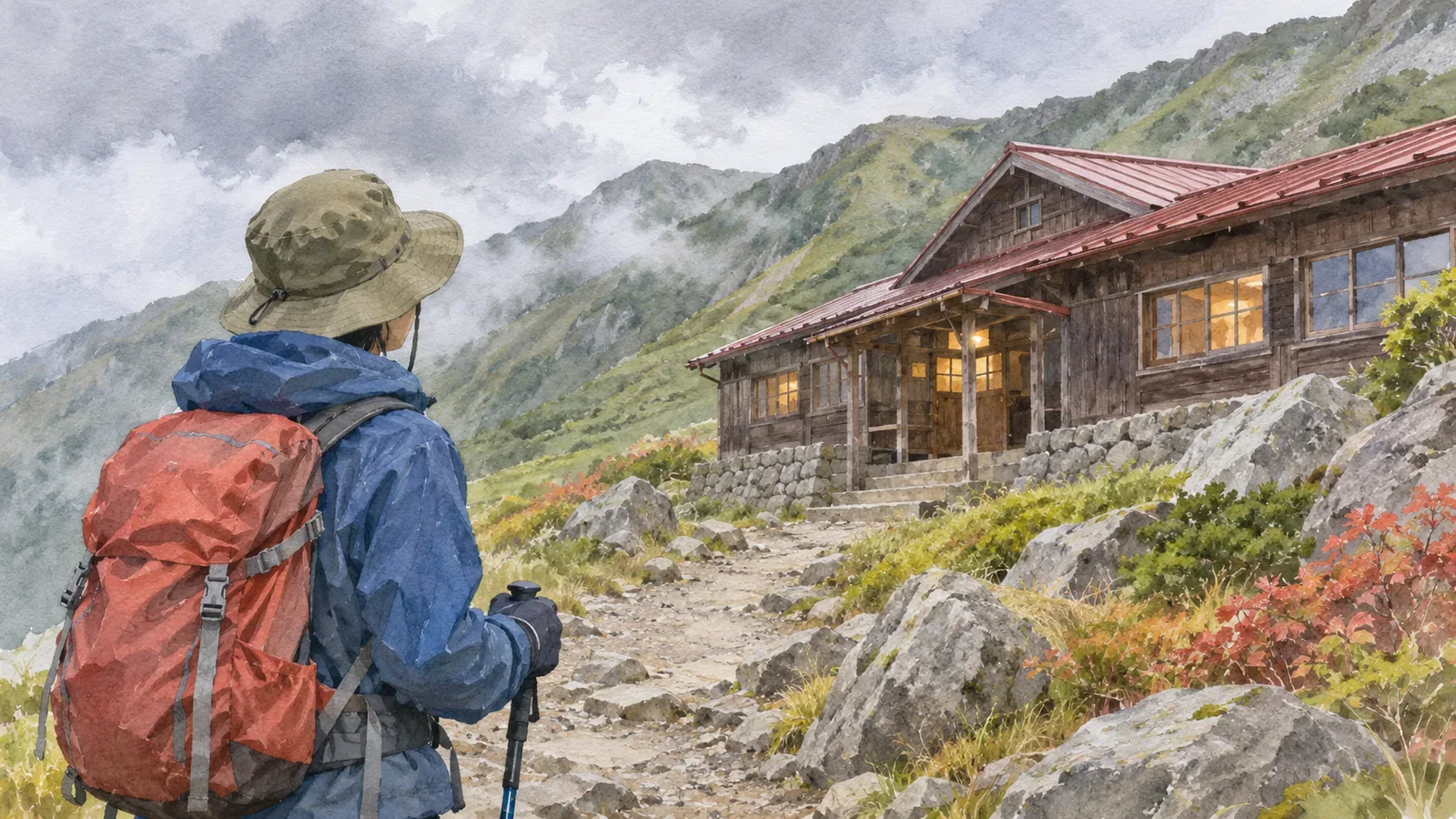
If you are unsure whether to continue towards the summit, there may be another option besides returning to the trailhead. A hut you can use along the way can be a place to end the day. Check when it is open, whether you can stay without a booking and whether the route to it is safe.
Add a possible stopping place to the plan
Use the map to find huts on your route or within safe reach. Check distance, elevation change, expected arrival and other ways down, and record the hut as an option if you need to stop. A short distance on the map still requires a check of the ground and conditions.
Kanagawa Prefectural Police advise assessing health, weather and conditions on the day and being ready to turn back during the hike. A hut can be another option to prepare. Whether it is safer than turning back depends on the situation.
Before leaving, agree where you will decide and who will call the hut, and check that everyone has the same information. Keep contact details where each person can find them. You may be unable to confirm current opening status in areas without reception. If you notice danger earlier than planned, reassess immediately.
Check opening and booking conditions
Use the hut’s official information to check its season, whether it welcomes day visitors or overnight guests, how to book and when check-in closes. A hut can be full or closed on short notice or in severe weather. Check availability even if it appears on your map. Enzansō, for example, lists advance booking for overnight stays. Check each hut’s own terms.
If you have a booking and need to change it, check the change and cancellation terms and contact details. Once you decide to stop at another hut, ask whether it can take you and inform the original hut as required. Enzansō requests notice of cancellation and a phone call for same-day cancellations. Save each hut’s contact method and deadline when booking. Confirm that your booking went through and what you need before arrival. Decide what to do if you cannot get through.
Water, meals, bedding and payment arrangements differ by hut. Discuss how you will cover the equipment and cost of an unplanned overnight stay. Carry what you need for the hike even if a hut may be available.
Can you reach the hut safely?
If someone feels unwell, visibility is poor or the trail is hazardous, even a nearby hut may be unsafe to reach. Hiroshima Prefectural Police advise assessing the situation and ending the hike early if visibility or health deteriorates, and seeking help if moving would be unsafe.
Compare the conditions between your position and the hut with those on the way back or down. Consider remaining time, weather, footing, how everyone feels and your means of communication. Ask how each person is doing before choosing the safest option. Act immediately if there is imminent danger or you need to call for rescue.
Avoid wandering to look for a hut when you do not know the route. Stop in a safe spot and check the map against your location. Contact the relevant agency or the hut if needed. Arrange communication in advance with gaps in mobile coverage in mind.
Tell your companions and your contact at home
If you stop at the hut, confirm where you are staying, when you expect to descend and when you will next check in. Tell the people who need to know. Kanagawa police advise sharing your plan with family or another contact. The U.S. National Park Service also recommends telling someone who stays behind about changes and the end of the activity. Check in advance how to amend a submitted hiking plan in the area.
Decide who will contact the hut and who will notify the person at home. If the change concerns someone’s health, discuss with that person what to tell the group and others, and share only what is needed.
After descending, consider whether the hut information helped and what was still unknown at the time of the decision. Opening conditions change. Read the official information again for the next hike.
Consider the hut, then check access and safety
A mountain hut along the route can give you a way to shorten the hike. Confirm its opening, booking and capacity, as well as whether you can reach it safely. Arrange a backup and a way to notify people before setting out.