
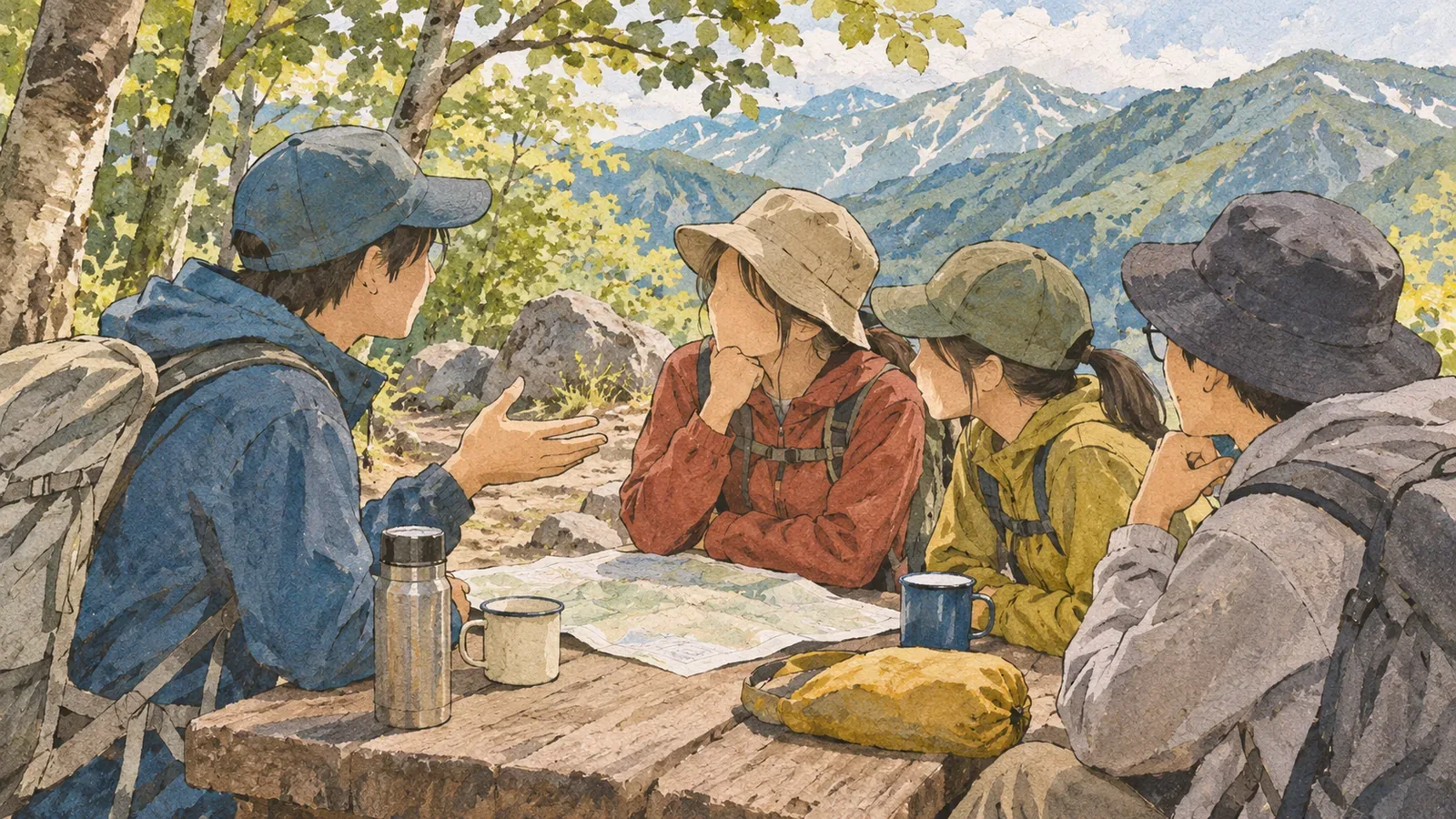
Ask about a recent mountain, the season, the route and what felt difficult. People with the same number of years of experience may have walked different terrain, carried different loads or felt different on the day. Use the answers to discuss how hard this outing is and what preparation it calls for. The questions below are suggestions for planning around people's abilities and condition.
How “Are you experienced?” can lead to the wrong route
Japan's National Police Agency's 2024 report on mountain incidents recommends choosing a mountain for the weather and the group's fitness, skills, experience and health, allowing time for breaks and identifying escape routes in advance. Iwate Prefectural Police also recommends a schedule with room to spare that suits the person's fitness, skills and experience. A choice between “experienced” and “beginner” covers only part of this information.
The Nagano Prefecture Mountain Center's group hiking manual notes that organized hikes can bring together people with very different fitness, skills, experience and ages, as well as beginners who are unfamiliar with mountains. It was written for leaders of school and organized outings. The editors see a similar variety when friends hike together. Assuming someone can manage because they have hiked for years or are young can lead you to choose a route that is too difficult. Assuming someone needs the easiest option because they are new can leave them wanting more. These are editorial inferences.
Ask about a specific recent hike
The editors suggest asking people torecall one specific hike they did recently, instead of asking for years or number of outings.Ask about the mountain, season, how long the walk felt and whether the climb, descent or length was hardest. Specific descriptions help the organizer compare routes more easily than “I'm used to it.” Use the answer to adjust the route and say something like “Then let's look at a hike around this level.”
For example, an invitation might start with “Want to do [mountain] next month? You've hiked before, so you'll be fine.” Try “I'm planning a day hike next month. Have you walked a mountain recently? If not, you can tell me how far you usually walk or how stairs feel for you. I'll suggest two options based on that.” It gives people another way to answer without assuming the hike will suit them.
If someone is concerned about their health, suggest that they discuss the route with their doctor or another healthcare provider. The US National Park Service's Hike Smart guide also suggests discussing plans with a healthcare provider if you have a medical condition. As the organizer, ask what would help, such as breaks or equipment, and make decisions together. Agree on who needs to know and collect only the health details you need.
Adjust the plan so everyone can manage it
Once you have the answers, consider actual experience and health, beyond how confident or cautious each person sounds. Plan a hike everyone can manage. The group hiking manual recommends observing the person with the least stamina and setting the pace to suit them. It notes that this can help the group finish earlier overall. It calls for generous time on the route, walking steadily and finishing early. When scouting, check places where someone who feels unwell could turn back, and identify alternative ways to descend.
A person's own assessment can change on the day. Watch how everyone is doing. The manual suggests checking in with someone who only sits and does not open their pack during a break. Among friends, the editors suggest agreeing that everyone will briefly say how they are feeling at each break so one person does not have to initiate every check-in.
As a tabletop exercise, mark turnaround points and escape routes on the map and show the person you are inviting. Seeing where you can turn back early gives you something concrete to discuss. If someone feels unwell or there is danger before a planned turnaround point, assess what is safe where you are.
Decide what to share and who will do what
The manual calls for a clear leader and chain of responsibility. Even with friends, agree who coordinates a change of plan, who checks the rear and who calls in an emergency. Make it easy for everyone to raise concerns or say they feel unwell. The experience of one person or the size of the group alone cannot establish safety. Decide who can take over if the decision-maker cannot act.
Once the hike is agreed, share the plan. Japan's National Police Agency recommends sharing it with the group, family and people at work. Iwate Prefectural Police says there is no set format but lists names, addresses, mobile numbers, emergency contacts, schedule, mountain name, type of hike and planned route as required information. It lists family or friends, trailhead submission boxes and prefectural police as recipients. The group hiking manual describes attaching a list of addresses and emergency contacts and submitting the plan to the police station responsible for the area.
Once someone joins, explain why you need the information and who will see it before asking for the details. Keep addresses out of the group chat unless there is a reason to share them there. Say who will compile the information and where it will go. Nagano Prefecture has filing instructions for designated trails, and coverage and procedures vary by area. Check the latest guidance from the relevant authority and let participants review the compiled plan.
Summary: use experience to choose the hike
Ask about experience to help set the difficulty of the hike.Ask about specific hikes and how people feel on the day, make a plan everyone can manage, and show where you could turn back or descend by another route. Once the hike is agreed, share the plan and decide who will make decisions. Start by rewriting one invitation using the example above.