
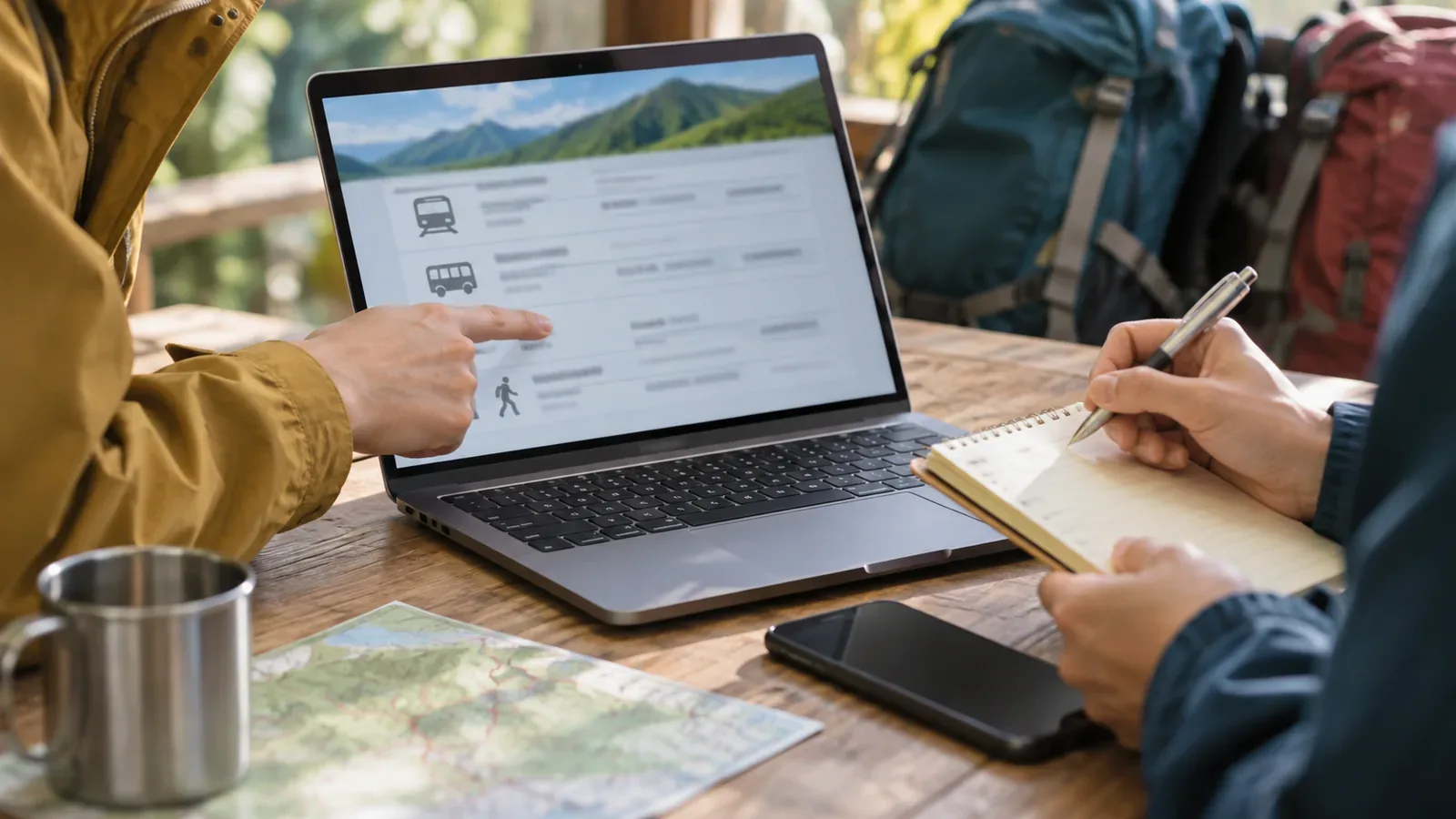
Once you’ve agreed on a hike, discuss transport to the trailhead. The details you need vary by operator and may include the name on the booking, how to collect tickets, luggage and who to contact if plans change, as well as the station and date. Even if one person makes the booking, everyone should be able to check how they’ll travel.
Spell out the outward and return journeys
Start with the stations you’ll depart from, arrive at and change at, the date and the time you want to travel. If you finish a traverse somewhere else, your return station may differ from where you arrived on the way out. Share Japanese names, pronunciations and official romanised spellings for the trailhead, bus stops and stations alongside a map.
Check the operator’s guidance for your travel date for train and bus booking terms, when tickets go on sale, fares and days of operation. For example, Tanabe’s tourism site lists outward and return bus schedules separately and marks some services as reservation-only. When choosing a service, allow time to walk to the stop after leaving the trail, make connections and take breaks.
If you might need another route down, check whether that route is open and what transport is available from its exit. If you book the return service first, agree where and by what time you’ll shorten the hike or turn back so you don’t have to rush on the mountain.
Check booking details with each traveller
Check what the operator needs, including the required name format, passenger count, contact details and ticket type, and collect only what’s needed. Ask each person to check the order and romanised spelling of their name against the booking screen and the documents they’ll use. Share personal information with care.
After booking, send everyone the date and time, the stations or stops, the boarding point and how to collect their tickets. For example, smartEX allows boarding with a QR ticket, a registered transport IC card or a printed ticket. Collecting printed tickets from a machine requires a pickup code and login password. Check how you’ll handle this, for example by having the booker collect and hand out the tickets.
Ask the operator about luggage size and storage, and how to request any assistance. If several people will bring large packs, check the rules in advance so the packs won’t block other passengers on board.
Agree on changes, cancellations and how to get in touch
Check the deadlines and procedures for changing or cancelling bookings if weather or someone’s health alters the hike. Refund terms vary by operator and ticket. Agree who will make changes and check each booking so the return reservation doesn’t remain in place by mistake after you cancel the outward trip.
Agree on a specific ticket gate, exit or landmark for the meeting point. Share how you’ll get in touch if someone is late and where and when to wait if there’s no reception. Ask what language works for your companions and make the Japanese station name available to show others.
Kanagawa Prefectural Police advise including the itinerary and expected arrival time at each point in the hiking plan and telling family or friends where you’re going. The transport booking and the mountain itinerary serve different purposes. Share the route from the departure station through the return station and agree on whom to contact if anything changes.
Give everyone a way to check the details
List each travel date, service, departure and arrival points, meeting place, who booked and where to check. Put the Japanese details beside a version your companions can read and show the locations on a map. If a translation seems unclear, consult the operator’s multilingual guidance or ask them directly.
The Kumano Kodo tourism guide lists paper maps available at information centres. Before leaving, make sure everyone can access meeting points, outward and return services and local contacts. The person making the booking should keep control of passwords and payment information.
Check travel updates shortly before leaving and share any changes with everyone. Review the boarding point and the return trip together so you know that each person understands. Ask what they need without guessing their travel experience or Japanese ability from their nationality.
Recap: make sure everyone can check the booking
Check each operator’s requirements for the journey, date and time, names, ticket collection, luggage and changes. Share outward and return details with a map, and agree in advance who will handle changes and how you’ll stay in touch.