
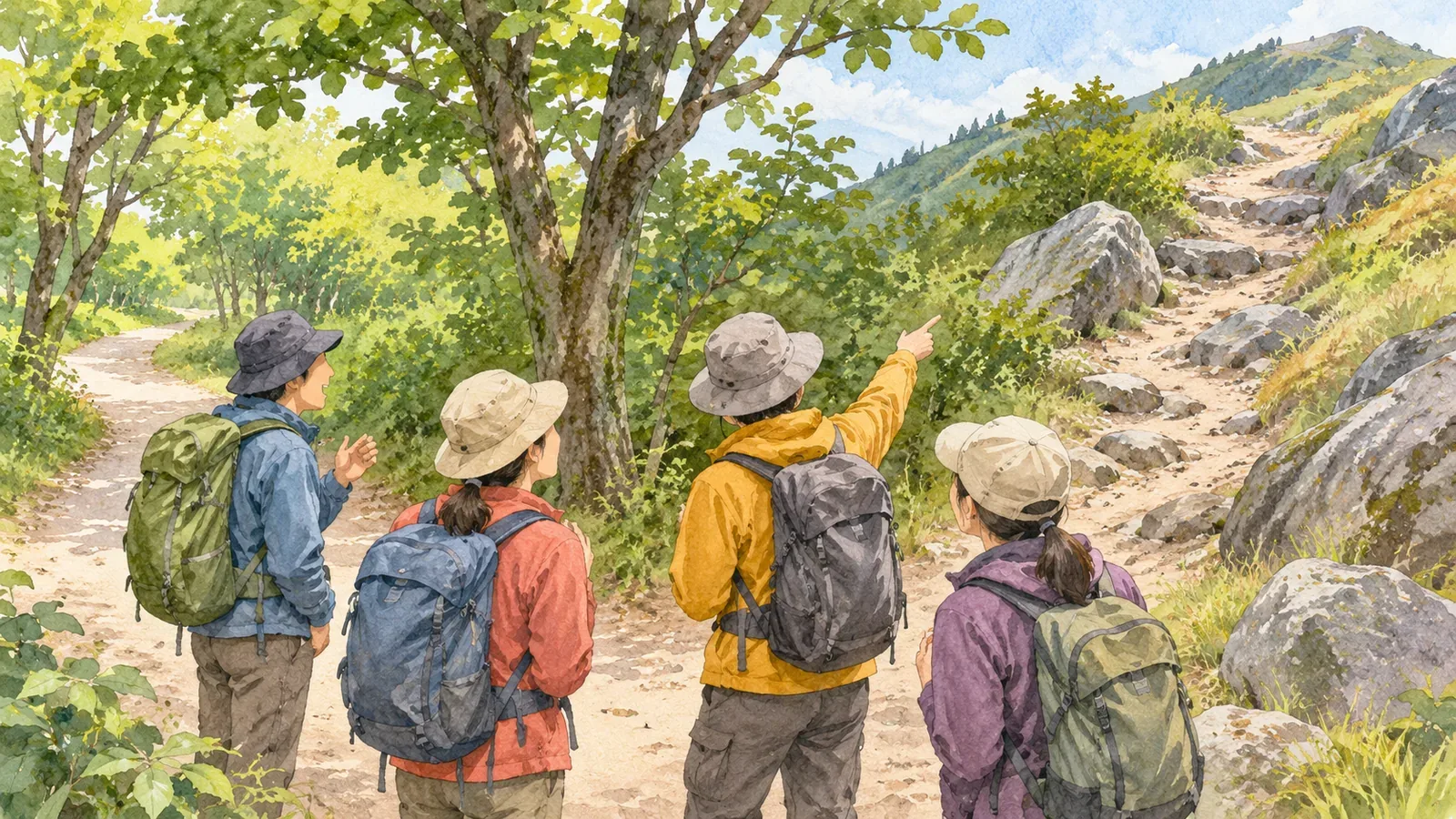
When a group walks at different speeds, look at a map to identify where you’ll need to pay close attention to your footing or the route. It helps everyone know when to pause a conversation. Even on good footing, walk at a pace everyone can manage. Color-coding the sections is one way to plan. If rain, fog or crowds change conditions on the day, pause the conversation and pay attention to your surroundings, even where you expected to be able to chat.
Use the slowest hiker’s pace for the talk test
The U.S. National Park Service’s Hike Smart guide suggests that if you can talk while you walk, you’re probably going at a suitable pace. It recommends letting the slowest hiker set the pace, staying together and placing that hiker near the front. Even if you arrive a little later, you’re less likely to get separated and can help someone right away if they’re injured. Great Smoky Mountains National Park and the Appalachian Trail Conservancy also recommend matching the pace of the slowest member. Check local guidance for rules and hazards on your route, then apply the general advice to your plan.
For the talk test, pay attention to whether the people walking more slowly can comfortably answer as well. A brief answer may mean someone wants quiet or needs to watch their footing. Ask whether the pace is comfortable and rest somewhere safe if needed. Talking comfortably is one clue about pace. Take anyone’s report of feeling unwell seriously and revisit the plan.
Mark both kinds of terrain on the map
Mark likely concentration points on the detailed hiking map you’ll use. Consider junctions, steep climbs and descents, unstable ground and narrow trails. Check the trail manager’s guidance and current conditions as well as the map. Have each person mark the map independently, compare the results and talk about why you marked different places. Treat sections where you expect to be able to talk as provisional. Agree to reassess them in light of the weather and trail surface.
Hike Smart recommends considering your own ability and that of your companions and choosing a route everyone can finish safely and enjoy. Ask yourself about experience, pack weight, fitness, familiarity with the conditions and whether you’ll hike alone or with others. The Smokies’ guidance notes that a short trail can still be difficult or take a long time. Use what you know about the group to revisit the colors on the map. A short estimated walking time doesn’t make every section easy to talk through.
Japan’s National Police Agency recommends finding hazards and possible exit routes ahead of time and keeping track of where you are. Use marks on the map to plan around hazards and remind the group to check the route. The report doesn’t estimate how often talking causes accidents. Pay attention when footing or visibility changes, even in unmarked places.
Agree how to handle tricky sections and where to regroup
The Appalachian Trail Conservancy recommends staying together, waiting for everyone at junctions and assigning a sweep at the back. Before a tricky section, have the people at the front and back account for everyone, then share the route and the next place to check in. Regroup in a safe spot before a narrow section without blocking it. If you change the sweep, tell everyone who has taken over.
Pause casual conversation on sections that require concentration and focus on your footing and route. Call out rockfall, slippery spots or a request for help immediately. Save longer discussions or looking at a screen for somewhere you can stop safely. When you get through the section, check that everyone is there and agree on the next direction from a safe spot. Wait for the people behind you before moving on.
Allow extra time in tricky sections to check footing and let others pass. Hike Smart recommends allowing for the round trip and getting back before dark. The Smokies’ guidance also recommends keeping track of elapsed time and distance. If the outward leg takes longer than expected, recalculate the time you need to get back and decide whether to turn around. Keep your margin rather than counting on being able to make up time by walking faster.
Think carefully before letting faster hikers go ahead
If faster hikers pull away, it becomes harder to know how the people behind them are doing and which way they’re going, whether or not anyone is talking. Japan’s National Police Agency recommends hiking in a group led by someone you trust because problems are often harder to handle alone. Have the people at the front adjust their pace so nobody gets left by themselves. If someone wants quiet to focus, stay with them and change how you talk to them.
Agreement to split up is only one part of preparing to do it. For this hike, plan to stay together and share the map and itinerary with everyone. Follow the National Police Agency’s advice to leave the trip plan with family, work or another contact. If you’re unsure of the route, stop somewhere safe and check your location. To retrace your steps, first make sure you know the way and can take it safely. Avoid pressing on or turning back blindly.
Chat at a pace everyone can manage and stay together through tricky sections
Share the places that may need extra attention on the map, and pause casual conversation as footing, visibility or weather changes. Talking comfortably is a clue about pace. It doesn’t establish that everyone is well or that conditions are safe. Speak up immediately about hazards or illness and save longer discussions for a safe spot. Stay together, check that everyone is present at junctions and at both ends of tricky sections, and revisit the destination and return route if the hike is taking longer than expected.