
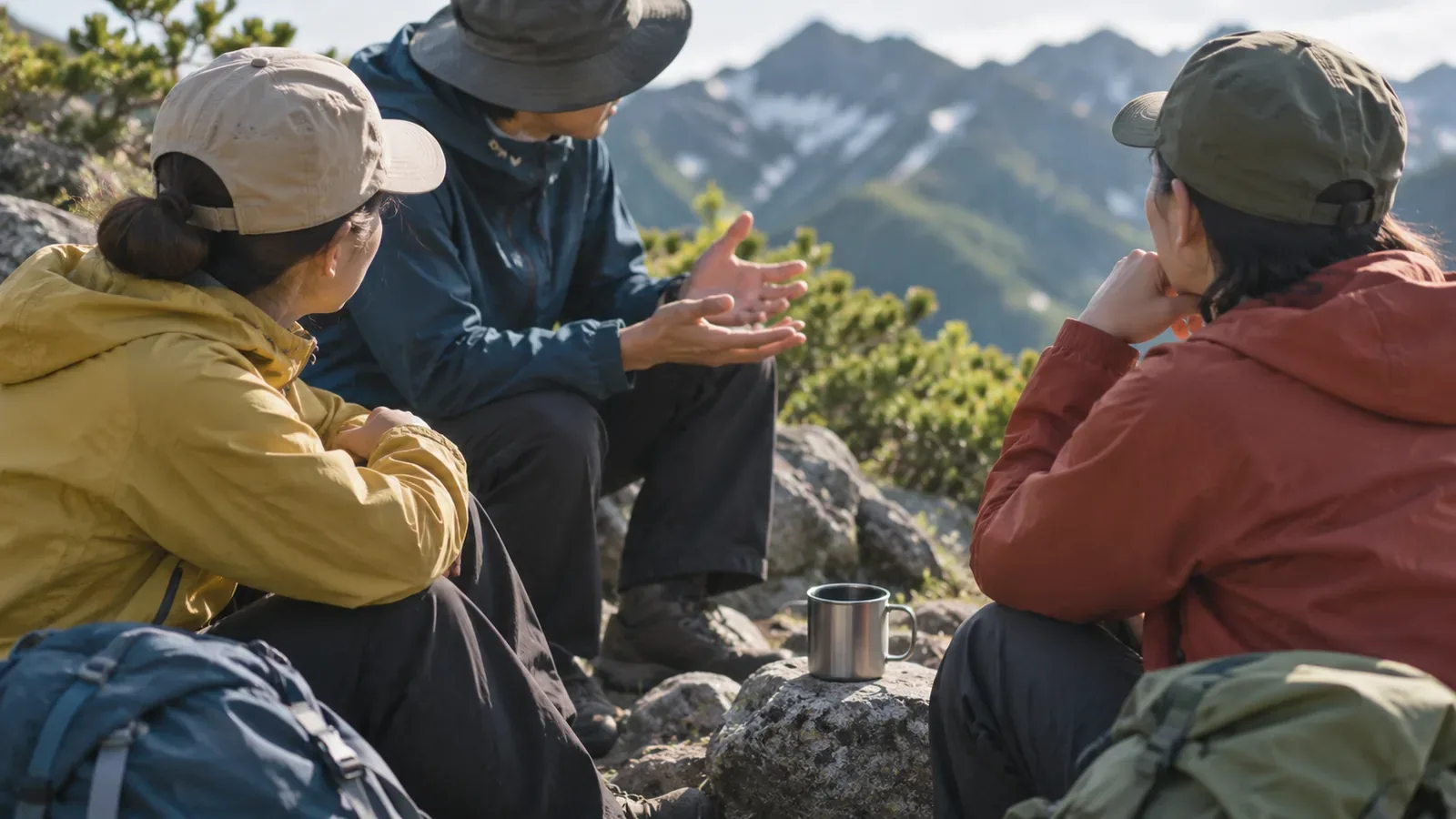
After the hike, talk about which sections took longer and how a different plan might have made the hike easier for everyone. Keep track of what went well and agree on specific changes for next time. Drawing on debriefs used by overseas hiking and outdoor education organizations, we suggest questions and ways to give feedback when the group walks at different speeds.
Start the debrief with three questions
In a report on a leadership summit, a Colorado Mountain Club (CMC) staff member shares three questions about what went well, what could improve and what to do next time. NOLS also teaches participants to reflect on an activity and put what they learn into the next plan. You can keep the first discussion brief and follow up later.
Use those questions to start and discuss what you’ll change. Find a safe, calm place after the hike and avoid keeping anyone who is tired in a long conversation. Choose a time and place that works for the driver and make it possible to respond privately or send a message later. If anyone still needs help after an incident or illness, attend to that first.
Review how you made decisions even when everyone got back safely
The CMC report encourages people to review how they made decisions, even when things turned out well. Look back at whether you nearly lost the route or continued through a section without a break when you needed one. Be glad everyone got back safely and take time to see which decisions you can improve.
U.S. National Park Service guidance offers some benchmarks. Both Hike Smart and the Great Smoky Mountains National Park hiking page recommend tracking time and distance, setting a turnaround time when a hike runs long and using conversation to judge pace. Hike Smart explicitly recommends sticking to the turnaround time. The Smokies page also says to turn back if you feel uncertain or the hike is harder than expected. These are guidelines for U.S. parks. Use them to guide the debrief while keeping the specifics of Japanese routes in mind.
Even when everyone gets back safely, compare four things with what you agreed before setting out. This is the editorial team’s suggestion. First, compare the planned and actual walking times. Second, check whether you set a turnaround time and talked it through when it approached. Third, recall where you could no longer keep a pace that let you talk comfortably. Fourth, ask how the group responded when someone expressed concern or said a section was harder than expected. Reconstruct times after the hike by comparing what people remember from each break. If you stop to take notes during a hike, do so in a safe place out of the way. Wait if you can’t find one.
Describe what happened and under what conditions
The Smokies guide asks whether the route fits the group’s abilities, and Hike Smart recommends matching the pace of the slowest hikers. If the schedule didn’t work out, look at the route, breaks, start time and conditions that day. Discuss what the person could improve in their experience, equipment or preparation without blaming them.
Instead of ending at “Alex fell behind,” say “The climb in the second half took longer than planned. Where could we have taken a break?” The person might reply, “I got out of breath there and wanted a longer rest.” Someone who had energy to spare might say, “I’d like to look at a longer route separately from the plan for the whole group.” Acknowledge differing preferences and give everyone room to choose their next hike.
CMC says leaders can make it easier to speak up and have concerns heard. Listen before responding and ask where it happened and what the person needed. An apology can be part of the conversation. Follow it with what the group can change next time.
Use the feedback in the next plan
NOLS describes several roles, including leading peers and actively supporting a leader. Give everyone a chance to speak in a debrief, too. Let those who want to speak go first and offer a way to talk privately. Avoid singling out anyone who was worried or requiring everyone to answer. Use the feedback to propose changes to the route, breaks, turnaround criteria or roles, and review the plan with the people who will join next time.
Japan’s National Police Agency recommends choosing a mountain suited to the weather, fitness, skills, experience and health and allowing ample time including breaks. It also recommends sharing the trip plan with companions and family, among others. If people report too few breaks or a tight schedule, revise those parts of the plan. Show what changed in the next invitation as well as keeping notes.
You can prepare on paper before you decide where to go next. Have each person write a line describing the section, what happened and what they would change. For example, “The climb in the second half. We stopped being able to talk. I’d like to add a break.” Look at maps of possible routes and decide what to change. Write down when you would turn back, too, so you can sit the hike out or turn back while it’s still safe to do so.
Discuss pace as a planning factor and make changes for next time
Start by asking what went well, what could improve and what to do next time. Even when everyone returns safely, compare planned and actual times, turnaround decisions and how people’s concerns were handled. Describe the section and conditions and make it possible to give feedback privately or later. Use what you learn to adjust breaks, routes and roles, and make sure everyone going next time has the same plan.