
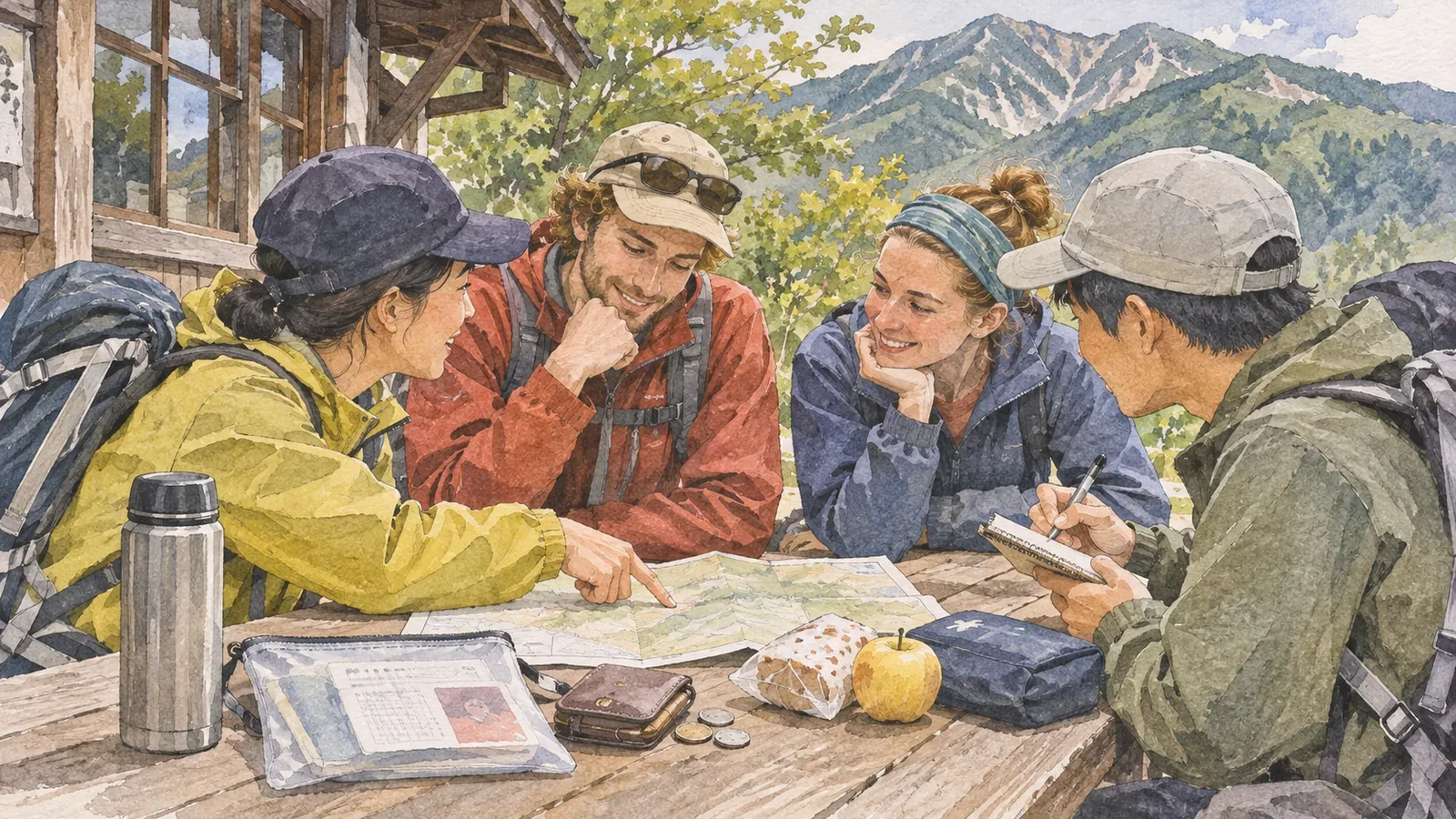
When sending meeting details to friends from abroad, put the date, time, location and contact for changes on one page. Separate fixed times, estimated arrivals and decisions that depend on the day’s weather. Ask for replies so you can compare what everyone understood.
Separate the meeting time from estimated arrivals
Give the date and use the 24-hour clock. Include the action: “Meet by the ticket gate by 07:20” or “Take the 07:35 service.” The Japan National Tourism Organization suggests arriving at mountain huts around 15:00–16:00. If your hut has an actual deadline, copy the time and contact details from the booking information.
If only the organiser knows the accommodation details, people may struggle if they miss the meetup. Name the booked accommodation, the night you’ll stay, who booked and who will call if you’re likely to arrive late.
Mark the ticket gate or exit on the map and include the Japanese place name and the form your companions use. Save the screen so you can show station staff if you need to ask for help.
Put the meetup details in the order people need them
Start with the date, time and place. Include a map link and write the ticket gate or exit in the message. For people reading outside Japan, say all times are Japan time. If a station has east and west exits and you’ll wait outside the gates, write “outside the ticket gates at the west exit.” Put meeting at the gate and boarding at the bus stop on separate lines.
Decide whom to contact if someone’s late, who should get in touch and where to wait. Check the latest accommodation prices and tell everyone what has already been paid, what’s due on site and which payment methods are accepted.
Check how to file the hiking plan for the area and decide who will do it. Kanagawa Prefectural Police recommend describing the itinerary in the plan and telling family or friends where you’re going. Check dietary needs with each person before booking. As the Kumano Kodo accommodation guide advises, tell the accommodation what food is needed and which ingredients to avoid. Add a rubbish bag to the packing list.
The Japan Tourism Agency recommends considering private medical insurance with enough cover for injury or illness in Japan. Make sure everyone knows the plan involves hiking. If they already have cover, help them identify the activity and ask their provider about cover for it and for rescue costs. Each person should manage their own policy number.
Label details as confirmed, estimated or to be decided on the day
Put the meeting date, time and place under “confirmed,” the planned hut arrival under “estimated,” and changes due to weather or health under “decide on the day.” List the hut’s check-in deadline and any cutoff for reporting changes separately from the estimated arrival.
For decisions on the day, note who will decide, where and when. Make the decision before leaving, from a place with stable footing. Once on the trail, retain the option to stop or turn back before entering hazardous terrain. Guests can feel awkward raising concerns with the organiser, so write that anyone may suggest stopping or turning back.
The Yarigatake Mountain Hut Group’s terms note that mobile reception may be unavailable in the mountains. Before meeting, agree where and how long to wait without contact and what to do if you can’t find each other. Stop on stable ground without blocking the way before checking a screen.
Use replies to spot misunderstandings
End with short questions asking everyone to reply in their own words with the meeting time and gate, who to contact if late and what they need to bring. Include a direct contact for anyone who wants to speak privately about meals or health.
If a reply doesn’t match the plan, identify the wording that caused the confusion and send the same correction to everyone. Recheck that the meeting description matches the map and that the confirmed and estimated times are shown consistently.
Recap: share the meetup details and check them in the replies
Include the place and confirmed meeting time, estimated arrival, what to do if plans change and what each person should prepare. If replies reveal a misunderstanding, revise the message so everyone can use the same version before leaving.
References and sources
- Japan National Tourism Organization: Hut Life
- Yarigatake Mountain Hut Group: accommodation terms
- Kanagawa Prefectural Police: enjoy hiking safely and prevent mountain accidents
- Tanabe City Kumano Tourism Bureau: Kumano Kodo Tips & Safety
- Japan Tourism Agency: Information on illnesses, injuries, and disasters