
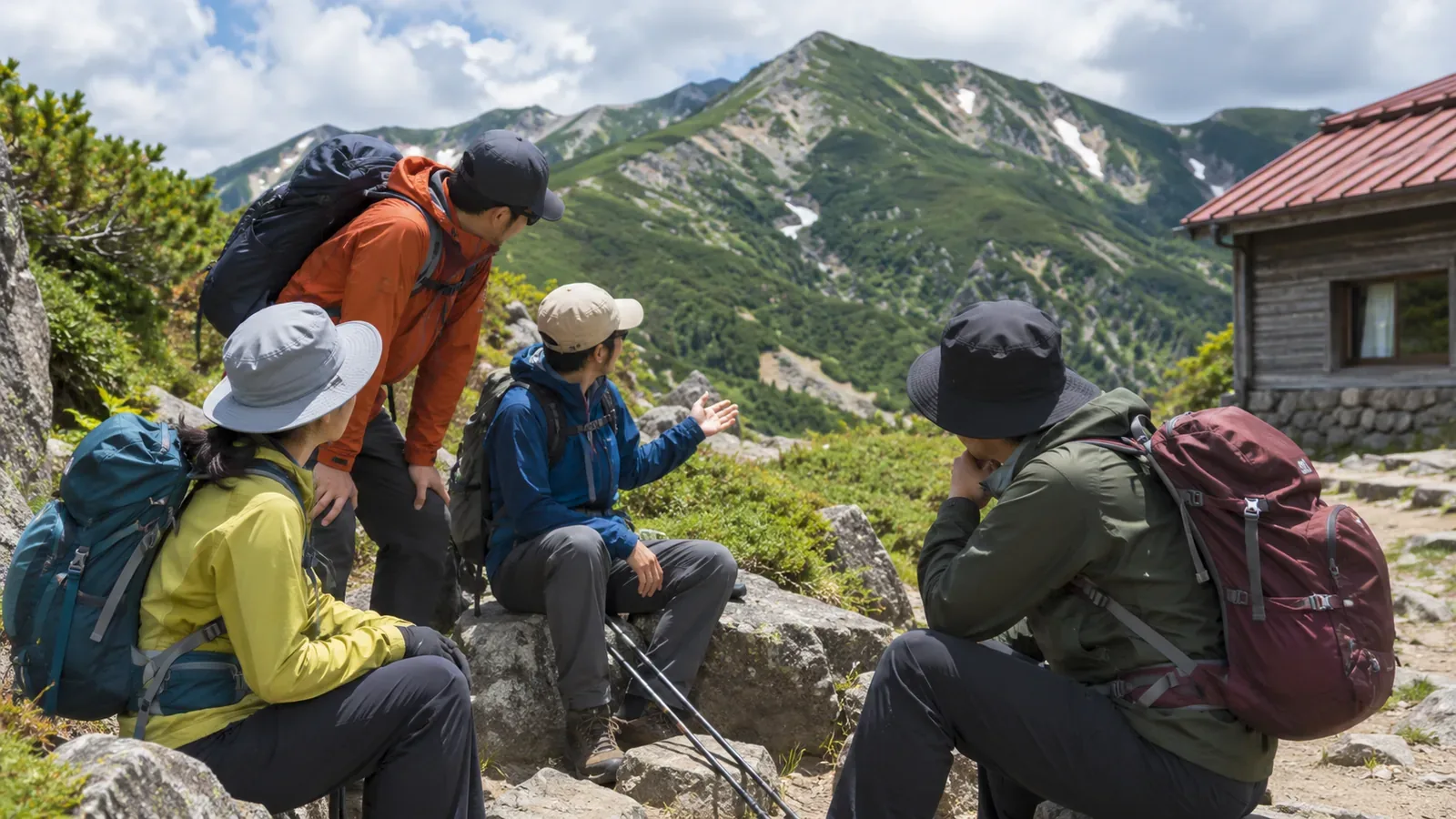
Give people opportunities to raise safety concerns from the moment you invite them. Mark checkpoints in the itinerary, ask how everyone feels at the start and during breaks, and agree to find a safe way to check the situation when someone speaks up. Invite everyone to speak, regardless of experience.
In a report on a leadership summit, the Colorado Mountain Club stresses hearing out people who raise concerns and reflecting after a trip. This is a report from practice, not a test of how well any specific wording works. Drawing on it and official hiking safety guidance, the editorial team suggests ways for friends to check in with each other.
Make it easy for anyone to raise a concern
The Nagano Mountain Center’s Group Hiking Manual notes that groups often include people with different fitness levels, skills, experience and ages. It addresses leaders of school hikes and trips open to registration. Its guidance on planning for those differences and clarifying who makes decisions can help friends agree on roles.
Several official sources discuss when to stop. Iwate Prefectural Police recommends checking health and weather and calmly considering cancellation at the first sign of concern. Japan’s National Police Agency advises assessing the situation and ending the hike early when appropriate in its 2024 report. If you suspect you’re lost, avoid walking on blindly and consider retracing your steps to the official trail.
Someone might hold back because they’re unsure or don’t want to interrupt the group. Make it clear before you leave that people can speak up without being certain and give them regular chances to do so. Check in with newer and more experienced hikers alike.
Three agreements to make before setting out
We suggest making three agreements between the invitation and the day before the hike.
First, mark where you’ll consider turning back in the itinerary. The manual recommends identifying these places during a reconnaissance hike for anyone who feels unwell. The National Police Agency also recommends identifying hazards and exit routes and allowing time to spare. A note such as “Check how everyone feels, the weather and the time here” lets people know when they can bring something up. Use what you learn about the mountain, season and group to choose the places and times. If someone feels unwell or there is a hazard, respond before the planned check-in.
Second, treat a concern as a request to check something. Say before you leave, “If something concerns you, say so even if you aren’t sure. We’ll get to a safe place to check.” “I think this may be the wrong trail” or “I’m concerned about my footing here” describes what someone has noticed without requiring them to establish the cause.
Third, choose someone to coordinate decisions and someone to help with communications. The manual calls for a clear leader and chain of command. Friends can agree on roles, too, so everyone knows whom to tell. Anyone can speak up about an immediate hazard. Take the necessary steps to stay safe without waiting for the person in charge.
The checkpoints are regular opportunities to review how things are going. Make sure everyone knows they can speak up elsewhere and that you can stop before the scheduled time.
Check in at the start and during breaks
The manual recommends checking names on the roster as well as the headcount. Ask about headaches, stomach aches, lack of sleep and whether people have eaten breakfast. During breaks, check on anyone who sits down without even opening their pack. Watch how people with less endurance are doing and match their pace.
At the morning meeting, ask about sleep, food and anything that could affect walking. Offer a way to talk privately with the person coordinating decisions. Discuss only the information that affects the plan or the support someone needs, with that person and whoever needs to know. Keep diagnoses and medical history private. A check-in alone cannot establish whether it is medically safe to hike. If concerns remain, reconsider taking part.
At the start of a break, take a moment for each person to say how they’re doing. Stop where the footing is stable and the group won’t block the trail. Someone resting without opening their pack or talking less than usual may be worth checking in with. Treat what you notice as an opening to ask how they’re doing.
Watch your footing and surroundings while walking. Take pictures or notes in a place where it’s safe to stop, or wait until you find one. If the way forward is unclear, check the map before the next scheduled break. Check nearby hazards, make sure you’re safe and work out where you are and where to go. Agree before setting out to call out any immediate hazard right away.
Respond to concerns and reflect after the hike
When someone speaks up, acknowledge the concern and check the surroundings and how the person is doing. Consider whether they can safely move somewhere more secure. Don’t make anyone move if it’s dangerous or they can’t walk. If you can talk safely, use your criteria and remaining time to consider a rest, a turnaround or a route change. Act on immediate hazards and request rescue as needed without waiting for everyone to speak in turn.
Even if you find no problem, thank the person for speaking up and give them no reason to feel ridiculed or blamed. Share what you checked and how you made the decision so the group can refer to it next time.
If someone thinks you are off route, follow the National Police Agency’s guidance to avoid walking on blindly. Check where you are and locate the official trail. Retrace your steps only if you know the way and can do so safely. The manual recommends keeping the group together unless there are enough leaders. On a hike among friends, take care before separating and weigh whether everyone has the stamina, equipment, judgment and means to communicate that any change would require.
After the hike, find a safe place to discuss when it was easy or hard to speak up. Use what you learn in the next invitation and plan. Let people share sensitive concerns privately afterward. Before the hike, you can also read through the itinerary together and discuss whom to tell and what decision to make if someone feels unwell. Iwate Prefectural Police recommends leaving the plan with family or friends. Nagano Prefectural Police recommends leaving it with family or work. Decide how you’ll communicate any changes and share that with the person staying behind.
Plan regular check-ins and encourage people to speak up right away
Mark checkpoints, ask how everyone feels in the morning and during breaks, and agree that anyone can call out a hazard immediately. Offer a way to raise sensitive issues privately. When someone speaks up, check the surroundings and their safety. End the hike or get rescue help when necessary without waiting for a round of comments. In your next invitation, try saying “If something concerns you, say so even if you aren’t sure,” and agree on how you’ll check in during the hike.
References and sources
- Nagano Mountain Center · Group Hiking Manual
- Iwate Prefectural Police · Safe and enjoyable hiking and mountain incident prevention
- Japan National Police Agency · Overview of mountain incidents in 2024
- Nagano Prefectural Police · Mountain information
- Colorado Mountain Club · The Importance of Trip Feedback