
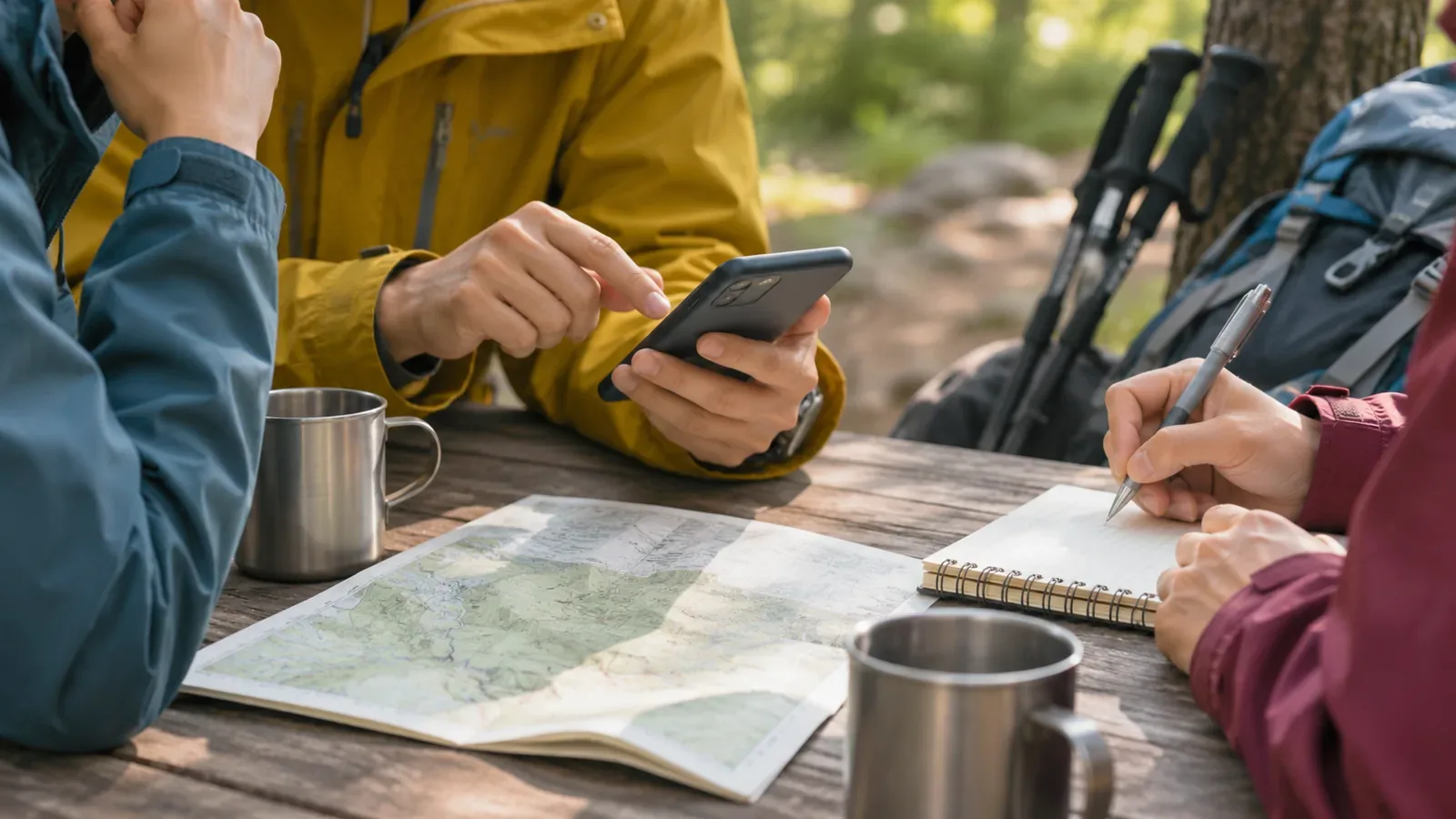
The meeting time is at the top of the group chat, the location is buried further down, and the decision about rain is in another thread. When details are scattered, everyone has to look for them again before leaving. Put the meeting information in one message so everyone can check the same current version. Share the detailed trip plan and private matters separately as needed.
A clear and easy-to-understand format for date and location.
At the beginning of the instructions, I’ll include the hiking date, meeting time, meeting location, and a landmark. Specifying not just the station name, but also the line, ticket gates, and even the exact waiting spot, will help prevent confusion with stations that share the same name or multiple exits. If including a link to a map, I’ll also add a description that can be read even when there’s no internet access.
For example, simply stating “at the station ticket gate” can be confusing in stations with multiple gates. Be sure to confirm the exit names using the official station maps and announcements. Also, list separate times for meeting and train departures. If traveling by car, confirm the boarding location, planned departure time, and how to get to the parking lot. If you need time for loading luggage or using the restroom, be sure to include that in your plans.
If the meeting point may change or a transport service may be suspended, say where to find the latest information. If old messages remain in the chat, send the revised details together and make clear which version to follow.
Outline of schedule and decision timing.
Include the mountain and route, the expected finish of the descent and a rough idea of the journey home. You can keep detailed maps and gear lists in a separate trip plan, as long as everyone knows where to find it. Share planned turnaround points and times as well as the summit plans.
Here’s how we will handle cancellations and changes due to bad weather, including who will make the decisions, when, and how the information will be communicated. It’s important to check the latest information before departure, and to be prepared to adjust plans if the weather conditions change. We will also discuss in advance how to contact those who may not be reachable.
The Nagano Prefectural Mountaineering Center recommends filing a trip plan and allowing enough time for severe-weather preparations, escape routes and reserve days. Complete any required filing and share the plan with family as well as sending the brief meeting message.
Contact information and handling of individual circumstances.
Say who to contact and how if someone is running late or finds that a transport service has been suspended. Group chat notifications may not arrive. Agree on a backup contact method and a practical way to follow up if someone does not respond.
When collecting information such as phone numbers or health details, we will confirm with the individual why this information is needed, who will be able to see it, and how it will be handled after a hike. We will ensure that any information that isn't necessary for everyone is not included in the group posting, and instead, we will consider how to communicate it privately to the relevant people.
The Nagano Prefectural Police recommend preparing a trip plan and leaving it with family or someone at work. Keep emergency contacts where the right people can find them when needed. Check the latest filing and handling instructions for the mountain area.
Please confirm the response for the latest version.
At the end, say what you want people to reply with and by when. For example, ask them to confirm the place and time, say whether they can attend or mention anything they need to discuss. LINE Help says some devices may show a message as read when a notification arrives, even when it has not been read. Look for a reply from each person.
If plans change, send a fresh message with the new time, place and decisions. Date it or mark it as the latest version, and ask for confirmation. Follow up with anyone who has not replied using the method you agreed on. The US National Park Service trip planning guide recommends telling your contact who is staying behind about changes. Update anyone holding your plan, such as family, and inform any providers you booked with.
On the day, we will confirm the number of people, the itinerary, the weather, and everyone’s condition after gathering. It’s important that we collectively review and adjust the plan as needed, based on the actual situation, rather than simply sending out the initial instructions.
Summary – All the necessary information in one place.
This itinerary will include details such as date and time, specific location, transportation, and an overview of the schedule, as well as criteria for cancellation and contact information. It’s important to confirm the latest version and discuss the scope of personal information sharing with the individual involved.