
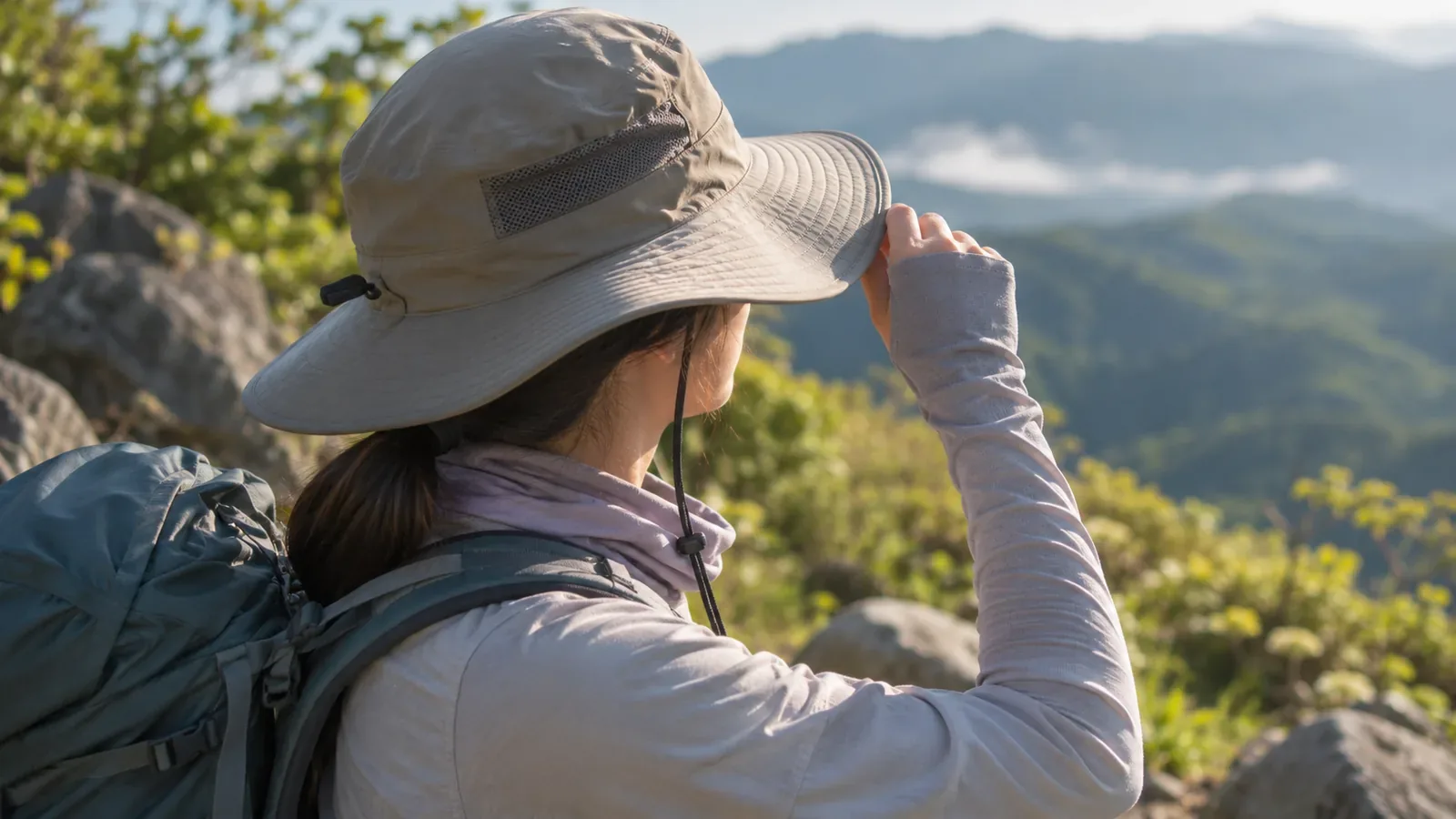
In the morning, your hat may shade your face, while in the afternoon light reaches you from the side. Changing your walking direction or the sun’s position changes where the shadow falls. The same hat can cover different parts of your face and neck. Check the coverage during a safe stop and combine the hat with other protection. Glare can remind you to check, but it does not tell you how strong UV is.
The shadow moves as the sun’s direction changes
The National Astronomical Observatory of Japan explains that in simple conditions a shadow falls opposite the sun. For an object of the same height, a higher sun makes a shorter shadow. A hat’s shadow also depends on the light direction as well as the shape and tilt of the brim and the shape of your face. The formula for a shadow on the ground cannot calculate a hat’s coverage.
The sun comes from different directions in the morning and afternoon, and you change direction as the trail turns. Your hat may shade the front of your face on the way out while light reaches you from the side or behind on the way back. Think about the time, the direction of travel and which way you face.
You can check where the shadow falls without looking up as you walk or staring toward the bright sun. At a safe rest spot, check the hat position and where the light reaches your face. Keep your footing secure and leave room for others before making adjustments.
Try the brim and check coverage around your neck
Put your hat on before leaving and check how far the brim covers the front, sides and back. Think about light coming in at a low angle and situations that expose the back of your neck. If there is a chin strap or a similar feature, adjust it as directed and check that wind is unlikely to carry the hat away.
Pulling a hat down can narrow what you see ahead. Keep the ground and your surroundings in view and make adjustments somewhere safe. Check for problems such as a brim that blows into your line of sight or neck attachments that restrict movement.
Try the hat with your rain hood and backpack as well. If it slips while you are walking, stop before putting it right. The brim’s shadow blocks some direct light. Other exposed areas still need protection.
Account for light from around you
The Japan Meteorological Agency explains that UV reaches you directly and through scattering in the air. Even if your hat blocks direct sunlight, UV can come from other angles where you can see the sky or where surfaces like snow reflect it. The forecast accounts for surface reflection, but it cannot tell you the amount reaching your face or eyes.
The agency also explains that a brief appearance of the sun under cloudy skies can expose you to strong UV. On cool or cloudy days, combine clothing, sunglasses and sunscreen as appropriate for the route and conditions. Follow product instructions and choose what suits your skin and eyes.
During breaks, check whether your hat is wet or has shifted in the wind. If sun protection overlaps with protection from cold or rain, adjust for current conditions and pack away unused items so you do not drop them.
Check coverage on the way out and back
Before leaving, check the rough timing and direction of travel on the map. On sections you walk in the opposite direction on the return, the sunny side can change. A map cannot settle whether valleys, ridges or clouds will block the light, so check again on site.
At breaks, you and your companions can check whether hats have shifted and whether necks or ears are exposed. Japan’s Ministry of the Environment recommends combining a broad-brimmed hat with clothing and sunglasses. If children come along, check their comfort and have an adult verify coverage and visibility. The sun can be strong even when it does not feel hot.
At home, think about whether the hat was prone to blowing away and whether the sun reached areas you expected it to shade. The next hike may have a different schedule, weather and route, so choose your equipment for that day.
In short: shade changes with the time and the way you face
The direction and elevation of the sun, your walking direction and the shape of the brim all change a hat’s shadow. Check coverage in the morning and afternoon and on both legs of the hike. Add other sun protection as needed.
References and sources
- National Astronomical Observatory of Japan: Estimating the Sun’s Elevation and Azimuth and the Position of Shadows
- Japan Meteorological Agency: Guide to UV Information
- Japan Meteorological Agency: Scattered Ultraviolet Radiation
- Japan Ministry of the Environment: UV and Environmental Health Handbook 2020