
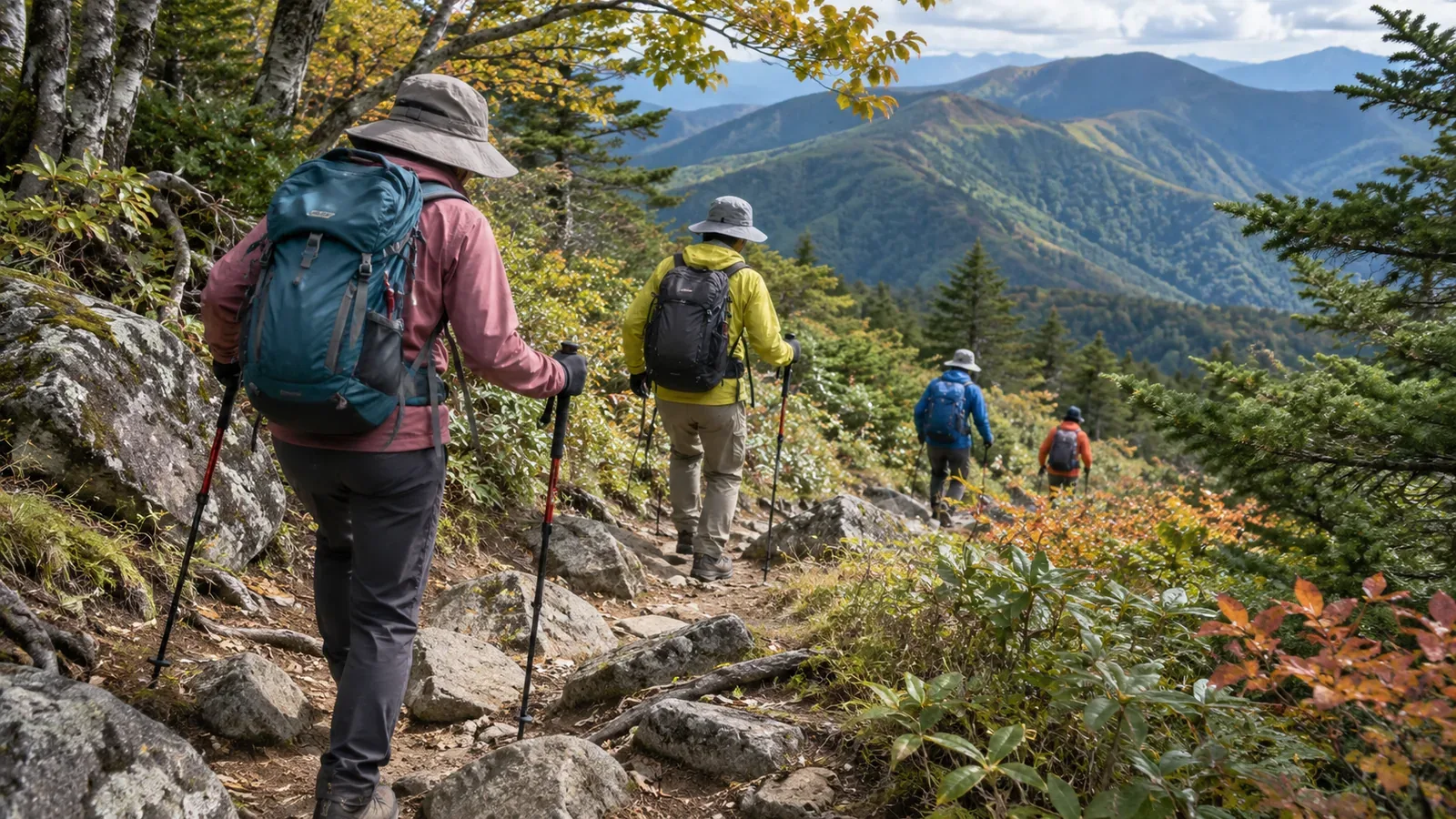
Even people who walk together on the way up can spread out on the way down. Fatigue, concerns about footing, footwear and pack weight can all play a part. Give everyone time to descend safely. Before setting out, agree where to wait at junctions and how to speak up if people start to get separated.
Estimate descent time separately
Check the distance, slope, surface and junctions on the way to the end of the trail as well as the time to the summit. Different hikers may take rocks, wet boardwalks and steep descents at different speeds. Give people room to descend at their own pace instead of applying the same ratio to everyone’s time on the way up.
The U.S. National Park Service recommends counting the outward and return legs when estimating total time and setting a turnaround time. Great Smoky Mountains National Park explains that difficulty depends on distance, elevation change, terrain and weather. Allow for breaks, route checks and travel to the station or parking lot so you can get back in daylight.
Before leaving, ask about experience and concerns. Offer to talk privately with anyone who is unsure about descending. Discuss how long difficult stretches might take and plan for everyone to get through without straining. If you’re unsure of the estimate, consider a shorter route or an earlier turnaround.
Agree how to stay together
Before setting out, choose who leads and who stays at the back, where to wait at junctions and how to get each other’s attention. The Appalachian Trail Conservancy recommends moving at the slowest hiker’s pace and waiting for everyone at junctions. Tell the group if the people in front or at the back change. Use the terrain and group size to find an arrangement that keeps track of everyone safely.
If you’re about to lose sight of the people ahead, call out from a safe spot and ask the front to wait. Give the group space to stop away from rockfall and drop-offs, without blocking other hikers. Make sure everyone knows where the others are.
At a junction, wait until the group is together before checking the map and signs and deciding which way to go. Tell the group if you stop to take a photo or adjust equipment so nobody is left behind.
Take regular breaks and check how people are doing
People slow down on descents for different reasons. Make it easy to talk about fatigue, discomfort in a foot or concerns about the surface without blame. Rest together in a safe spot and give the last person to arrive time to rest too.
If someone is in pain or very tired, give them time to move safely. Japan’s National Police Agency recommends planning for people’s health and ending a hike early when needed. Check whether the person can move safely now. Consider a stop, a change of plan or getting help based on the weather, daylight and the rest of the route. If they have difficulty moving, avoid asking them to walk to a planned meeting spot.
Choose a stable place to adjust equipment or clothing. Skipping checks to catch up can leave people rushing. Once you know you’re running late, think about onward transport and updating the contact who is staying behind.
Revisit the plan when you’re running late
Compare planned and actual times and check the remaining distance, sunset and return transport. Make a decision together about shortening the route, turning back or getting help. Keep the pace safe through difficult descents even when you’re late.
Where there’s a signal, notify the contact who stayed behind or your accommodation about the delay if needed. Share contact details and what to do if there’s no signal before leaving so more than one person has that information.
After the hike, discuss where it took longer than expected and whether the waiting arrangements and breaks worked. Use what you learn to adjust the next route and schedule for everyone.
Leave room for differences in pace on the descent
Fatigue and how people handle the terrain can widen differences in pace on the way down. Estimate the round-trip time, wait for everyone at junctions and give the people at the back time to rest. If you’re running late, adjust the plan early so everyone can get back safely at a manageable pace.