
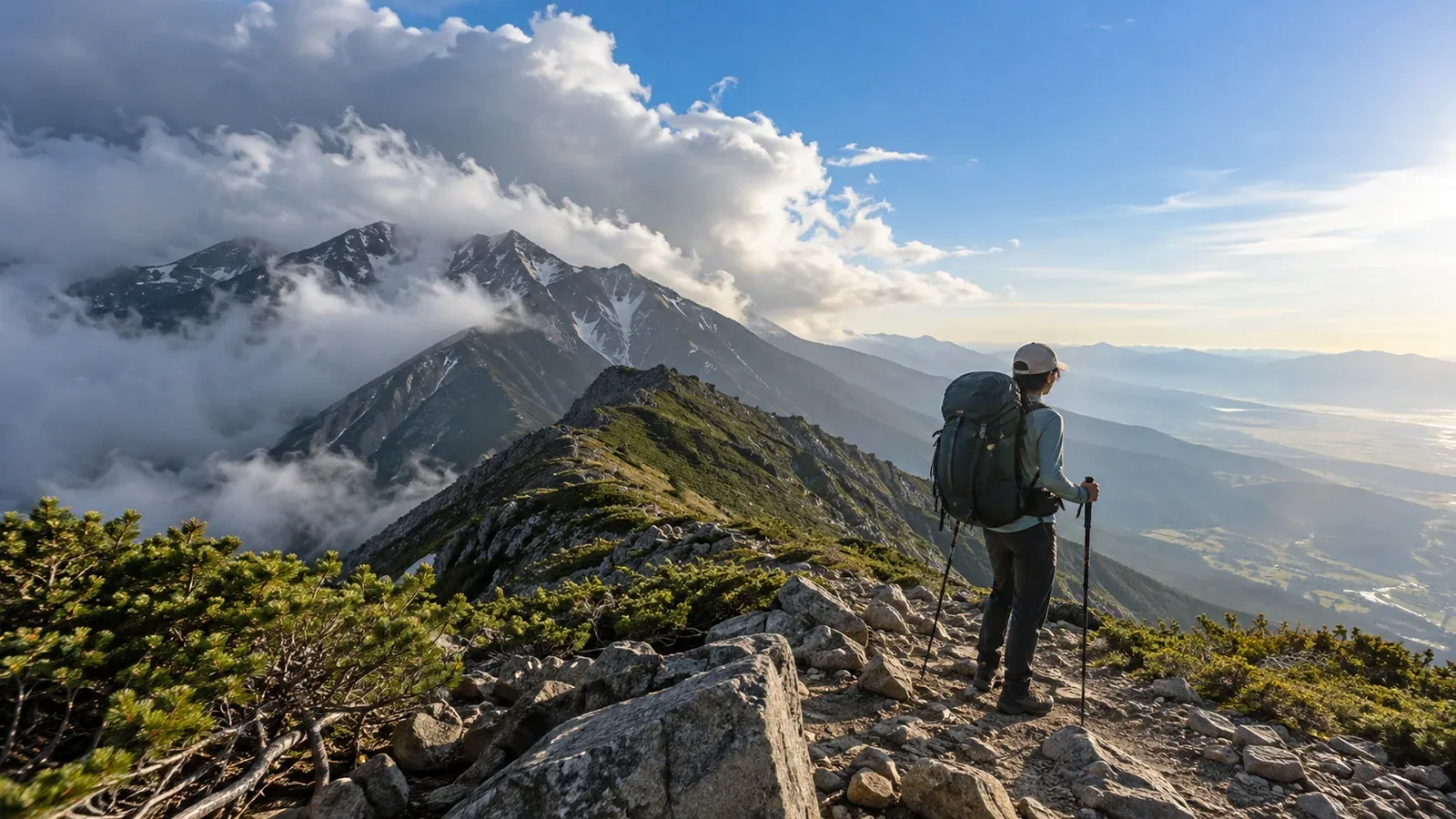
Mountain weather can change quickly, and a foehn produces a distinctive pattern. Rain or snow can fall on the windward side while the lee side is sunny, warm and unusually dry. Recognizing the pattern helps you spot risks a simple forecast icon can miss.
Foehn conditions can occur in many Japanese ranges. Examples include the eastern foothills of the Northern Japan Alps, the eastern side of the Ōu range and the north side of the Shikoku mountains when the wind crosses them. Warm, dry weather can raise the risk of dehydration, heat illness and wildfire.
Here is how foehn winds form, what forecasts to check and what to do on the trail.
How the lee side warms
Moist air rising over a slope can cool to saturation and form cloud. Condensation releases heat, so the air may cool by around 0.5–0.6°C per 100 m once saturated. Unsaturated air descending the lee side warms by about 1.0°C per 100 m.
When rain or snow removes moisture on the windward slope, the descending air can become warmer and drier than air at the same elevation upwind. This describes a wet foehn. A foehn can also occur without upwind precipitation when air descends from higher levels.
The resulting warm, dry downslope wind is called a foehn. Cross-mountain winds can cause it when a low moves across the Sea of Japan, for example. Nearby lowlands can record exceptional temperatures.
What it means for hikers
Dehydration and heat illness
Air along the lee-side trail can become dry. Sweat can evaporate quickly, so you may lose fluid without noticing, even if the breeze feels cool.
Carry water to suit the heat and your itinerary and drink to thirst. Needs vary. Plan for the conditions on the exposed part of the route.
Air temperature and how it feels
Wind can feel cooling when it helps sweat evaporate. A sheltered valley or forest can feel hotter. Check air temperature, sunlight, effort and how you are doing as well as how the wind feels.
Stoves and wildfire
Dryness and wind make fires easier to spread. Avoid using fire outdoors during dry, windy conditions or when wildfire advisories or warnings are in effect. Check the land manager’s and local authority’s guidance.
Rapid weather changes
When airflow changes, rain or snow from the windward side can reach the lee and temperatures can fall. A passing front or low can change winds and precipitation. Check when those changes are expected if you plan to be on a ridge.
What to check before leaving
Use several pieces of information to assess a possible foehn.
Information and where to find it
- Forecast wind direction and speed: Use Japan Meteorological Agency regional forecasts and warnings alongside a mountain point forecast. Look for winds crossing the range together with warmer, drier conditions downwind.
- Observed humidity: Check AMeDAS stations that measure relative humidity, near the start and finish if available. Look for a marked drop since the previous day.
- Pressure pattern: A low over the Sea of Japan can bring southerly flow. Whether foehn develops depends on how the wind crosses the range.
- Local conditions: If the hut is open, its social channels or staff may have reports from the previous day.
Decisions on the trail
If you think you are in a foehn, use these observations and turn-back criteria.
Possible signs
- Strong winds continue across the range.
- Temperature rises and humidity falls on the lee side.
- Lips, hands or the inside of your nose feel dry.
- People in the group are thirsty more often.
These are clues. Adjust breaks and fluids to thirst and how the group is doing. On a long ridge, know where you can leave the route if conditions change.
When to consider turning back or finding shelter
- A strong wind suddenly shifts direction or weakens.
- Clouds nearby begin growing quickly.
- It feels several degrees colder over a short period.
Make the turnaround decision early. Continuing because the summit is close can leave fewer options if the weather changes.
What to watch for by season
A foehn can occur year-round and affects a hike differently in each season.
Spring, March–May: Rapid warming can soften lingering snow. Consider the risk of breaking through it or encountering an avalanche.
Summer, June–August: Heat illness is a particular risk. A foehn can add to already high temperatures and bring heat stress even on ridges. Start and finish early to spend less time on the ridge.
Autumn, September–November: A warm day can turn cold after sunset or when cold air arrives. Keep warm clothing within reach.
Winter, December–February: The lee side can still turn warm and dry for a time. Winter mountain travel requires skills and equipment for changes in conditions.
Before you go
Compare JMA weather charts with a mountain forecast the day before and look at wind and humidity. If foehn conditions are possible, plan your water supply and mark escape routes on the map. You can share plans with experienced hikers in Nordwand’s Base Camp.
Further reading
- Japan Meteorological Agency, mountain weather resources
- Japan Meteorological Agency, AMeDAS observation network
- National Police Agency of Japan, annual mountain incident reports