
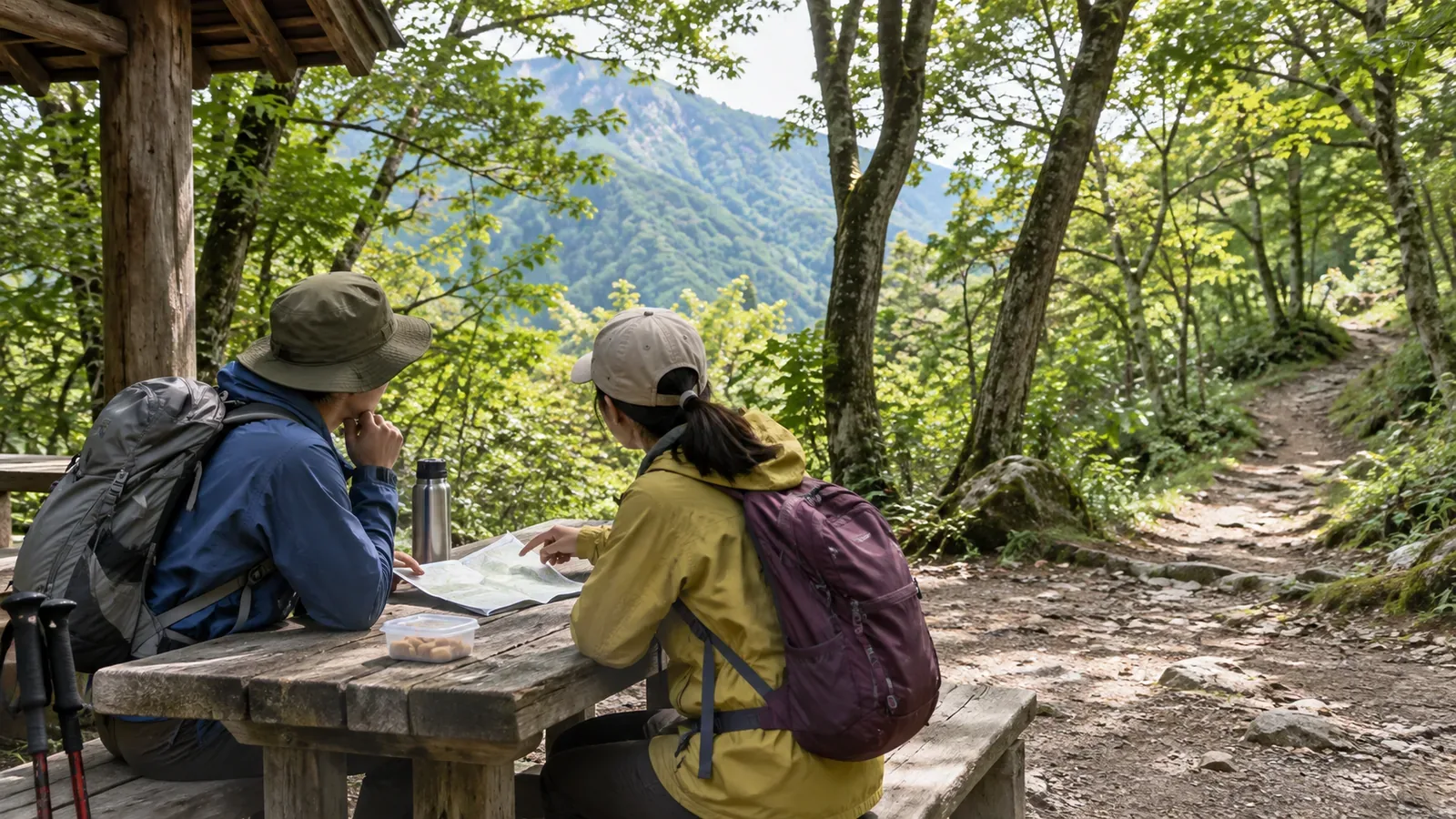
You would like to spend time outdoors, but you may not know how far you will feel able to walk that day. Choose a route that is easy to end partway through. Planning places to turn back and rest, and checking transport home, gives you more ways to adapt the day.
Start with places where you can turn back
Look for benches, viewpoints or visitor facilities near the entrance. Walk to one of them and rest, then carry on if you feel up to it or head back if you prefer. With several places to make that decision, you can plan the day without committing to a set distance. Check the site's visitor information for any conditions that apply at each stop.
On an out-and-back route, it is easy to see which way to return. A downhill stretch on the way out becomes an uphill stretch on the way back. On a loop, check whether there is a shortcut and whether you can use it. Look at current site notices, because construction or the state of the path can make a route on the map unavailable.
Along with distance, check for steps and stairs, path width and uneven surfaces. Japan's Ministry of Land, Infrastructure, Transport and Tourism gives uneven stone paving in urban parks as an example of a barrier for wheelchair users and older pedestrians. It is an urban park example that illustrates why the surface matters even on short walks.
Plan breaks and transport together
If there are benches, check their location, the route to them and the surface around them. Some people need shade or a backrest, or room to sit with their companions. If photos leave questions open, ask the site manager for details.
For restrooms, find out which features are available, when they are open and how to reach them. The urban park guidance notes that demand can concentrate on multipurpose restrooms and calls for information about equipment and features to reach the people who need them. Ask the person which features they need, then contact the site.
If you finish the walk early, you still need to get from the entrance to the bus stop or car park. Kamikochi's official FAQ describes seasonal closures and transport suspensions. An account written during the open season may tell you little about your visit. Check current notices from the site or operator for the number and days of services and somewhere to wait if you get back early.
Agree on how to change the plan
If you have companions, talk before you leave about what each person wants to enjoy and how they can ask for a break. Ask directly what distance and pace suit them, what arrangements would help and whether they want assistance. Age or disability alone tells you little about their preferences.
At a discussion on universal design in national parks reported by DPI Japan, participants talked about the importance of involving people with disabilities in planning and checking facilities after construction. When planning a walk, share what you know about the path and facilities so each person can use that information to decide.
Some people hesitate to speak up even after being told, “Say something if you get tired.” Agree on a way to make changes easier, such as checking in at each bench or sharing when you need to head back. If you feel unsure about your health that day, you can also postpone the outing.
End the walk early if it suits the day
You may arrive to stronger winds, a wet path or a closed facility. Follow the site manager's directions. If conditions change, you can enjoy the view near the entrance instead of sticking to the planned stop. If something concerns you, rest early and end the outing if needed.
Afterward, note which rest areas worked well and what information would have helped beforehand. Record the date alongside the actual conditions to help plan next time. Check the weather and site information again for a future outing, since conditions can change.
Japan's Ministry of the Environment lists letting national park visitors choose how far to go and what to do based on their abilities and interests as a design principle. Plan your walk around what each person wants to enjoy. Distance alone says little about the time you spent taking in the view, talking with companions or enjoying the air outdoors. What you learn on a short outing can help you choose the next one.
Make room to turn back from the start
Start by thinking about breaks, return routes, restrooms and transport as one plan. Ask what your companions want and agree that anyone can suggest ending early. A shorter route can be the right way to enjoy being outdoors that day.
References and sources
- Japan Ministry of Land, Infrastructure, Transport and Tourism: overview of accessibility guidelines for urban parks
- DPI Japan: discussion on universal design in national parks (December 13, 2024)
- Kamikochi official website: frequently asked questions
- Japan Ministry of the Environment: universal design in the protection and use of national parks