
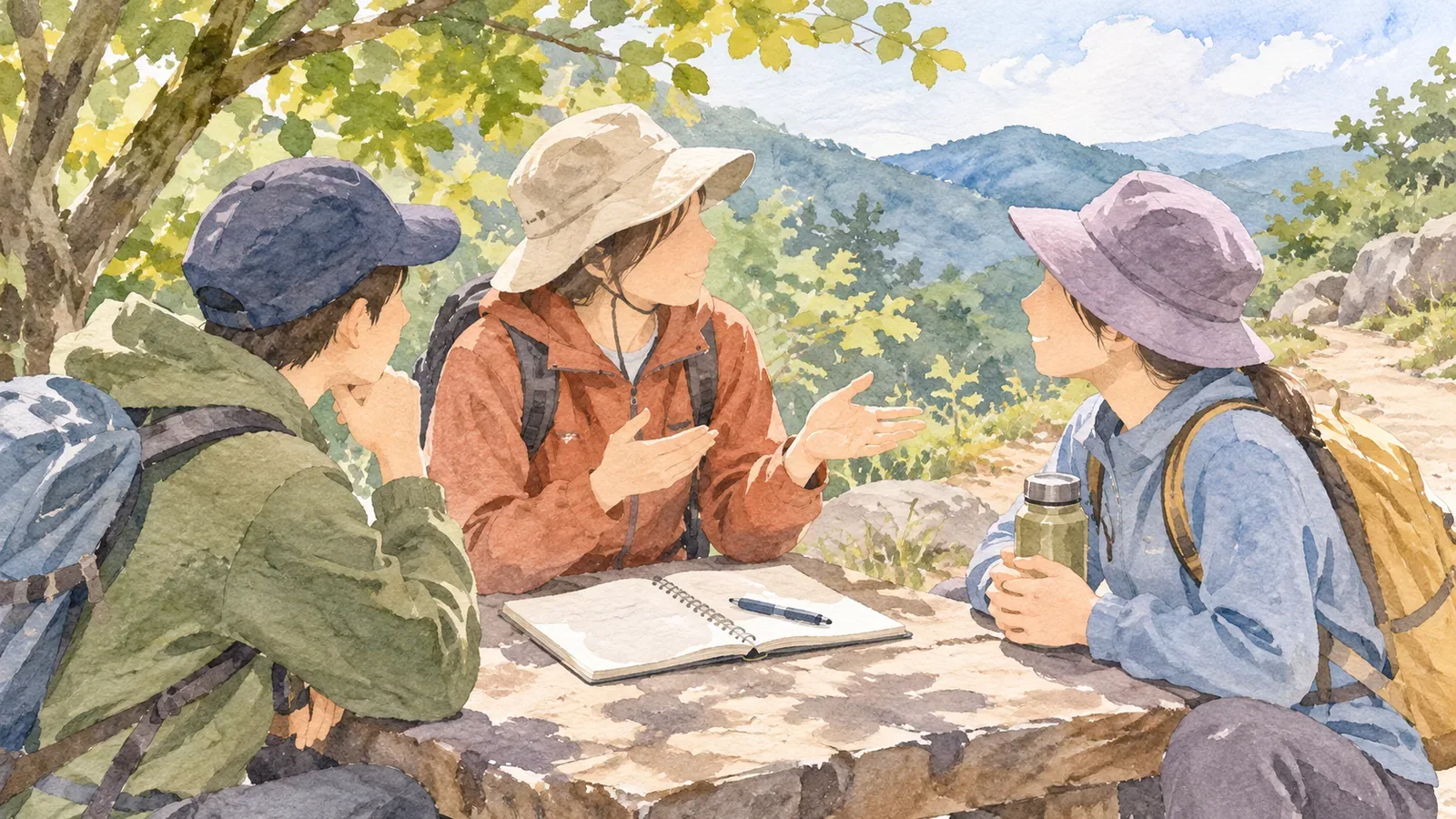
When you plan to spend time outdoors together, “Will you be okay?” may not tell you what someone needs. People differ in what they need to know about the path, where they rest, how they get information and what help works for them. Start by listening to their experience and preferences. Then look together for information that lets them choose.
Start by asking what people want to enjoy
Ask what they want to see and how they want to spend the time. The Ministry of the Environment’s national park development policy also says visitors should be able to choose activities and how far they go according to their abilities and interests. Agree on the aim, such as looking at the forest or visiting an exhibit, before working out what access or support is needed.
At a discussion on universal design in national parks reported by DPI Japan, participants asked for wheelchair users to be able to reach the places visitors come to see. Think together about whether your companion can get to the place they want to enjoy, beyond simply reaching the entrance.
Avoid guessing someone’s walking distance or support needs based on age, disability or appearance. Preferences can change with how a person is feeling or with the weather. Ask only what’s needed for the plan, without pressing for details they’d rather keep private. Choose a way to talk that works for them.
Ask about specific situations
Alongside “Is there anything you need?”, try asking about a specific situation: “Would you like me to check for steps between the entrance and the viewpoint?” or “Should we find out how far apart the rest stops are?” Respect a no and leave room to revisit it later.
Ask when and where they’d like to rest. They may care about things like backrests, shade or the route to the toilet. For a toilet, check the features they need and share the facility’s information so they can judge it themselves.
Ask what works best for sharing information, whether it’s text, audio, a map or a spoken explanation. Respect their choice if they want to contact the facility themselves. If you ask on their behalf, share both the questions and the answers.
Check how and when to offer help
If someone seems to need help, speak to them first and ask how they want you to assist. Get permission before touching a wheelchair, cane or bag, and let the person choose where to go. Help takes different forms, and the person often knows best what works for them.
If you can’t find information about steps or gradients, ask the facility manager about a specific section. Japan’s Ministry of Land, Infrastructure, Transport and Tourism gives uneven stone paving as an example of something that can make movement difficult in a city park. Check the actual surface and gradient and share them, even if the path is described as paved.
Talk about whether anyone offering help can do so safely. If you can’t confirm the conditions you need, choose another route or place. Make sure anyone in the group, including the person receiving support, can suggest a change of plan.
Changing plans on the day and handling personal information
Construction, weather or how someone is feeling can change what you checked in advance. Keep options such as a break, an early finish or switching to an exhibit. Ask what the person wants to do now before going ahead with the original plan.
Share what you learned only with the people who need it and only in the detail they need. Japan’s Personal Information Protection Commission advises getting permission before sharing another person’s information. Ask before telling others or writing publicly about health or disability. If you’re contacting a facility, check with the person whether you can simply ask about the features they need.
Afterwards, you can ask what worked well and what they’d like to know for next time. Make it optional and respect how much they want to say. Check again before the next visit, since the place and how they feel that day may differ.
Recap: make choices together
Ask each companion about the activities and situations that matter to them. Share route and facility details and ask how they’d like any help to be given. A plan you can change lets people enjoy the outdoors at their own pace.
References and sources
- DPI Japan: discussion on universal design in national parks, 13 December 2024
- Ministry of Land, Infrastructure, Transport and Tourism: overview of accessibility guidelines for urban parks
- Ministry of the Environment: protecting and using national parks, universal design
- Personal Information Protection Commission of Japan: examples and precautions for handling personal information