
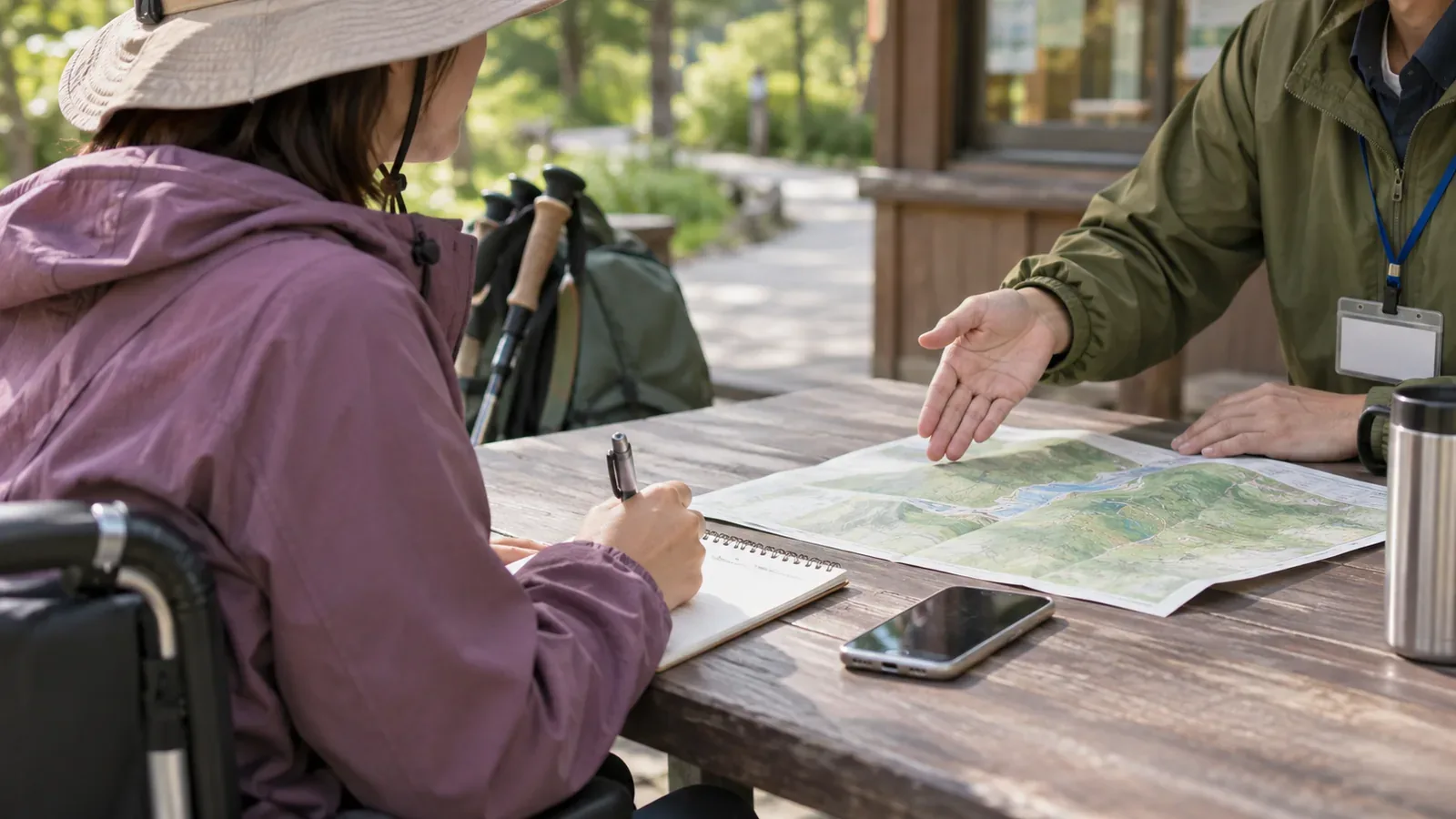
You find a route with few steps and a restroom that might meet your needs. Before making plans, find out when and where the information was checked. Renovations, exhibit changes and changes to the path can make old photos and visitor accounts out of date. Use the date to start checking the details that matter to you.
Find out what the date refers to
A webpage might show the date it was published, the date the page was edited, or the date someone checked conditions on site. Even if the page was edited recently, check when the path photos were taken or the facilities were last inspected. If you cannot find a date, treat the timing as unknown.
Notices about renovations or temporary closures may appear on another page. Check recent announcements and construction notices as well as the visitor guide, and look for the sections and facilities that matter for your trip. If you still need information, contact the site manager with the date of your visit and where you plan to go.
Japan's Ministry of Land, Infrastructure, Transport and Tourism guidance for urban parks calls for sharing accessibility information, including the features and functions of restrooms as well as their names. A recent date on a page is useful when visitors can also find the details they need.
Identify changes that could affect your plan
For paths, check the grade, steps, construction detours, uneven surfaces and puddles. On a nature trail, the surface after a change in the weather may look different from older photos. The urban park guidance gives uneven stone paving as an example of a barrier to movement. Ask the site manager about the current conditions on the path you plan to use.
For restrooms, find out whether the equipment you need is working, how to reach it and when it is open. Labels such as “wheelchair accessible” or “multipurpose” may leave those questions open. Ask your companion what they need and pass those details on to the site.
Benches, rest areas and audio guides can change when they are moved, repaired or replaced as part of a new exhibit. The Lake Biwa Museum in Shiga Prefecture says in its visitor guide that its former Biwahaku Navi service ended in March 2023. Use the museum's current guide to see what is available, and confirm anything you need before setting out.
Record when you checked and what the answer covers
When you contact the site, give your planned visit date, the section you want to use, and the equipment or route you are asking about. Questions about steps from the entrance to the viewpoint or clearance at the restroom entrance help everyone identify the same place. Note which details the site confirmed and which remain uncertain.
When sharing a reply with your companions, include the date you checked and the section it covers. Japan's Ministry of the Environment also notes that the universal design features in its national park listings are available only at some facilities and asks visitors to inquire in advance. A label for one entrance or a whole park may tell you little about a particular path. Check signs and ask staff on the day.
At a national park discussion reported by DPI Japan, participants called for people with disabilities to be involved, and for arrangements to continue site visits and discussions after construction. This would help show how the facilities work in practice and how conditions change over time.
Read visitor accounts with the date and conditions in mind
Visitor accounts and photos can show useful details that do not appear in the official guide. What you can learn from them depends on the date, the route taken and the wheelchair or other mobility aid used. Look at what made the visit possible or prevented it.
When sharing your own experience, give the date, the sections you checked and the condition of the path or equipment. Encourage readers to check with the site manager and let them decide whether the same route works for them. Keep the original information so you can add an update or correction if you learn about a change.
If you cannot confirm a condition you need, you can choose another site. The burden of finding accurate information should not fall on the visitor. Ask companions and site staff to help find the details so the person with access needs can choose where to go.
Use the update date to check current conditions
For accessibility information, check when the equipment and the route were verified as well as when the page was edited. Ask the person what they need, then ask the site about the specific places involved. Share what you checked and when, and adapt the plan to any changes you find on the day.
References and sources
- Japan Ministry of Land, Infrastructure, Transport and Tourism: overview of accessibility guidelines for urban parks
- DPI Japan: discussion on universal design in national parks (December 13, 2024)
- Lake Biwa Museum, Shiga Prefecture: accessibility and visitor facilities
- Japan Ministry of the Environment: park-by-park directory of topics and universal design features